
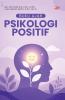
BUKU AJAR PSIKOLOGI POSITIF
Keywords:
PSIKOLOGI POSITIF, PSIKOLOGISSynopsis
Buku ajar Psikologi Positif ini disusun sebagai bahan pembelajaran yang komprehensif untuk mahasiswa, dosen, peneliti, maupun praktisi yang ingin memahami kajian psikologi dari sisi kekuatan, potensi, dan kesejahteraan manusia. Berbeda dengan pendekatan psikologi tradisional yang banyak berfokus pada gangguan dan masalah psikologis, psikologi positif menekankan bagaimana individu dapat hidup secara optimal, bahagia, bermakna, serta mampu mengembangkan kualitas diri secara positif. Pembahasan dalam buku ini diawali dengan perkembangan psikologi positif sebagai sebuah pendekatan ilmiah, termasuk konsep hidup bahagia (pleasant life), hidup yang baik (good life), dan hidup yang bermakna (meaningful life). Selanjutnya, buku ini menguraikan konsep well-being beserta model teoritis, dimensi, faktor yang memengaruhi, dan prediktor kesejahteraan psikologis individu. Topik lain yang dibahas meliputi kebahagiaan (happiness), resiliensi, konsep flow, emosi positif, kreativitas, optimisme, harapan (hope), cinta (love), rasa syukur (gratitude), dan forgiveness. Setiap bab tidak hanya memuat konsep teoritis, tetapi juga hasil penelitian empiris, aplikasi praktis, serta implikasi dalam kehidupan sehari-hari. Buku ini juga memperlihatkan bagaimana psikologi positif diterapkan dalam berbagai ranah kehidupan, seperti perkembangan anak, proses penuaan, pemulihan setelah disabilitas fisik, konteks multikultural, hingga dunia kerja. Dengan bahasa yang sistematis dan mudah dipahami, buku ini diharapkan dapat menjadi sumber belajar yang membantu pembaca memahami pentingnya membangun kekuatan karakter, emosi positif, hubungan interpersonal yang sehat, dan makna hidup guna mencapai kesejahteraan psikologis secara menyeluruh.
Chapters
-
KATA PENGANTAR
-
DAFTAR ISI
-
DAFTAR ISI
-
Bab - 1 PERKEMBANGAN PSIKOLOGI POSITIF .
-
Bab - 2 WELL BEING
-
Bab - 3 HAPPINESS
-
Bab - 4 RESILLIENSI
-
Bab - 5 KONSEP FLOW
-
Bab - 6 EMOSI POSITIF
-
Bab - 7 KREATIVITAS
-
Bab - 8 OPTIMISME
-
Bab - 9 HOPE
-
Bab - 10 LOVE
-
Bab - 11 GRATITUDE
-
Bab - 12 FORGIVENESS
-
Bab - 13 PSIKOLOGI POSITIF DI BERBAGAI RANAH
-
PROFIL PENULIS
Downloads
References
Seligman, M. E. P. (2002). Authentic happiness: Using the new positive psychology to realize your potential for lasting fulfillment. Free Press.
Seligman, M. E. P., & Csikszentmihalyi, M. (2000). Positive psychology: An introduction. American Psychologist, 55(1), 5–14.
Peterson, C., & Seligman, M. E. P. (2004). Character strengths and virtues: A handbook and classification. Oxford University Press.
Ed Diener Carol D. Ryff World Health Organization
Diener, E. (1984). Subjective well-being. Psychological Bulletin, 95(3), 542–575.
Ryff, C. D. (1989). Happiness is everything, or is it? Journal of Personality and Social Psychology, 57(6), 1069–1081.
World Health Organization. (1948). Constitution of the World Health Organization. WHO.
Seligman, M. E. P. (2011). Flourish. Free Press.
Achor, S. (2010). The happiness advantage. Crown Business.
Carr, A. (2004). Positive psychology: The science of happiness and human strengths. Brunner-Routledge.
Diener, E., Oishi, S., & Lucas, R. E. (2003). Personality, culture, and subjective well-being. Annual Review of Psychology, 54, 403–425.
Lyubomirsky, S. (2008). The how of happiness. Penguin Press.
American Psychological Association. (2014). The road to resilience. APA.
Garmezy, N. (1991). Resiliency and vulnerability to adverse developmental outcomes. American Journal of Orthopsychiatry, 61(3), 331–339.
Richardson, G. E. (2002). The metatheory of resilience. Journal of Clinical Psychology, 58(3), 307–321.
Werner, E. E., & Smith, R. S. (1992). Overcoming the odds: High risk children from birth to adulthood. Cornell University Press.
Csikszentmihalyi, M. (1990). Flow: The psychology of optimal experience. Harper & Row.
Csikszentmihalyi, M. (1997). Finding flow. Basic Books.
Nakamura, J., & Csikszentmihalyi, M. (2002). The concept of flow. In C. R. Snyder & S. J. Lopez (Eds.), Handbook of positive psychology (pp. 89–105). Oxford University Press.
Fredrickson, B. L. (2001). The role of positive emotions in positive psychology. American Psychologist, 56(3), 218–226.
Goleman, D. (1995). Emotional intelligence. Bantam Books.
Salovey, P., & Mayer, J. D. (1990). Emotional intelligence. Imagination, Cognition and Personality, 9(3), 185–211.
Carver, C. S., & Scheier, M. F. (2002). Optimism. In C. R. Snyder & S. J. Lopez (Eds.), Handbook of positive psychology. Oxford University Press.
Scheier, M. F., & Carver, C. S. (1985). Optimism, coping, and health. Health Psychology, 4(3), 219–247.
Seligman, M. E. P. (1990). Learned optimism. Knopf.
Snyder, C. R. (2002). Hope theory. Psychological Inquiry, 13(4), 249–275.
Snyder, C. R., et al. (1991). The will and the ways: Development of an individual-differences measure of hope. Journal of Personality and Social Psychology, 60(4), 570–585
Hendrick, C., & Hendrick, S. (1986). A theory and method of love. Journal of Personality and Social Psychology, 50(2), 392–402.
Sternberg, R. J. (1986). A triangular theory of love. Psychological Review, 93(2), 119–135.
Emmons, R. A., & McCullough, M. E. (2003). Counting blessings versus burdens. Journal of Personality and Social Psychology, 84(2), 377–389.
Emmons, R. A. (2007). Thanks! How the new science of gratitude can make you happier. Houghton Mifflin.
Enright, R. D., & Fitzgibbons, R. P. (2000). Helping clients forgive. APA Books.
Worthington, E. L. (2006). Forgiveness and reconciliation. Routledge.
Gillham, J. E., & Reivich, K. J. (2004). Cultivating optimism in childhood. Annals of the American Academy of Political and Social Science, 591, 146–163.
Linley, P. A., & Joseph, S. (2004). Positive psychology in practice. Wiley.
Published
License

This work is licensed under a Creative Commons Attribution-ShareAlike 4.0 International License.