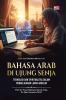
BAHASA ARAB DI UJUNG SENJA: Teknologi dan Spiritualitas dalam Pembelajaran Lansia Muslim
Kata Kunci:
bahasa arab, teknologi, lansiaSinopsis
Bahasa Arab dipandang lebih dari sekadar bahasa ibadah; ia merupakan sarana penting untuk memperkuat dimensi spiritual dan interaksi sosial antar lansia. Pemanfaatan teknologi informasi menjadi solusi yang relevan dan adaptif untuk memenuhi kebutuhan lansia agar tetap produktif, bahagia, dan terhubung dengan komunitasnya. Buku ini tidak hanya membahas teori dan prinsip pembelajaran, tetapi juga menyajikan panduan praktis berbasis temuan lapangan di Banten, yang dikenal memiliki tingkat penetrasi digital tinggi di kalangan lansia.
Buku ini merupakan hasil penelitian yang fokus pada pengembangan strategi pembelajaran bahasa Arab berbasis teknologi informasi untuk komunitas lanjut usia (lansia). Pada latar belakangnya, buku ini menggarisbawahi fenomena peningkatan signifikan populasi lansia di Indonesia, yang diperkirakan akan mencapai 20% dari total populasi pada tahun 2045. Kondisi ini menghadirkan peluang sekaligus tantangan dalam meningkatkan kualitas hidup lansia, terutama di aspek sosial dan spiritual. Dalam pembahasannya, buku ini mengkaji perkembangan demografi lansia, tantangan sosial, spiritual dan digital yang mereka hadapi, serta pentingnya pendidikan sepanjang hayat khususnya melalui pembelajaran bahasa Arab. Selanjutnya, diulas pula peran teknologi informasi dalam memperluas akses dan variasi metode pembelajaran yang sesuai dengan karakteristik lansia, termasuk literasi digital dan solusi praktisnya.
Strategi pembelajaran yang dikembangkan menekankan prinsip andragogi, pendekatan mudah dan adaptif, penggunaan multimedia audio-visual, serta pendampingan personal dan komunitas belajar untuk menumbuhkan motivasi dan keterlibatan lansia. Buku ini juga membahas integrasi dimensi sosial dan spiritual dalam pembelajaran bahasa Arab sebagai sarana pemberdayaan yang menyeluruh dan berkelanjutan. Lebih jauh, disajikan peluang bisnis digital pembelajaran bahasa Arab untuk lansia, serta rekomendasi dan implikasi kebijakan yang mendukung keberlanjutan program ini. Penutup buku menguatkan pentingnya sinergi antara pemerintah, lembaga pendidikan, komunitas, dan keluarga dalam memberdayakan lansia melalui pembelajaran berbasis teknologi yang inklusif dan humanistik.
Buku ini ditujukan sebagai referensi dan inspirasi bagi pendidik, peneliti, pembuat kebijakan, dan praktisi yang peduli pada pendidikan dan pemberdayaan lansia, khususnya dalam konteks pembelajaran bahasa Arab dengan dukungan teknologi informasi di era digital.
Bab
-
KATA PENGANTAR
-
DAFTAR ISI
-
BAB 1 LANSIA DI ERA DIGITAL
-
BAB 2 BAHASA ARAB SEBAGAI JALAN SPIRITUAL
-
BAB 3 TEKNOLOGI INFORMASI DALAM PEMBELAJARAN BAHASA ARAB BAGI LANSIA
-
BAB 4 STRATEGI PEMBELAJARAN BAHASA ARAB UNTUK LANSIA
-
BAB 5 DIMENSI SOSIAL DAN SPIRITUAL DALAM PEMBELAJARAN
-
BAB 6 PELUANG BISNIS DIGITAL PEMBELAJARAN BAHASAN ARAB KELAS LANSIA
-
BAB 7 DISKUSI LANJUTAN
-
BAB 8 PENUTUP
-
DAFTAR PUSTAKA
-
LAMPIRAN
-
PROFIL PENULIS
Unduhan
Referensi
’Adlimah, A. M. (2019). Implementasi Model Pembelajaran Konstruktivisme Dalam Meningkatkan Hasil Belajar Siswa Dalam Pendidikan Agama Islam Pada Kompetensi Dasar Beriman Kepada Qada Dan Qadar Berbuah Ketenangan Hati. POTENSIA: Jurnal Kependidikan Islam, 5(2), 219–238. https://doi.org/10.24014/potensia.v5i2.6628
Abdullah, M. Y., Alfarezy, A., Ritonga, A. W., Farhan Bin, M., Noradin, M., Khalil, M., & Alramadeen, M. (2024). Linguistic Problems of Arabic Learning in Various Indonesian Formal Schools (2019-2023): A Systematic Literature Review. ARABIYATI: Journal of Arabic Language Education, 1(1), 293–323. https://journal.pppbai.or.id/index.php/arabiyati/article/view/133
Abdussamad, Z. (2021). Metode Penelitian Kualitatif. Syakir Media Press.
Achyar, H., Andriani, H., Ustiawaty, J., Utami, E., Istiqomah, R., Fardani, R., Sukmana, D., & Auliya, N.K. (2020). Buku Metode Penelitian Kualitatif & Kuantitatif. Pustaka Ilmu Group.
Adistiyarani, R., Azzahra, N. N., & Bakar, M. Y. A. (2025). Penerapan Teori Konstruktivistik dalam Pembelajaran Bahasa Arab. Cendekia Pendidikan, 14(5), 6–7. https://doi.org/10.9644/sindoro.v3i9.267
Adom, D., Attah, A. Y., & Ankrah, K. (2016). Constructivism Philosophical Paradigm: Implications for Research, Teaching, and Learning. Global Journal of Arts, Humanities and Social Sciences, 4(10), 1–9.
Adzkiya, D. M. A. (2022). Overview of Spiritual Experiences in Healthy Elderly. Spirituality and Local Wisdom, 2(2), 51–57.
Agustian, N., & Salsabila, U. H. (2021). Peran Teknologi Pendidikan dalam Pembelajaran. Islamika, 3(1), 123–133. https://doi.org/10.36088/islamika.v3i1.1047
Agustini, A. (2023). Urgensi Pemahaman Bahasa Arab dalam Mempelajari Agama Islam di Indonesia. IN RIGHT: Jurnal Agama Dan Hak Azazi Manusia, 10(2), 195. https://doi.org/10.14421/inright.v10i2.2922
Ahmad, N. A., Abd Rauf, M. F., Mohd Zaid, N. N., Zainal, A., Tengku Shahdan, T. S., & Abdul Razak, F. H. (2022). Effectiveness of Instructional Strategies Designed for Older Adults in Learning Digital Technologies: A Systematic Literature Review. SN Computer Science, 3(2), 1–13. https://doi.org/10.1007/s42979-022-01016-0
Akbar, M. A. A., Suryati, S., & Fitri, H. U. (2023). The Influence of Islamic Spiritual Guidance by Increasing Mental Peace for the Elderly in Palembang. Grief and Trauma, 1(2), 69–78. https://doi.org/10.59388/gt.v1i2.568
Akyıldız, S. T., & Ahmed, K. H. (2021). An Overview of Qualitative Research and Focus Group Discussion. International Journal of Academic Research in Education, 7(1), 1–15. https://doi.org/10.17985/ijare.866762
Al Farisi, M. Z., Maulani, H., Hardoyo, A. B., Khalid, S. M., & Saleh, N. (2024). Investigating Arabic language teaching materials based on Indonesian folklore: an ethnographic study on the folktale of “Bandung.” Asian Education and Development Studies, 13(2), 134–149. https://doi.org/10.1108/AEDS-07-2023-0082
Alhumaid, M. M., Said, M. A., Adnan, Y., & Khoo, S. (2024). Cross-Cultural Adaptation and Validation of the Arabic Version of the Physical Activity Scale for Individuals with Physical Disabilities in Saudi Arabia (PASIPD-AR). Healthcare (Switzerland), 12(2), 419–427. https://doi.org/10.3390/healthcare12020179
Allsop, D. B., Chelladurai, J. M., Kimball, E. R., Marks, L. D., & Hendricks, J. J. (2022). Qualitative Methods with Nvivo Software: A Practical Guide for Analyzing Qualitative Data. Psych, 4(2), 142–159. https://doi.org/10.3390/psych4020013
Ambagtsheer, R. C., Borg, K., Townsin, L., Pinero de Plaza, M. A., O'Brien, L. M., Kunwar, R., & Lawless, M. T. (2024). The effectiveness of technology interventions in reducing social isolation and loneliness among community-dwelling older people: A mixed methods systematic review. Archives of Gerontology and Geriatrics Plus, 1(1), 100008. https://doi.org/10.1016/j.aggp.2024.100008
Amin, B., Ulfa, M., & Humaira, P. (2022). Program Bimbingan Bahasa Arab untuk Komunitas PKH Kabupaten Pidie Jaya. Khadem: Jurnal Pengabdian Kepada Masyarakat, 1(2), 9–17. https://ejournal.unisai.ac.id/index.php/jkdm/article/view/800
Amir, S. N., Juliana, N., Azmani, S., Abu, I. F., Talib, A. H. Q. A., Abdullah, F., Salehuddin, I. Z., Teng, N. I. M. F., Amin, N. A., Azmi, N. A. S. M., & Aziz, N. A. S. A. (2022). Impact of Religious Activities on Quality of Life and Cognitive Function Among the Elderly. Journal of Religion and Health, 61(2), 1564–1584. https://doi.org/10.1007/s10943-021-01408-1
Anah, S. (2021). Pembelajaran Bahasa Arab Berbasis Konstruktivisme Di Stai Taruna Surabaya. Al-Fakkaar, 2(2), 100–114. https://doi.org/10.52166/alf.v2i2.2656
Anas, S. H., Indriani, F., Anggi Oktafia, Nurul Khoirunnisa Ar-Rohmah, Masnu’atul hariroh, Anjani Rifka Dewi, Ilham Pramudya, Soviyatun Nur Hikmah, & Suraida Haya. (2025). The Role of Spirituality in the Success of Elderly Developmental Tasks: Integrity vs Despair Stage at Wisma Harapan Asri. Socio-Economic and Humanistic Aspects for Township and Industry, 3(2), 283–292. https://doi.org/10.59535/sehati.v3i2.490
Astuti, A. D., Basuki, H. O., & Priyanto, S. (2024). Buku Ajar. PT Nuansa Fajar Cemerlang Jakarta.
Au, A., Siddiqi, H., Sayadi, G., Zhao, T., Kleib, M., Tong, H., & Salma, J. (2024). Digital learning preferences of Arabic-speaking older immigrants in Canada: A qualitative case study. Educational Gerontology, 50(11), 1006–1028. https://doi.org/10.1080/03601277.2024.2370114
Ayse, D. I. (2018). Use of technology in the constructivist approach. Educational Research and Reviews, 13(21), 704–711. https://doi.org/10.5897/err2018.3609
Azhar, M., Wahyudi, H., Karim, P., & Pamil, J. (2022). Progress of Learning Arabic at the Darussakinah Boarding School, Batu Bersurat. Lisaniya Arabiya: Jurnal Pendidikan Bahasa Arab, 6(2), 285–307. https://doi.org/10.32699/liar.v6i2.3499 Progress
Baars, B. J. (2016). A Cognitive Theory of Consciousness. Cambridge University Press.
Bailly, N., Martinent, G., Ferrand, C., Agli, O., Giraudeau, C., Gana, K., & Roussiau, N. (2018). Spirituality, social support, and flexibility among older adults: a five-year longitudinal study. International Psychogeriatrics, 30(12), 1745–1752. https://doi.org/10.1017/S1041610218000029
Bakker, C., Tanjung, R., Anwar, S., & Ruben, A. (2024). Pendidikan Berbasis Komunitas untuk Lansia di Era Digital : Pendekatan Psikologi Positif. Journal on Education, 07(01), 6867–6873. https://doi.org/https://doi.org/10.31004/joe.v7i1.7357
Basnet, H. B. (2018). Focus Group Discussion: a Tool for Qualitative Inquiry. Researcher: A Research Journal of Culture and Society, 3(3), 81–88. https://doi.org/10.3126/researcher.v3i3.21553
Bengtsson, M. (2016). How to plan and perform a qualitative study using content analysis. NursingPlus Open, 2, 8–14. https://doi.org/10.1016/j.npls.2016.01.001
Bodner, G. M. (1986). Constructivism: A theory of knowledge. Journal of Chemical Education, 63(10), 873–878. https://doi.org/10.1021/ed063p873
Boulton-Lewis, G. M. (2010). Education and learning for the elderly: Why, how, what. Educational Gerontology, 36(3), 213–228. https://doi.org/10.1080/03601270903182877
BPS. (2023). Statistik Telekomunikasi Indonesia 2022.
BPS. (2024). Statistik Penduduk Lanjut Usia 2024 (Vol. 11).
BPS. (2025). Statistik Indonesia 2025.
Budiastti, D., & Bandur, A. (2018). Validitas dan Reliabilitas Penelitian dengan Analisis NVivo, SPSS dan AMOS. In Metode Penelitian Pendidikan Matematika. Mitra Wacana Media.
Can Oz, Y., Duran, S., & Dogan, K. (2022). The Meaning and Role of Spirituality for Older Adults: A Qualitative Study. Journal of Religion and Health, 61(2), 1490–1504. https://doi.org/10.1007/s10943-021-01258-x
Chandra, Y., & Shang, L. (2019). Computer-Assisted Qualitative Research: An Overview. In Y. Chandra & L. Shang (Eds.), Qualitative Research Using R: A Systematic Approach (pp. 21–31). Springer Nature Singapore. https://doi.org/10.1007/978-981-13-3170-1_2
Che Mat, N. H., Ibrahim, Z., Muhammad, F., & Mat Hassan, P. (2022). Metacognitive strategies in Arabic language learning among senior citizen learners of Jamiah Dar Al Huda. Journal of Contemporary Islamic Studies, 8(2), 67–78. https://doi.org/10.24191/jcis.v8i2.5
Cheng, L., Liu, Y., Chen, Q., & Zhang, F. (2025). Exploring the spiritual experiences of older adults with chronic diseases: a qualitative study in a multicultural context. BMC Psychology, 13(1). https://doi.org/10.1186/s40359-025-02710-3
Chruściel, P., & Dobrowolska, B. (2020). The correlation between social support and quality of life of seniors without cognitive disorders from an institutional environment—a descriptive cross-sectional survey. Healthcare (Switzerland), 8(3). https://doi.org/10.3390/healthcare8030212
Coelho-Júnior, H. J., Calvani, R., Panza, F., Allegri, R. F., Picca, A., Marzetti, E., & Alves, V. P. (2022). Religiosity/Spirituality and Mental Health in Older Adults: A Systematic Review and Meta-Analysis of Observational Studies. Frontiers in Medicine, 9(May), 1–29. https://doi.org/10.3389/fmed.2022.877213
Creswell, J. W. (2013). Qualitative Inquiry and Research Design : Choosing among Five Approaches (3rd ed.). Sage Publications.
Creswell, J. W. (2014). Research Design : Qualitative, Quantitative, and Mixed Methods Approaches (4th ed.). Sage Publications.
Dalkin, S., Forster, N., Hodgson, P., Lhussier, M., & Carr, S. M. (2021). Using computer-assisted qualitative data analysis software (CAQDAS; NVivo) to assist in the complex process of realist theory generation, refinement, and testing. International Journal of Social Research Methodology, 24(1), 123–134. https://doi.org/10.1080/13645579.2020.1803528
Do, H. N., Do, B. N., & Nguyen, M. H. (2023). 3How do constructivist learning environments generate better motivation and learning strategies? The Design Science Approach. Heliyon, 9(12), e22862. https://doi.org/10.1016/j.heliyon.2023.e22862
Drianus, O. (2021). The Existential-Spiritual of Development of the Elderly: Thematic Review & Islamic Interpretation of al-Ashr. Counselle| Journal of Islamic Guidance and Counseling, 1(1), 1–19. https://doi.org/10.32923/couns.v1i1.1734
Drisko, J. W. (2024). Transferability and Generalization in Qualitative Research. Research on Social Work Practice, 1–9. https://doi.org/10.1177/10497315241256560
Edidarmo, T., & Fudhaili, A. (2023). The Power of Spiritual Motivation: A Conceptual and Theoretical Review of Arabic Language Learning. Arabiyatuna: Jurnal Bahasa Arab, 7(1), 315–334. https://doi.org/10.29240/jba.v7i1.5629
Endah, P. T., Wilujeng, S. A., Rifka, F., Achmad, S., & Imbalan, Z. (2020). Pemanfaatan NVivo dalam Penelitian Kualitatif NVivo. Universitas Negeri Malang. https://fip.um.ac.id/wp-content/uploads/2021/10/b5-Pemanfaatan-NVIVO-dalam-Penelitian-Kualitatif.pdf
Ezati, E., Hosseinikoukamari, P., Karimy, M., Rawlins, J., Akbartabar, F., & Khalvandi, P. (2023). The Role of Spirituality and Social Support in Iranian Elderly Happiness: A Cross-sectional Study. Journal of Education and Community Health, 10(1), 16–22. https://doi.org/10.34172/jech.2023.1856
Fatmawati, P., Fahmiyah, M., & Novita, A. P. (2025). Analisis Minat Siswa Non-Pesantren: Faktor Pendukung Dan Penghambat Minat Bahasa Dalam Proses Pembelajaran Bahasa Arab Di Daerah Terpencil Banten. Jurnal Intelek Insan Cendikia, 2(6), 11947–11956. https://jicnusantara.com/index.php/jiic
Fatmawati, P., Fahmiyah, M., Novita, A. P., Hidayat, W., & Indriyana, D. (2024). Pengaruh Motivasi Belajar Bahasa Arab Terhadap Hasil IPK Mahaswa Pendidikan Bahasa Arab UIN Banten. Jurnal Intelek Insan Cendikia, 1(10), 7771–7777. https://jicnusantara.com/index.php/jiic/article/view/2058
Findsen, B., & Formosa, M. (2011). Lifelong Learning in Later Life. In Lifelong Learning in Later Life (Issue 7). Sense Publishers. https://doi.org/10.1007/978-94-6091-651-9
Fosnot, C. T. (2013). Constructivism: Theory, Perspectives, And Practice (2nd ed., Issue June). Teachers College Press.
Garami, L., Chow, R., Fakuade, A., Swaminathan, S., & Alain, C. (2020). Orienting Attention to Auditory and Visual Short-term Memory: The Roles of Age, Hearing Loss, and Cognitive Status. Experimental Aging Research, 46(1), 22–38. https://doi.org/10.1080/0361073X.2019.1693008
Gianfredi, V., Nucci, D., Pennisi, F., Maggi, S., Veronese, N., & Soysal, P. (2025). Aging, longevity, and healthy aging: the public health approach. Aging Clinical and Experimental Research, 37(1), 1–12. https://doi.org/10.1007/s40520-025-03021-8
Gundumogula, M. (2020). Importance of Focus Groups in Qualitative Research. International Journal of Humanities and Social Studies, 8(11), 299–302. https://hal.univ-lorraine.fr/hal-03126126/document
Hakim, L., Kodir, A., & Haron, M. Z. (2025). Integrative Islamic Education for the Elderly: a Holistic Model From Madrasah Ibnu Mas'Ud in Malaysia. Jurnal Pendidikan Islam, 11(1), 176–188. https://doi.org/10.15575/jpi.v11i1.45186
Hakim, M. L. (2021). Agama dan perubahan sosial. MNC Publishing Cetakan.
Hall, S., & Liebenberg, L. (2024). Qualitative Description as an Introductory Method to Qualitative Research for Master 's-Level Students and Research Trainees. International Journal of Qualitative Methods, 23, 1–5. https://doi.org/10.1177/16094069241242264
Haruns, K. H., Yuwono, D., Sugiharto, P., & Saraswati, S. (2023). The Effectiveness of Nature-Based Person-Centred Group Counselling in Improving Spiritual wellbeing Among the Elderly. Bulletin of Counseling and Psychotherapy, 7(2), 1–10. https://doi.org/https://doi.org/10.51214/002025071409000
Hazin, B. I., Imasinska, & Qosim, N. (2023). Motivasi Lansia Dalam Mengikuti Pembelajaran Bahasa Arab di Rumah Bimbingan Belajar Bahasa Arab Al Hazin. Jurnal Ilmiah Mandala Education (JIME), 9(3), 2024–2029. https://doi.org/10.58258/jime.v9i1.5631/http
Hidayat, S. (2020). Interaksi Lansia dengan Al -Qur’an. ŚALIĤA: Jurnal Pendidikan Dan Agama Islam, 3(1), 78–84. https://doi.org/https://doi.org/10.54396/saliha.v3i1.38
Hollweck, T. (2016). Robert K. Yin. (2014). Case Study Research Design and Methods (5th ed.). Thousand Oaks, CA: Sage. 282 pages. The Canadian Journal of Program Evaluation, 30(1). https://doi.org/10.3138/cjpe.30.1.108
Ilham, A., Nafi’ah, K., Mutmainah, M., Sarip, M., & ... (2025). Multimodal Project-Based Learning Through Transmediation: Design for Arabic Literature Learning. … of Arabic Learning …, 14(1), 1–13.
Iqbal, S., Fischl, C., & Asai, R. (2025). Older Persons’ Social Participation, Health, and Well-Being Through Digital Engagement. Activities, Adaptation and Aging, 00(00), 1–30. https://doi.org/10.1080/01924788.2025.2512299
Jackson, K., & Bazeley, P. (2019). Qualitative Data Analysis with NVivo. In SAGE Publications (3rd ed.). Wiley. https://uk.sagepub.com/en-gb/eur/qualitative-data-analysis-with-nvivo/book261349
Jadidi, A., Khodaveisi, M., Sadeghian, E., & Fallahi-Khoshknab, M. (2021). Exploring the Process of Spiritual Health of the Elderly Living in Nursing Homes: A Grounded Theory Study. Ethiopian Journal of Health Sciences, 31(3), 589–598. https://doi.org/10.4314/ejhs.v31i3.16
Jakaria, J., Permana, E. S., Saripah, I., Saepudin, A., & Yahya, F. H. (2025). Andragogy Model to Improve Digital Technology Competence of High School Teachers. EDUKASIA Jurnal Pendidikan Dan Pembelajaran, 6(1), 241–254. https://doi.org/10.62775/edukasia.v6i1.1418
Kadir, A. (2022). Belajar Komunikasi Berbahasa Arab Dasar Bagi Pemula Dan Lansia. Widina Bhakti Persada Bandung.
Karki, P., Sapkota, K. P., Pradhan, P. M. S., Suvedi, B. K., & Bhurtyal, A. (2025). Successful aging and its associated factors among older adults in Nepal: a cross-sectional study. BMC Geriatrics, 25(1). https://doi.org/10.1186/s12877-025-06335-4
Kemenag. (2015). Al Qur’an dan Terjemah. Darus Sunnah.
Khumaedi, A. A., Islam, U., Abdurrahman, N. K. H., Pekalongan, W., Baru, P., & Pekalongan, K. (2024). Perkembangan Literasi Digital Bahasa Arab : Peluang dan Tantangan Era. Jurnal Bima: Pusat Publikasi Ilmu Pendidikan Bahasa Dan Sastra, 2(4), 257–264. https://doi.org/https://doi.org/10.61132/bima.v2i4.1380 Online
Knowles, M. S., Iii, E. F. H., & Swanson, R. A. (2005). The Adult Learner – The Definitive Classic in Adult Education and Human Resource Development. In Industrial and Commercial Training (Vol. 37, Issue 7).
https://doi.org/10.1108/00197850510626857
Krathwohl, D. R., Pintrich, P. R., Raths, J., & Wittrock, M. (2013). A taxonomy for learning, teaching, and assessing: A revision of Bloom's Taxonomy of Educational Objectives (Complete edition). Longman.
Kuoppamäki, S., Hänninen, R., & Taipale, S. (2022). Enhancing Older Adults' Digital Inclusion Through Social Support: A Qualitative Interview Study. In Vulnerable People and Digital Inclusion: Theoretical and Applied Perspectives (pp. 211–230). Spring Nature Pte Ltd. https://doi.org/10.1007/978-3-030-94122-2_11
Kusumo, M. P. (2020). Buku Lansia (Issue November). UMY.
Lacka, E., Wong, T. C., & Haddoud, M. Y. (2021). Can digital technologies improve students' efficiency? Exploring the role of Virtual Learning Environment and Social Media use in Higher Education. Computers & Education, 163, 104099. https://doi.org/https://doi.org/10.1016/j.compedu.2020.104099
Lefa, B. (2014). The Piaget theory of cognitive development: An educational implication. Research Gate, 1(9), 1–9. https://www.researchgate.net/publication/252532772_Constructing_a_theory_of_learner_autonomy_Some_steps_along_the_way
Liu, J., Wang, C., Meng, Z., & Yu, C. (2025). Digital interaction and active aging: the impact of social media use on physical activity behavior mediated by social capital and self-efficacy. Frontiers in Psychology, 16(June), 1–11. https://doi.org/10.3389/fpsyg.2025.1580936
Luo, J., Zhang, R., Xu, J., & Pan, Y. (2024). Positive Strategies for Enhancing Elderly Interaction Experience in Smart Healthcare through Optimized Design Methods: An INPD-Based Research Approach. Sustainability (Switzerland), 16(20). https://doi.org/10.3390/su16208770
Marston, H. R., & Musselwhite, C. B. A. (2021). Improving Older People’s Lives Through Digital Technology and Practices. Gerontology and Geriatric Medicine, 7, 1–4. https://doi.org/10.1177/23337214211036255
Mays, N., & Pope, C. (2020). Quality in qualitative research. Qualitative Research in Health Care, 21, 76–80. https://doi.org/10.1002/9781119410867.ch15
Mcleod, B. S. (2018). Maslow's Hierarchy of Needs. Simply Psychology, 1–17.
Miftachuddin, M., Saifudin, A., & Fitriani, Y. (2024). Program TPQ Lansia: Upaya Meningkatkan Kemampuan Membaca Al-Qur’an di Kalangan Lanjut Usia. PengabdianMu: Jurnal Ilmiah Pengabdian Kepada Masyarakat, 9(9), 1752–1761. https://doi.org/10.33084/pengabdianmu.v9i9.7088
Mohammadi, M., Alavi, M., Bahrami, M., & Zandieh, Z. (2017). Assessment of the relationship between spiritual and social health and the self-care ability of elderly people referred to community health centers. Iranian Journal of Nursing and Midwifery Research, 22(6), 471–475. https://doi.org/10.4103/ijnmr.IJNMR_171_16
Mohd Zaid, N. N., Ahmad, N. A., Abd Rauf, M. F., Zainal, A., Abdul Razak, F. H., Tengku Shahdan, T. S., & Pek, L. S. (2023). Elderly and their barriers to accepting and learning to use technology: A scoping review. Masyarakat, Kebudayaan Dan Politik, 36(1), 1–17. https://doi.org/10.20473/mkp.v36i12023.1-17
Moleong, J. . (2014). Metode Penelitian Kualitatif. Remaja Rosdakarya.
Mu’izzuddin, M. (2020). Model Desain Pembelajaran Bahasa Arab. Media Edukasi Indonesia.
Muassomah, M., & Hakim, A. R. (2025). Challenges and opportunities for learning Arabic: Insights from non-native students in Indonesian higher education. Lisania: Journal of Arabic Education, 9(1), 95–111. https://doi.org/http://dx.doi.org/10.18326/lisania.v9i1.95-111
Mubarak, M. R., Audina, N. A., Wahdah, N., Hamidah, H., & Ilmiani, A. M. (2021). Factors Influencing Motivation in Online Arabic Learning of Indonesian Older Men. Izdihar : Journal of Arabic Language Teaching, Linguistics, and Literature, 4(1), 15–26. https://doi.org/10.22219/jiz.v4i1.15270
Munjin, & Kusumawanti, W. D. (2023). The Educational Character Based on Islamic Spirituality. Khazanah Pendidikan Islam, 5(2), 122–136. https://doi.org/10.15575/kp.v5i2.25208
Mustajoki, H., & Mustajoki, A. (2017). A New Approach to Research Ethics. In A New Approach to Research Ethics. https://doi.org/10.4324/9781315545318
Naska, I. (2017). Being Muslim And Motivation In Learning Arabic: An Insight From Three Decades. Islam Realitas: Journal of Islamic & Social Studies, 3(2), 190–204. https://doi.org/https://ejournal.uinbukittinggi.ac.id/index.php/Islam_realitas/article/view/418
Nasution, A. F. (2023). Metode Penelitian Kualitatif. CV. Harfa Creative.
Nasution, S., & Zulheddi. (2018). Pengembangan Model Pembelajaran Bahasa Arab Arabi : Journal of Arabic Studies. Arabi : Journal of Arabic Studies, 3(2), 121–144. https://doi.org/http://dx.doi.org/10.24865/ajas.v3i2.96
Navarro, R., Godínez, N. M. A., & Ibarra, M. L. (2024). Andragogical Principles and Adult Learners in the Teaching of English for Specific Purposes (ESP). InterSedes, Revista Electrónica de las Sedes Regionales de la Universidad de Costa Rica, 25(51), 1–30. https://doi.org/10.15517/isucr.v25i51
Nicol, D. J., Minty, I., & Sinclair, C. (2003). The social dimensions of online learning. Innovations in Education and Teaching International, 40(3), 270–280.
https://doi.org/10.1080/1470329032000103807
Nugraha, E., Anneke Rantung, D., & Naibaho, L. (2023). Analyzing Learning Media for The Elderly. Enrichment: Journal of Multidisciplinary Research and Development, 1(4), 153–161. https://doi.org/10.55324/enrichment.v1i4.28
Nurhaliza, L., & Ritonga, A. A. (2023). Elderly Community Education System. Scaffolding: Jurnal Pendidikan Islam Dan Multikulturalisme, 5(2), 614–652. https://doi.org/10.37680/scaffolding.v5i2.3225
Nurhasanah, S., Jayadi, A., Sa;diyah, R., & Syafrimen. (2019). Buku Strategi Pembelajaran. Edu Pustaka.
Nurlaila, N., & Muassomah, M. (2021). Analisis Pembelajaran Bahasa Arab Berbasis Konstruktivisme di MAN 1 Pamekasan. Taqdir, 6(2), 45–70. https://doi.org/10.19109/taqdir.v6i2.5945
Nuzula, F., Mahmud, A., & Rohtih, W. A. (2025). The Interaction of Elderly Individuals in Learning to Read the Qur’an. Aphorisme: Journal of Arabic Language, Literature, and Education, 6(1), 337–353. https://doi.org/10.37680/aphorisme.v6i1.7366
Nyandra, M. (2019). Lansia (Aktif, Sehat, Dan Bahagia). In LANSIA (Aktif, Sehat, dan Bahagia) Penulis. Pilar.
Oensyar, K. (2015). Pengantar Metodologi Pembelajaran Bahasa Arab. IAIN Antasari Press.
Omara, T. M., & Harby, K. A. (2023). Measurement and analysis of the religious and spiritual factors of quality of life of residents of Islamic cities. Interdisciplinaria, 40(1), 399–412. https://doi.org/10.16888/interd.2023.40.1.24
Orden, K. A. Van, Ph, D., Bower, E., Ph, D., Lutz, J., Ph, D., Silva, C., Ph, D., Gallegos, A. M., Ph, D., Podgorski, C. A., Ph, D., Santos, E. J., & Conwell, Y. (2020). Connections Among Older Adults Restrictions. Am J Geriatr Psychiatry, 1(January), 1–12. https://doi.org/https://doi.org/10.1016/j.jagp.2020.05.004
Osmani, S., & Tartari, D. (2024). The Impact of Digital Technology on Learning and Teaching: A Case Study of Schools in Durrës, Albania. Journal of Educational and Social Research, 14(6), 193–209. https://doi.org/10.36941/jesr-2024-0165
Paine, N. (2011). Learning Strategies. The MASIE Center.
Perpres/88. (2021). Peraturan Presiden Nomor 88 Tahun 2021 Tentang Strategi Nasional Kelanjutusiaan (pp. 1–45). Sekretariat Negara.
Pihlainen, K., Ehlers, A., Rohner, R., Cerna, K., Kärnä, E., Hess, M., Hengl, L., Aavikko, L., Frewer-Graumann, S., Gallistl, V., & Müller, C. (2023). Older adults’ reasons to participate in digital skills learning: An interdisciplinary, multiple case study from Austria, Finland, and Germany. Studies in the Education of Adults, 55(1), 101–119. https://doi.org/10.1080/02660830.2022.2133268
Pikhart, M., & Klimova, B. (2020). Maintaining and supporting seniors' wellbeing through foreign language learning: Psycholinguistics of second-language acquisition in older age. International Journal of Environmental Research and Public Health, 17(8038), 1–15. https://doi.org/doi:10.3390/ijerph17218038
Prianggita, V. A., & Meliyawati, M. (2022). Peran Media Pembelajaran Berbasis Teknologi Informasi Dan Komunikasi Di Era Pandemi Covid-19. Aksara: Jurnal Ilmu Pendidikan Nonformal, 8(1), 147. https://doi.org/10.37905/aksara.8.1.147-154.2022
QSR International. (2014). Nvivo 10 for Windows. QSR International. https://doi.org/10.1093/combul/42.2.22
Raco, J. R., & Tanod, R. R. H. M. (2012). Metode Fenomenologi Entrepreneurship Aplikasi pada Entrepreneurship. Grasindo.
Rahadi, D. R. (2020). Konsep Penelitian Kualitatif, Plus Tutorial NVivo. In PT. Filda Fikrindo. PT. Filda Fikrindo.
Rahaju, A. (2025). The Role of Andragogy Strategies in Enhancing Lifelong Learning in Community Education. Riwayat, 8(2), 1823–1831. https://doi.org/https://doi.org/10.24815/jr.v8i2.46207 advancement,
Rahmi, E. N., Nurmala, M., Nurbayan, Y., Syukran, S., & Faza, A. M. (2024). A Phenomenological Study of Arabic Language Environment to Improve Students' Speaking Skills at Modern Islamic Boarding. Mantiqu Tayr: Journal of Arabic Language, 4(1), 232–256. https://doi.org/10.25217/mantiqutayr.v4i1.4085
Rasyid Ridha, M., Arifin, I., & Rijani, M. (2025). The Revolution of Arabic Language Learning Media: Challenges And Solutions in 3T Areas (Remote, Frontier, Outermost). Journal of Arabic Learning and Teaching, 14(1), 2025. https://journal.unnes.ac.id/journals/laa/index
Ridhlo, U. (2023). Metode Penelitian Studi Kasus (Case Study). Publica Indonesia Utama.
Rusydi Amar, F. (2023). The Urgency and Functions of Arabic Language Learning in Educational Institutions. International Journal of Language and Ubiquitous Learning, 1(2), 95–103. https://doi.org/10.70177/ijlul.v1i2.622
Safitri, I. P., Subhi, M. R., Rahman, S. F. B. A., & Sholeh, M. I. (2024). Islamic Religious Counselor in Religious Social Guidance For The Elderly. Al Irsyad: Jurnal Studi Islam, 3(2), 55–64. https://doi.org/10.54150/alirsyad.v3i2.255
Saidin, M., & Abdul Majid, L. (2025). Revitalization of Hadith Education Within the Context of Islamic Gerontology: An Analytical Study of Prophetic Themes in Empowering Positive Ageing. International Journal of Academic Research in Business and Social Sciences, 15(8), 2034–2048. https://doi.org/10.6007/ijarbss/v15-i8/26310
Salleh, S., & Razak, M. (2021). An appraisal on maslow's hierarchy of needs from an islamic perspective. Global Journal of Educational Research and Management (GERMANE), 1(2), 101–114.
Salma, J., Au, A., Sayadi, G., & Kleib, M. (2025). Digital Competence of Arabic-Speaking Immigrant and Refugee Older Adults Enacting Agency and Navigating Barriers: Qualitative Descriptive Study. Journal of Medical Internet Research, 27, e60547. https://doi.org/10.2196/60547
Sarbani, Y. A., Mulyati, H., & Astuti, S. I. (2024). Literasi Digital, Lansia, dan Konstruktivisme. Scriptura, 14(1), 72–81. https://doi.org/10.9744/scriptura.14.1.72-81
Schoultz, M., Öhman, J., & Quennerstedt, M. (2020). A review of research on the relationship between learning and health for older adults. International Journal of Lifelong Education, 39(5–6), 528–544. https://doi.org/10.1080/02601370.2020.1819905
Sen, K., Prybutok, G., & Prybutok, V. (2022). The use of digital technology for social wellbeing reduces social isolation in older adults: A systematic review. SSM - Population Health, 17, 101020. https://doi.org/10.1016/j.ssmph.2021.101020
Shabiralyani, G., Hasan, K. S., Hamad, N., & Iqbal, N. (2015). Impact of Visual Aids in Enhancing the Learning Process: Case Research, District Dera Ghazi Khan. Journal of Education and Practice, 6(19), 226–233.
Shidiq, F. M., Al-Haqiqy, M. S. I., Triwibowo, M., & Mustofa, S. (2023). Exploring The Position and Role of Arabic in Indonesian Society: A Descriptive Analysis. Al-Ta’rib : Jurnal Ilmiah Program Studi Pendidikan Bahasa Arab IAIN Palangka Raya, 11(2), 275–292. https://doi.org/10.23971/altarib.v11i2.6899
Sipollo, B. V., Dwiki, A. R. S., Karyadi, A. A. P., Balqis, A. A., Prasetyo, A. D., Brigita Riadi, Maria Angelica Rayna Christianti, Octaviana Lady Florancia Hamady, Patricia Putri Indrasari, Sharbela Adelia Pitalokaning Ayu, & Theresia Bunga Cinta Antari. (2024). Phenomenological study: Spiritual life of older adults. Proceedings of International Conference on Healthy Living (INCOHELIV), 1(1), 280–287. https://doi.org/10.24123/incoheliv.v1i1.6564
Sirega, R. T., Enas, U., Putri, D. E., Hasbi, I., Ummah, A. H., Arifudin, O., Hanika, I. M., Zusrony, E., Chairunnisah, R., Ismainar, H., Syamsuriansyah, Bairizki, A., Lestari, A. S., & Utami, M. M. (2021). Komunikasi Organisasi. In Komunikasi Organisasi. Widina Bhakti Persada Bandung.
Skinner, B. (2014). Science and Human Behavior. B. F. Skinner Foundation. https://doi.org/10.4135/9781483327372.n6
Soar, J., Yu, L., & Al-Hakim, L. (2020). Older People's Needs and Opportunities for Assistive Technologies. In The Impact of Digital Technologies on Public Health in Developed and Developing Countries: 18th International Conference, ICOST 2020, Hammamet, Tunisia, June 24–26, 2020, Proceedings (Vol. 12157, pp. 404–414). https://doi.org/10.1007/978-3-030-51517-1_37
Soederberg Miller, L. M., Callegari, R. A., Abah, T., & Fann, H. (2024). Digital Literacy Training for Low-Income Older Adults Through Undergraduate Community-Engaged Learning: Single-Group Pretest-Posttest Study. JMIR Aging, 7(e51675), 1–15. https://doi.org/10.2196/51675
Sugiyono, S. (2017). Metode Penelitian Kuantitatif, Kualitatif dan R&D. Alfabeta.
Sukesi. (2011). Lansia Berkualitas. Lutfansah Mediatama.
Sutisna, D., & Atha, Y. A. S. (2023). Strategies to Increase Interest in Arabic Learning at Senior High School. Ta’lim Al-’Arabiyyah: Jurnal Pendidikan Bahasa Arab & Kebahasaaraban, 7(2), 299–314. https://doi.org/10.15575/jpba.v7i2.23983
Syaifurrohman, A. (2022). Strategi Pembelajaran Al-Qur’an Untuk Usia Lanjut Di Majelis Ta’Lim Annabawi Singasari Karanglewas Banyumas [UIN Purwokerto]. https://doi.org/10.30604/diteksi.v2i1.1114
Syihabudin, M. N. (2024). Implementasi Living Quran: Pembelajaran al-Quran bagi Lansia di Masjid Baitul Amin Sleman Yogyakarta. Edudeena : Journal of Islamic Religious Education, 8(1), 40–51. https://doi.org/10.30762/ed.v8i1.2409
Timmins, F., McCausland, D., Brennan, D., Sheerin, F., Luus, R., McCallion, P., & McCarron, M. (2024). A national cohort study of spiritual and religious practices of older people with intellectual disability. Journal of Intellectual Disabilities, 28(2), 533–548. https://doi.org/10.1177/17446295231163977
Tohar, B., & Rahman, A. (2024). Konstruktivisme Lev Semonovich Vygotsky dan Jerome Bruner: Model Pembelajaran Aktif dalam Pengembangan Kemampuan Kognitif Anak. Nusantara: Jurnal Pendidikan Indonesia, 4(1), 210–228. https://doi.org/https://doi.org/10.14421/njpi.2024.v4i1-13 Pendahuluan
Tristanto, A. (2020). Dukungan Kesehatan Jiwa Dan Psikososial (Dkjps) Dalam Pelayanan Sosial Lanjut Usia Pada Masa Pandemi Covid-19. Sosio Informa, 6(2), 205–222. https://doi.org/10.33007/inf.v6i2.2348
Ukpo, S. D., Imohiosen, C. E., Owot, J. A., & Ajuluchukwu, P. (2024). The Impact of Religious and Spiritual Counseling on Mental Health Outcomes in Geriatric Care. International Journal of Multidisciplinary Research and Growth Evaluation, 5(6), 1538–1547. https://doi.org/10.54660/.ijmrge.2024.5.5.1538-1547
van der Ploeg, M., Keijzer, M., & Lowie, W. (2023). Language learning, motivation, and well-being in later life. Social Sciences and Humanities Open, 8(1), 100749. https://doi.org/10.1016/j.ssaho.2023.100749
Vignato, J., Inman, M., Patsais, M., & Conley, V. (2021). Computer-Assisted Qualitative Data Analysis Software, Phenomenology, and Colaizzi’s Method. Western Journal of Nursing Research, 44(12), 1117–1123. https://doi.org/10.1177/01939459211030335
Wanti, A., AR, K., & Prajana, A. (2019). Analisis Tingkat Pemahaman Guru Terhadap Penggunaan Teknologi Informasi Pada Smk Kabupaten Aceh Besar. Cyberspace: Jurnal Pendidikan Teknologi Informasi, 3(2), 106–114. https://doi.org/10.22373/cj.v3i2.6281
Wekke, I. S. (2015). Arabic Teaching and Learning: A Model from Indonesian Muslim Minority. Procedia - Social and Behavioral Sciences, 191, 286–290.
https://doi.org/10.1016/j.sbspro.2015.04.236
WHO. (2017). Aging and the brain.
https://doi.org/10.1002/9781118772034.ch3
Yahya, F. B., Hassan, H. C., Panduragan, S. L., & Mat, S. (2024). Quality of Life: the Spirituality and Spiritual Wellbeing of the Elderly in Malaysia. Jurnal Ilmiah Ilmu Terapan Universitas Jambi, 8(2), 773–783. https://doi.org/10.22437/jiituj.v8i2.34273
Yin, R. (2016). Qualitative Research from Start to Finish (Second). Guilford Publications, Inc.
Yusuf, M. (2017). Metode Penelitian Kuantitatif, Kualitatif, dan Penelitian Gabungan (Empat). Kencana.
Zainudin, U. (2023). Problematika Penutur Non Arab Dalam Pembelajaran Bahasa Arab. HASBUNA : Jurnal Pendidikan Islam, 3(1), 203–209. https://doi.org/10.70143/hasbuna.v3i1.220
Zheng, J., Xu, J., Wu, Y., & Liu, D. (2025). Impact of living patterns and social participation on the health vulnerability of older persons in urban and rural areas of Jiangsu Province, China. BMC Geriatrics, 25(1). https://doi.org/10.1186/s12877-025-05797-w
Zikriah, Z., & Mauludiyah, L. (2024). Research trends in Arabic language teaching worldwide: Systematic literature review based on the Scopus database. Research and Development in Education (RaDEn), 4(1), 27–48. https://doi.org/10.22219/raden.v4i1.31847
Zolbin, M. G., Kujala, S., Widén, G., Eriksson-Backa, K., & Huvila, I. (2025). Digital Inclusion Among Older Adults: Identifying Potential Solutions. Human Technology, 21(1), 51–72. https://doi.org/10.14254/1795-6889.2025.21-1.3