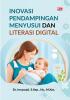
INOVASI PENDAMPINGAN MENYUSUI DAN LITERASI DIGITAL
Kata Kunci:
PENDAMPINGAN, MENYUSUI, LITERASI DIGITALSinopsis
Buku Inovasi Pendampingan Menyusui dan Literasi Digital membahas secara komprehensif tentang pentingnya pemberian ASI eksklusif serta tantangan yang dihadapi ibu menyusui di era modern. Buku ini diawali dengan uraian mengenai manfaat ASI bagi kesehatan ibu dan bayi, serta kaitannya dengan masalah gizi global seperti stunting. Penulis menyoroti rendahnya angka keberhasilan menyusui eksklusif di Indonesia, meskipun berbagai kebijakan dan program nasional telah diterapkan. Hal ini disebabkan oleh kurangnya pengetahuan, dukungan sosial, serta terbatasnya pendampingan bagi ibu menyusui, terutama setelah masa persalinan.
Bagian selanjutnya membahas berbagai faktor determinan yang mempengaruhi keberhasilan menyusui eksklusif, mulai dari aspek biologis, psikologis, sosial, hingga kebijakan publik. Buku ini menekankan pentingnya dukungan sosial melalui peran keluarga, tenaga kesehatan, dan masyarakat. Pendampingan oleh kelompok Dasa Wisma menjadi salah satu inovasi penting, karena kedekatan sosial dan geografis memungkinkan ibu memperoleh dukungan praktis dan emosional yang berkelanjutan. Pendampingan teman sebaya terbukti mampu meningkatkan kepercayaan diri ibu, mengatasi masalah menyusui, dan memperpanjang durasi pemberian ASI eksklusif.
Selain itu, buku ini menyoroti peran literasi media digital dalam mendukung keberhasilan menyusui di era teknologi. Banyak ibu mencari informasi tentang ASI melalui media sosial, namun sering kali menemukan informasi yang tidak akurat. Karena itu, penguatan literasi digital menjadi sangat penting agar ibu mampu memilah informasi yang benar dan berbasis ilmiah. Penulis mengusulkan model Pusat Pendampingan Menyusui berbasis komunitas dan teknologi digital sebagai solusi inovatif. Model ini menggabungkan edukasi, konseling, serta dukungan digital interaktif melalui aplikasi dan media sosial. Dengan pendekatan hybrid— tatap muka dan daring—model ini diharapkan dapat meningkatkan pengetahuan, kepercayaan diri, dan praktik menyusui eksklusif secara berkelanjutan.
Bab
-
KATA PENGANTAR
-
DAFTAR ISI
-
BAB 1. PENDAHULUAN
-
BAB 2. IBU MENYUSUI
-
BAB 3. MENYUSUI EKSKLUSIF
-
BAB 4. FAKTOR DETERMINAN MENYUSUI EKSKLUSIF
-
BAB 5. DUKUNGAN SOSIAL PADA IBU MENYUSUI
-
BAB 6. PERILAKU KESEHATAN
-
BAB 7. CAKUPAN ASI ESKLUSIF DAN KEBERHASILAN DALAM MENYUSUI EKSKLUSIF
-
BAB 8. PUSAT PENDAMPINGAN MENYUSUI
-
BAB 9. LITERASI MEDIA DIGITAL DALAM MENYUSUI
-
DAFTAR PUSTAKA
-
PROFIL PENULIS
Unduhan
Referensi
1. WHO, HRP. WHO Recommendations on Maternal and Newborn Care for a Positive Postnatal Experience (Executive Summary). World Health Organization; 2022.
https://www.ncbi.nlm.nih.gov/books/NBK579653/
2. UNICEF, WHO. The Extension of the 2025 Maternal, Infant and Young Child Nutrition Targets to 2030 : WHO/UNICEF Discussion Paper. United Nations Digital Library. New York; United Nations Children's Fund (UNICEF), World Health Organization; 2021.
https://digitallibrary.un.org/record/4016715?ln=en%3Fln%3Den&v=pdf
3. Reynolds R, Kingsland M, Daly J, et al. Breastfeeding Practices and Associations with Pregnancy, Maternal and Infant Characteristics in Australia: a Cross-Sectional Study. International Breastfeeding Journal. 2023;18(1):1-13.
https://doi.org/10.1186/s13006-023-00545-5
4. Meedya S, Hocking J, Atchan M, Burns E. Publicly Available Australian Hospital Data on Infant Feeding: A Review and Comparative Analysis of Outcomes. Women and Birth. 2024;37(5):101658.
https://doi.org/10.1016/j.wombi.2024.101658
5. Giang HTN, Duy DTT, Vuong NL, et al. Prevalence of Exclusive Breastfeeding for the First Six Months of An Infant’s Life and Associated Factors in a Low–Middle Income Country. International Breastfeeding Journal. 2023;18(47):1-11.
https://doi.org/10.1186/s13006-023-00585-x
6. Kemenkes RI. Profil Kesehatan Indonesia 2023. Jakarta: Kementerian Kesehatan Republik Indonesia; 2024.
7. Mohamed Ahmed SO, Ashgar RI, Mohammed Abdelgader AA, et al. Exclusive Breastfeeding: Impact on nfant hHealth. Clinical Nutrition Open Science. 2023;51:44-51.
https://doi.org/10.1016/j.nutos.2023.08.003
8. Saeed OB, Haile ZT, Chertok IA. Association Between Exclusive Breastfeeding and Infant Health Outcomes in Pakistan. Journal of Pediatric Nursing. 2020;50:62-68.
https://doi.org/10.1016/j.pedn.2019.12.004
10. Apara EF, Olawade DB, Olatunji GD, Kokori E, Aderinto N, Clement David-Olawade A. Factors Influencing Nursing Mothers’ Exclusive Breastfeeding Practices and Their Effects on Infants Aged Zero to Six Months in Nigeria: A Review of Current Evidence. Women and Child Nursing. 2024;2(3):49-55.
https://doi.org/10.1016/j.wcn.2024.07.001
11. Vidal-Batres M, Marquis GS, Pareja RG. Infant and Maternal Morbidity Symptoms as Predictors for the Interruption of Exclusive Breastfeeding in Lima, Peru: A Prospective Study. Journal of Pediatric Health Care. 2024;38(4):564-573.
https://doi.org/10.1016/j.pedhc.2024.02.003
12. WHO. Protecting, Promoting and Supporting Breastfeeding in Facilities Providing Maternity and Newborn Services. Geneva: World Health Organization; 2018.
https://www.who.int/publications/i/item/9789241550086
13. Paramashanti BA, Dibley MJ, Huda TM, Alam A. Breastfeeding Perceptions and Exclusive Breastfeeding Practices: A Qualitative Comparative Study in Rural and Urban Central Java, Indonesia. Appetite. 2022;170: 105907.
https://doi.org/10.1016/j.appet.2021.105907
14. Sabilla M, Laksono AD, Megatsari H. Determine the Promotion Target of Exclusive Breastfeeding Among Poor Families in Indonesia. Clinical Epidemiology and Global Health. 2025;32:101960.
https://doi.org/10.1016/j.cegh.2025.101960
15. Dinkes Kota Semarang. Profil Kesehatan Kota Semarang 2019. Semarang: Dinas Kesehatan Semarang; 2020:1-104.
16. Dinkes Jateng. Profil Kesehatan Jawa Tengah Tahun 2023. Semarang: Dinas Kesehatan Provinsi Jawa Tengah; 2024. https://dinkesjatengprov.go.id/v2018/dokumen/1Profil_Kesehatan_2023/files/downloads/Profil%20Kesehatan%20Jawa%20Tengah%202023.pdf
17. Forster DA, McLardie-Hore FE, McLachlan HL, et al. Proactive Peer (Mother-to-Mother) Breastfeeding Support by Tele-phone (Ringing up About Breastfeeding Early [RUBY]): A Multicentre, Unblinded, Randomised Controlled Trial. EClinicalMedicine. 2019;8:20-28.
https://doi.org/10.1016/j.eclinm.2019.02.003
18. Gebeyehu NA, Tegegne KD, Shewangashaw NE, Biset G, Abebaw N, Tilahun L. Knowledge, Attitude, Practice and Determinants of Exclusive Breastfeeding Among Women in Ethiopia: Systematic Review and Meta-analysis. Public Health in Practice. 2023;5:100373.
https://doi.org/10.1016/j.puhip.2023.100373
19. Jalil H, Chong MC, Jalaludin MY, Wong LP, Hmwe NTT. Knowledge, Attitude, and Practice Among Mothers Toward Breast-feeding and Complementary Feeding in Community Health Setting, Malaysia. Heliyon. 2024;10(21):e39746.
https://doi.org/10.1016/j.heliyon.2024.e39746
20. Alabi TA, Adejoh SO, Atinge S, Umahi E. Social and Bio-Medical Predictors of Exclusive Breastfeeding Among Nursing Mothers in Lagos and Taraba States, Nigeria. Journal of Pediatric Nursing. 2020;52:96-102.
https://doi.org/10.1016/j.pedn.2019.12.002
21. Lojander J, Axelin A, Niela-Vilén H. Breastfeeding Exclusivity, Difficulties, and Support in The First Days After Hospital Discharge: A Correlational Study. European Journal of Obstetrics & Gynecology and Reproductive Biology. 2024;296:76-82.
https://doi.org/10.1016/j.ejogrb.2024.02.029
22. Ickes SB, Oddo VM, Sanders HK, et al. Formal Maternal Employment is Associated with Lower Odds of Exclusive Breastfeeding by 14 Weeks Postpartum: A Cross-Sectional Survey in Naivasha, Kenya. The American Journal of Clinical Nutrition. 2021;113(3): 562-573.
https://doi.org/10.1093/ajcn/nqaa351
23. Fajar NA, Ananingsih ES, Sulaningsi K, Firdaust M, Yudhastuti R, Diana, Riris, Zen Rahfiludin M. Social Determinant of Health on Exclusive Breastfeeding Practice in South Sumatra, Indonesia. Malaysian Journal of Medicine and Health Sciences. 2024;20: 163-169.
https://doi.org/10.47836/mjmhs.20.s9.27
24. Mccarthy E, Vries J De, Gallagher L. Women’ s Perspectives on the Role and Impact of Breastfeeding Support Groups in Ireland. Midwifery. 2024;139:104181.
https://doi.org/10.1016/j.midw.2024.104181
25. Sultana M, Dhar S, Hasan T, et al. Knowledge, Attitudes, and Predictors of Exclusive Breastfeeding Practice Among Lactating Mothers in Noakhali, Bangladesh. Heliyon. 2022;8(10).
https://doi.org/10.1016/j.heliyon.2022.e11069
26. Awoke S, Mulatu B. Determinants of Exclusive Breastfeeding Practice Among Mothers in Sheka Zone, Southwest Ethiopia: A Cross-Sectional Study. Public Health in Practice. 2021;2:100108.
https://doi.org/10.1016/j.puhip.2021.100108
27. Khan MMI, Kabir MR. Prevalence and Associated Factors of Early Cessation of Exclusive Breastfeeding Practice in Noakhali, Bangladesh: A Mixed-Method Study. Journal of Pediatric Nursing. 2021:44-53. https://doi.org/10.1016/j.pedn.2020.12.017
28. Chowdhury AR, Surie A, Bhan G. Breastfeeding Knowledge and Practices of Working Mothers in The Informal Economy in New Delhi: A Formative Study to Explore New Intervention Pathways Towards Improved Maternal and Child Health Outcomes. Social Science & Medicine. 2021;281:114070.
https://doi.org/10.1016/j.socscimed.2021.114070
29. Girma D, Abita Z. Rural Versus Urban Variations of Factors Associated with Early Initiation of Breastfeeding in Ethiopia. Heliyon. 2024;10(13).