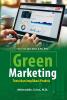
GREEN MARKETING: Teori dan Implikasi Praktis
Kata Kunci:
green marketing, teori dan implikasiSinopsis
Buku Green Marketing: Teori dan Implikasi Praktis menyajikan pemahaman komprehensif mengenai konsep, strategi, dan penerapan pemasaran hijau dalam berbagai konteks industri dan skala usaha. Melalui pendekatan teoritis yang didukung dengan studi empiris dan praktik terbaik, buku ini mengupas secara mendalam bagaimana perusahaan dapat mengintegrasikan nilai-nilai keberlanjutan ke dalam strategi pemasarannya, sekaligus membangun keunggulan kompetitif yang berkelanjutan di tengah meningkatnya tuntutan konsumen dan regulasi lingkungan.
Pembahasan dimulai dari landasan konseptual green marketing, perkembangan sejarah, dan relevansinya di era modern, kemudian berlanjut pada analisis perilaku konsumen hijau, strategi bauran pemasaran ramah lingkungan, hingga tantangan dan peluang yang dihadapi oleh pelaku usaha di negara berkembang. Penulis juga menyoroti penerapan green marketing pada berbagai sektor industri—mulai dari manufaktur, jasa, hingga UMKM—serta mengulas peran teknologi digital, inovasi, dan kebijakan publik dalam mempercepat transisi menuju praktik bisnis berkelanjutan (Hisanan et al., 2024).
Dilengkapi dengan kutipan dari pakar pemasaran, studi kasus aktual, serta daftar pustaka yang luas, buku ini dirancang sebagai referensi akademis sekaligus panduan praktis bagi mahasiswa, peneliti, pelaku bisnis, dan pembuat kebijakan. Dengan menggabungkan perspektif global dan lokal, buku ini tidak hanya menguraikan teori, tetapi juga menawarkan panduan langkah demi langkah untuk mengimplementasikan strategi pemasaran hijau yang efektif dan relevan dengan dinamika pasar saat ini.
Bab
-
Kata Pengantar
-
Daftar Isi
-
BAB 1 - Pengantar
-
BAB 2 - Teori-Teori Dasar Pemasaran Hijau
-
BAB 3 - Segmentasi, Targeting, dan Positioning dalam Green Marketing
-
BAB 4 - Strategi Produk dan Inovasi Ramah Lingkungan
-
BAB 5 - Strategi Harga dalam Green Marketing
-
BAB 6 - Strategi Distribusi dan Rantai Pasok Berkelanjutan
-
BAB 7 - Strategi Komunikasi dan Promosi Green Marketing
-
BAB 8 - Perilaku Konsumen terhadap Produk Hijau
-
BAB 9 - Implementasi Praktis Green Marketing di Berbagai Industri
-
BAB 10 - Tantangan dan Peluang Green Marketing
-
Daftar Pustaka
-
Profil Penulis
Unduhan
Referensi
Biswas, A., & Roy, M. (2015). Green products: An exploratory study on the consumer behaviour in emerging economies of the East. Journal of Cleaner Production, 87(1), 463–468. https://doi.org/10.1016/j.jclepro.2014.09.075
Carter, C. R., & Rogers, D. S. (2008). A framework of sustainable supply chain management: Moving toward new theory. International Journal of Physical Distribution & Logistics Management, 38(5), 360–387. https://doi.org/10.1108/09600030810882816
Chen, Y. S. (2010). The drivers of green brand equity: Green brand image, green satisfaction, and green trust. Journal of Business Ethics, 93(2), 307–319. https://doi.org/10.1007/s10551-009-0223-9
Dangelico, R. M., & Vocalelli, D. (2017). “Green Marketing”: An analysis of definitions, strategy steps, and tools through a systematic review of the literature. Journal of Cleaner Production, 165, 1263–1279. https://doi.org/10.1016/j.jclepro.2017.07.184
Delmas, M. A., & Burbano, V. C. (2011). The drivers of greenwashing. California Management Review, 54(1), 64–87. https://doi.org/10.1525/cmr.2011.54.1.64
Ferdianto, J. R., Nafiati, D. A., Mahmuddin, P. N. A., Adur, V. R. B., Prihatiningrum, R. Y., Rismawati, F., & Claudia, M. Pengantar Bisnis.
Gleim, M. R., Smith, J. S., Andrews, D., & Cronin, J. J. (2013). Against the green: A multi-method examination of the barriers to green consumption. Journal of Retailing, 89(1), 44–61. https://doi.org/10.1016/j.jretai.2012.10.001
Griskevicius, V., Tybur, J. M., & Van den Bergh, B. (2010). Going green to be seen: Status, reputation, and conspicuous conservation. Journal of Personality and Social Psychology, 98(3), 392–404. https://doi.org/10.1037/a0017346
Henninger, C. E., Alevizou, P. J., & Oates, C. J. (2016). What is sustainable fashion? Journal of Fashion Marketing and Management, 20(4), 400–416. https://doi.org/10.1108/JFMM-07-2015-0052
Hisanan, H., Mahmuddin, M., & Wati, F. W. (2024). Pengaruh Literasi Digital Terhadap Minat Berwirausaha Pada Mahasiswa Kewirausahaan Fakultas Ekonomi Universitas Negeri Makassar. Economics and Digital Business Review, 5(2), 721–728. https://doi.org/10.37531/ecotal.v5i2.1390
Hultman, M., & Kazeminia, A. (2015). International green marketing: A review and conceptual framework for future research. International Marketing Review, 32(3-4), 333–356. https://doi.org/10.1108/IMR-03-2014-0094
Joshi, Y., & Rahman, Z. (2015). Factors affecting green purchase behaviour and future research directions. International Strategic Management Review, 3(1-2), 128–143. https://doi.org/10.1016/j.ism.2015.04.001
Kirchoff, J. F., Koch, C., & Nichols, B. S. (2011). Stakeholder perceptions of green marketing: The effect of demand and supply integration. International Journal of Physical Distribution & Logistics Management, 41(7), 684–696. https://doi.org/10.1108/09600031111154146
Kotler, P., & Armstrong, G. (2018). Principles of marketing (17th ed.). Pearson Education.
Leonidou, C. N., Leonidou, L. C., Palihawadana, D., & Hultman, M. (2011). Evaluating the green advertising practices of international firms: A trend analysis. International Marketing Review, 28(1), 6–33. https://doi.org/10.1108/0265 1331111107080
Min, H., & Kim, I. (2012). Green supply chain research: Past, present, and future. Logistics Research, 4(1-2), 39–47. https://doi.org/10.1007/s12159-012-0071-3
Nielsen. (2015). The sustainability imperative: New insights on consumer expectations. Nielsen Global Survey of Corporate Social Responsibility and Sustainability. https://www. nielsen.com/us/en/insights/report/2015/the-sustainability-imperative
Ottman, J. A. (2011). The new rules of green marketing: Strategies, tools, and inspiration for sustainable branding. Berrett-Koehler Publishers.
Ottman, J. A., Stafford, E. R., & Hartman, C. L. (2006). Avoiding green marketing myopia: Ways to improve consumer appeal for environmentally preferable products. Environment: Science and Policy for Sustainable Development, 48(5), 22–36. https://doi.org/10.3200/ENVT.48.5.22-36
Parguel, B., Benoît-Moreau, F., & Larceneux, F. (2011). How sustainability ratings might deter ‘greenwashing’: A closer look at ethical corporate communication. Journal of Business Ethics, 102(1), 15–28. https://doi.org/10.1007/s10551-011-0901-2
Peattie, K., & Crane, A. (2005). Green marketing: Legend, myth, farce or prophesy? Qualitative Market Research: An International Journal, 8(4), 357–370. https://doi.org/10.1108/1352275 0510619733
Peters, A., & Driel, H. V. (2016). The automotive industry and the environment: Toward sustainable mobility. Business History Review, 90(3), 489–511. https://doi.org/10.1017/S0007 680516000601
Rahbar, E., & Wahid, N. A. (2011). Investigation of green marketing tools' effect on consumers’ purchase behavior. Business Strategy Series, 12(2), 73–83. https://doi.org/10.1108/ 17515631111114877
Rex, E., & Baumann, H. (2007). Beyond ecolabels: What green marketing can learn from conventional marketing. Journal of Cleaner Production, 15(6), 567–576. https://doi.org/10.1016 /j.jclepro.2006.05.013
Singh, G., & Pandey, N. (2012). Green marketing: Policies and practices for sustainable development. Integral Review: A Journal of Management, 5(1), 22–30.
Srivastava, S. K. (2007). Green supply‐chain management: A state‐of‐the‐art literature review. International Journal of Management Reviews, 9(1), 53–80. https://doi.org/10.1111/j.1468-2370.2007.00202.x
Sudarmi, Awaluddin, M., Syam, A., & Mahmuddin. (2024). Tren Fashion Syariah dalam Digitalisasi Marketing di Era Milineal dan Gen Z. Economic Reviews Journal, 3(3), 2172 –. https://doi.org/ 10.56709/mrj.v3i3.329
Vermeir, I., & Verbeke, W. (2008). Sustainable food consumption among young adults in Belgium: Theory of planned behaviour and the role of confidence and values. Ecological Economics, 64(3), 542–553. https://doi.org/10.1016/j.ecolecon.2007. 03.007
Wells, P., & Seitz, M. (2005). Business models and closed-loop supply chains: A typology. Supply Chain Management: An International Journal, 10(4), 249–251. https://doi.org/ 10.1108/ 13598540510612712
Young, W., Hwang, K., McDonald, S., & Oates, C. J. (2010). Sustainable consumption: Green consumer behaviour when purchasing products. Sustainable Development, 18(1), 20–31. https://doi.org/10.1002/sd.394
Zhu, Q., & Geng, Y. (2013). Drivers and barriers of extended supply chain practices for energy saving and emission reduction among Chinese manufacturers. Journal of Cleaner Production, 40, 6–12. https://doi.org/10.1016/j.jclepro.2010.09.017