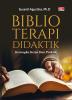
BIBLIOTERAPI DIDAKTIK: Kerangka kerja dan praktik
Kata Kunci:
biblioterapi, didaktikSinopsis
Buku ajar ini dirancang untuk mendukung pustakawan, guru, dan terapis dalam memahami dan menerapkan biblioterapi secara sistematis dan terstruktur. Dengan memanfaatkan bahan bacaan sebagai alat untuk pengembangan diri, pengelolaan emosi, dan peningkatan kesejahteraan mental, biblioterapi dapat menjadi pendekatan yang efektif dalam berbagai konteks, termasuk pendidikan dan kesehatan mental.
Isi buku ini mencakup konsep dasar biblioterapi, kerangka kerja holistik untuk evaluasi bahan bacaan, serta panduan praktis dalam pelaksanaan biblioterapi. Buku ini juga dilengkapi dengan modul pelatihan, studi kasus, dan alat bantu seperti template evaluasi dan daftar referensi bahan bacaan untuk berbagai kelompok usia. Semua ini dirancang untuk memberikan panduan komprehensif bagi praktisi yang ingin menerapkan biblioterapi secara profesional.
Bab
-
KATA PENGANTAR
-
DAFTAR ISI
-
DAFTAR GAMBAR
-
DAFTAR TABEL
-
BAB 1 PENDAHULUAN
-
BAB 2 KONSEP DASAR BIBLIOTERAPI
-
BAB 3 BIBLIOTERAPI DIDAKTIK: PERSPEKTIF DAN PENDEKATAN
-
BAB 4 KERANGKA KERJA HOLISTIK UNTUK EVALUASI BAHAN BACAAN
-
BAB 5 PEMILIHAN DAN PENILAIAN BAHAN BACAAN UNTUK BIBLIOTERAPI
-
BAB 6 IMPLEMENTASI BIBLIOTERAPI DALAM PENDIDIKAN
-
BAB 7 BIBLIOTERAPI UNTUK KESEJAHTERAAN EMOSI
-
BAB 8 PELATIHAN UNTUK PRAKTISI BIBLIOTERAPI
-
BAB 9 PENELITIAN DAN PENGEMBANGAN BIBLIOTERAPI
-
BAB 10 ALAT DAN REFERENSI PRAKTIS
-
MODEL, KEBIJAKAN, PRODUK, DAN POLICY BRIEF UNTUK BIBLIOTERAPI
-
DAFTAR PUSTAKA
-
INDEKS
-
PROFIL PENULIS
Unduhan
Referensi
Agustina, S., Setiawati, N. L., Johan, R. C., & Hadiapurwa, N. A. (2025). Didactic bibliotherapy for character and moral development. Record and Library Journal, 11(1), 187–200. https://doi.org/10.20473/rlj.v11-i1.2025.187-200
Agustina S. Perpustakaan Sebagai Wahana Terapi yang Ramah Disabilitas: Implementasi Biblioterapi di Perpustakaan Lingkungan Pendidikan. Edulib [Internet]. 2014;4(2). Available from:
http://dx.doi.org/10.17509/edulib.v4i2.1137
Agustina, S. (2018, April 21). Biblioterapi Didaktika: Seni Mengolah Literatur Anak Sebagai Bahan Terapi Buku. In ResearchGate. Seminar Nasional Perempuan Peneliti Sastra Anak, Jakarta, Perpustakaan Nasional Republik Indonesia, Indonesia.
Alao A, Adekeye O, Gesinde A, Adeusi S, Agoha B, Idiegbeyan-ose J, et al. The role of librarians in health information provision for depression reduction. 2020 [cited 2024 Mar 22]; Available from:
https://digitalcommons.unl.edu/libphilprac/3565
Arini, L. A., & Novikayati, I. (2021). Biblioterapi untuk mereduksi kecemasan pada klien General Anxiety Disorder (GAD). Psyche Jurnal Psikologi, 3(2), 153–162. https://doi.org/10.36269/psyche.v3i2.311
Biscan, F., & Krpan, K. (2023). Developing critical thinking among children and bibliotherapy in the library. Knjižnica Revija Za Področje Bibliotekarstva in Informacijske Znanosti, 67(1–2), 121–135. https://doi.org/10.55741/knj.67.1-2.7
Brewster, E. An investigation of experiences of reading for mental health and well-being and their relation to models of bibliotherapy. Diss. University of Sheffield. 2011.
Brewster L, Sen B, Cox A. Legitimising bibliotherapy: evidence‐based discourses in healthcare. J Doc [Internet]. 2012;68(2):185–205. Available from: http://dx.doi.org/10.1108/00220411211209186
Brewster L, Sen B, Cox A. Mind the gap: Do librarians understand service user perspectives on bibliotherapy? Libr Trends [Internet]. 2013;61(3):569–86. Available from: http://dx.doi.org/10.1353/lib.2013.0001
Brewster L, McNicol S. Bibliotherapy in practice: a person-centred approach to using books for mental health and dementia in the community. Med Humanit [Internet]. 2021;47(4):e12–e12. Available from: http://dx.doi.org/10.1136/medhum-2020-011898
Canty N. Bibliotherapy. Logos [Internet]. 2017;28(3):32–40. Available from: http://dx.doi.org/10.1163/1878-4712-11112133
Carty S, Thompson L, Berger S, Jahnke K, Llewellyn R. Books on Prescription – community‐based health initiative to increase access to mental health treatment: an evaluation. Aust N Z J Public Health [Internet]. 2016;40(3):276–8. Available from: http://dx.doi.org/10.1111/1753-6405.12507
Chaer, H., Sirulhaq, A., & Rasyad, A. (2020). Membaca: Sebagai meditasi pikiran dan bahasa. Lingua Scientia Jurnal Bahasa, 11(1). https://doi.org/10.21274/ls.2019.11.1.161-182
De Vries, D., Brennan, Z., Lankin, M., Morse, R., Rix, B., & Becl, T. (2017). Healing with Books: A literature review of bibliotherapy used with children and youth who have experienced trauma. Therapeutic Recreation Journal, 51(1), 48–74. https://doi.org/10.18666/trj-2017-v51-i1-7652
Faikusa, N. M. Y., Nagul, N. W., & Margaretha, N. D. (2024). Efektivitas penerapan teknik bibliotherapy melalui konseling individual untuk peningkatan konsep diri siswa kelas VIII A SMPN St. Yoseph Noelbaki Kupang tahun pelajaran 2023/2024. Morfologi Jurnal Ilmu Pendidikan Bahasa Sastra Dan Budaya, 2(2), 98–108. https://doi.org/10.61132/morfologi.v2i2.440
Graneheim UH, Lundman B. Qualitative content analysis in nursing research: concepts, procedures and measures to achieve trustworthiness. Nurse Educ Today [Internet]. 2004;24(2):105–12. Available from: http://dx.doi.org/10.1016/j.nedt.2003.10.001
Gupta VK, Mishra R, Saini PK. Bibliotherapy: A therapeutic adjuvant in medicine. Gyankosh- J Libr Inf Manag [Internet]. 2017;8(1):32. Available from: http://dx.doi.org/10.5958/2249-3182.2017.00004.1
Hang Y, Wildemuth BM. Qualitative Analysis of Content. In: Wildemuth BM, editor. Applications of Social Research Methods to Questions in Information and Library Science. Westport, CT: Libraries Unlimited; 2009. p. 308–19.
Hanifah, D. P., & Lestiyanawati, R. (2023). Kajian Sastra Anak “Biji Semangka Ajaib” dalam Penerapan Pendidikan Karakter Berbasis Biblioterapi Didaktik. Jurnal Elementaria Edukasia, 6(2), 263-275.
Hutchinson, E. Bibliotherapy Programmes in Dublin Public Libraries: A Case-Study of Dublin City, Fingal and South Dublin Public Library Services. QQML Journal /Special Issue 2014 Social Justice, Social Inclusion [Internet]. Qqml.net. [cited 2024 Mar 22]. Available from: http://qqml.net/Special_Issue_2014_Social_Justice_Social_Inclusion.html.
Jack, S. J., & Ronan, K. R. (2008). Bibliotherapy. School Psychology International, 29(2), 161–182. https://doi.org/10.1177/0143034308090058
Janavičienė, D. Bibliotherapy process and type analysis: Review of possibilities to use it in the library. Bridges/Tiltai 53 (4):119–32. 2010.
Jensen, L. (2020). The Effects of Bibliotherapy on Students Experiencing Grief, Loss, and Trauma. Counselor Education Capstones. https://openriver.winona.edu/cgi/viewcontent.cgi?article=1148&context=counseloreducationcapstones
Khoeini, S., A. Noruzi, and F. Fahimnia. 2019. The implementation of bibliotherapy from the viewpoint of LIS and Psychology professionals with an emphasis on the role of librarians. Journal of Studies in Library and Information Science 11 (1):89–104. https://doi:10.22055/slis.2017.16007.1163
Kim, Y., Lee, S. Y., Jun, M., & Shim, T. (2025). STEM Students’ Perceptions of Classical Reading: A Q-Methodology Study on Well-Being-Related Experiences. Behavioral Sciences, 15(8), 1074. https://doi.org/10.3390/bs15081074
Krippendorff, K. Content Analysis: An Introduction to Its Methodology (4th ed.). Thousand Oaks, CA: Sage Publications; 2019.
Kusumastuti, A., Khoiron, A. M., & Achmad, T. A. (2021). Metode penelitian kuantitatif. Deepublish.
Levin, M. E., An, W., Davis, C. H., & Twohig, M. P. (2020). Evaluating Acceptance and Commitment Therapy and Mindfulness-Based Stress Reduction Self-Help books for college Student Mental health. Mindfulness, 11(5), 1275–1285. https://doi.org/10.1007/s12671-020-01344-3
Lune H, Berg BL. Qualitative research methods for the social sciences, global edition. 9th ed. London, England: Pearson Education; 2017.
McCaffrey K. Bibliotherapy: How Public Libraries Can Support their Communities’ Mental Health. Dalhous J Interdiscip Manag [Internet]. 2016;12(1). Available from: http://dx.doi.org/10.5931/djim.v12i1.6452
Mika, M. J. C., & Saputra, R. (2025). Peran perpustakaan perguruan tinggi sebagai terapi kesehatan mental mahasiswa. Unilib : Jurnal Perpustakaan. https://doi.org/10.20885/unilib.Vol16.iss2.art4
Nasution, F. H., Risnita, Jailani, M. S., & Junaidi, R. (2024, July 30). Kombinasi (Mixed -Methods) dalam praktis penelitian ilmiah.
https://ejournal.uncm.ac.id/index.php/gm/article/view/1145
Neville P. Prose not Prozac? The role of book prescription schemes and healthy reading schemes in the treatment of mental illness in Ireland. Health Sociol Rev [Internet]. 2013;22(1):19–36. Available from:
http://dx.doi.org/10.5172/hesr.2013.22.1.1
Noor, T. R. (2021). Bibliotherapy sebagai upaya meningkatkan keterampilan interpersonal remaja. Jurnal Studia Insania, 8(2), 164. https://doi.org/10.18592/jsi.v8i2.3974
Oyewusi, F., M. F. S. Nicolau, K. A. Aramide, and F. A. Messakh 2019. Librarian’s roles on students who are hurt: A comparative study of two countries. In International Association of School Librarianship Conference. 21-25 October 2019. Dubrovnik, Croatia https://doi.org/10.29173/iasl7399
Rahmawati, D. (2022). Mengatasi Problematika Kemampuan Penyesuaian Diri (Risilien) Dengan Teknik Bibliokonseling. Penerbit P4I.
Rizal, M. A. S. (2024). Memperkuat kesejahteraan mental melalui Sastra: Sebuah tinjauan literatur. Innovative: Journal Of Social Science Research, 4(4), 8285-8299. https://doi.org/10.31004/innovative.v4i4.13439
Roosinda, F. W., Lestari, N. S., Utama, A. G. S., Anisah, H. U., Siahaan, A. L. S., Islamiati, S. H. D., ... & Fasa, M. I. (2021). Metode penelitian kualitatif. Zahir Publishing.
Singh, V., Kumar, A., & Gupta, S. (2022). Mental Health Prevention and Promotion—A Narrative Review. Frontiers in Psychiatry, 13. https://doi.org/10.3389/fpsyt.2022.898009
Roller, M. R., & Lavrakas, P. J. Applied Qualitative Research Design: A Total Quality Framework Approach. New York: Guilford Press; 2015.
Salifa MP, Agustina S. Analisis Film Surga Yang Tak Dirindukan 2 Sebagai Self Help Biblioterapi. JPUA: Jurnal Perpustakaan Universitas Airlangga: Media Informasi dan Komunikasi Kepustakawanan [Internet]. 2021;11(1):51. Available from:
http://dx.doi.org/10.20473/jpua.v11i1.2021.51-64
Shestakova, K., Gnatchuk, O., Yenhalycheva, I., Korolenko, V., & Iievliev, O. (2023). Modern didactic methods in the formation of moral values and training of future social workers. Cadernos De Educação Tecnologia E Sociedade, 16(se2), 20–39.
https://doi.org/10.14571/brajets.v16.nse2.30-39
Srivastava, R., & Jaiswal, B. (2025). Ready or not? Exploring use of bibliotherapy by academic librarians to encourage holistic development of students. College & Undergraduate Libraries, 1–23.
https://doi.org/10.1080/10691316.2025.2487000
Tasijawa, F. A., Kurniawan, R. A., & Aliyudin, N. (2021). Penerapan biblioterapi dalam kesehatan jiwa: Scoping Review. Jurnal Keperawatan Florence Nightingale, 4(2), 52–58. https://doi.org/10.52774/jkfn.v4i2.76
Wahyudi, A., Setyowati, A., & Partini, S. (2020). Biblioterapi: Pengembangan Resiliensi Individu di Era Covid 19. Prosiding Seminar Bimbingan Dan Konseling, 0(0). http://conference.um.ac.id/index.php/bk2/article/view/73
Yasar, A. B. (2024). A randomized controlled trial of the effect of cognitive behavioral therapy-based self-help psychotherapy books on anxiety and depressive symptoms: A bibliotherapy study. Dusunen Adam the Journal of Psychiatry and Neurological Sciences, 5–14. https://doi.org/10.14744/dajpns.2024.00232
Yohanes, F. D. P. (2025). Penerapan Biblioterapi Melalui Novel Perahu Kertas untuk Menurunkan Depresi Ringan pada Remaja. Jurnal Sosial Dan Sains, 5(5), 1196–1204. https://doi.org/10.59188/jurnalsosains.v5i5.32167