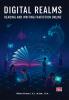
DIGITAL REALMS: Reading And Writing Fanfiction Online
Kata Kunci:
Fanfiction OnlineSinopsis
As the digital age reshapes the way we read and write, fanfiction has emerged as one of the most vibrant forms of participatory. Through platforms such as Wattpad, Webtoon, Archive of Our Own (AO3) and Character.AI, readers are no longer mere consumers of stories but active creators, reimagining characters, words, and narratives in ways that reflect their own voices and perspectives.
This book focuses on exploring fanfiction as a powerful medium of digital literature, highlighting the ways in which online platforms and social media foster creativity, collaboration, and community. It aims to help students, educators, and enthusiasts understand the structures, genres, and cultural significance of fanfiction, while also offering practical guidance on reading, writing, and publishing in the digital realm. Through examples, discussions, and assignments, readers are encouraged to analyze existing works, experiment with different forms, create their own original pieces inspired by fandom culture.
Bab
-
FOREWORD
-
TABLE OF CONTENTS
-
CHAPTER 01 FANFICTION
-
CHAPTER 02 READING FANFICTION AND WATTPAD
-
CHAPTER 03 READING FANFICTION AND WEBTOON
-
CHAPTER 04 READING FANFICTION AND ARCHIVE OF OUR OWN (AO3)
-
CHAPTER 05 WRITING FANFICTION AND ALTERNATE UNIVERSE (AU)
-
CHAPTER 06 WRITING FANFICTION AND CHARACTER.AI (C.AI)
-
BIOGRAPHY
Unduhan
Referensi
Black, R. W. (2007). Fanfiction writing and the construction of space. E-Learning, 4(4):384–397.
Fagan, E. (2020, September 26). The importance of fanfiction. The Nerd Daily. From thenerddaily. https://thenerddaily.com/the-importance-of-fanfiction/
Inkling Creative. (2025). The surprising benefits of writing fan fiction. From inklingcreative. https://www.inklingcreative.work/post/the-surprising-benefits-of-writing-fan-fiction
Lee, S. (2025). FanFiction in the Digital Age How the Internet and Social Media have Revolutionized Fan Fiction. Number Analytics. https://www.numberanalytics.com/blog/fan-fiction-in-the-digital-age
Lipton, J. D. (2014). Copyright and the Commercialization of Fanfiction. Vol. 52, Iss: 2, pp 3989.
Oliveria, B. D. (2013). Fanfictions e o Papel do Fã na Era da Transmídia/Fanfictions and the Fan Role in the Age of Transmedia. Vol. 3, Iss: 1, pp 1-14
Saray, Y. (2020). From the “Fluff” to the “Angst”. The most popular Fanfiction genres. From Medium. https://medium.com/@ysgomez/from-the-fluff-to-the-angst-the-most-popular-fanfiction-genres-270379d2559
Thomas, B. (2011). What is fanfiction and why are people saying such nice things about it? Story Worlds: A Journal of Narrative Studies, 3:1–24.
Uckelman, S.L. (2018). Fanfiction, Canon, and Possible Worlds. https://philarchive.org/archive/UCKFCA
Wolfe, S. (2025). Top fanfiction sites to upload fanfiction. From MyBookCave. (n.d.). https://mybookcave.com/authorpost/top-fanfiction-sites-to-upload-fanfiction/
Zezylyn. (2025). An introduction to fanfiction. Digital Media, Society, and Culture. From digmedia.luchdh.nl. https://digmedia.lucdh.nl/2024/10/07/an-introduction-to-fanfiction/
Al Falaq, J. S., Suprayogi, S., Susanto, F. N., & Husna, A. U. (2021). Exploring The Potentials of Wattpad For Literature Class. Indonesian Journal of Learning Studies (IJLS), 1(2), 98-105.
Al-Sharqi, L., & Abbasi, I. S. (2020). The Influence of Technology on English Language and Literature. English Language Teaching, 13(7), 1-7.
Astutiningsih, I. (2012). Looking Into Cyber Space: Fan Fiction Online as a Creative Writing. Jurnal Pengembangan Pendidikan, 9(2), 210254.
Bheda, J. B. (2023). Impact of Internet on language and literature. Vidhyayana-An International Multidisciplinary Peer-Reviewed E-Journal-ISSN 2454-8596, 8(6)
Budiarto, A., Chairunissa, R., & Fitriani, A. (2021). Motivation behind writing fanfictions for digital authors on wattpad and twitter. Alphabet: A Biannual Academic Journal on Language, Literary, and Cultural Studies, 4(1), 48-53.
Chapman, G. (2018). Writers and readers go mobile and social at Wattpad. GMA News Online.
Fitriyah, A., Nisa, R. F. A., & Pandin, M. G. R. (2022). The Popularity of The Wattpad Application in Increasing Millennial Generation’s Literacy Through Literary Works.
Hoch, E. (2022). Wattpad. com and fanfiction. de on the rise: How online writing platforms open up literary discourse. TXT, 8, 111-123.
Pratiwi, S., & Dewi, T. U. (2023). Pemanfaatan Wattpad Sebagai Media Literasi Digital. Khazanah Pendidikan, 17(2), 229-236.
Rochester, S. (2019). 6. Telling Stories or Selling Stories: Writing for Pleasure, Writing for art or Writing to Get Paid?. Whose Book is it Anyway?, 129.
Sinaga, R., Simanjuntak, S. E., Ginting, M. N., Tarigan, F., & Pinem, A. B. (2024). Empowering digital literacy through Wattpad: Bridging creativity, reading, and writing in education. Jurnal Pengabdian Masyarakat dan Riset Pendidikan, 2(3), 157-161.
Widiasmara, I. K. (2023). Using Wattpad as a media to foster better literacy skills: Extensive reading and creative writing. Journal of Linguistics, Literacy, and Pedagogy, 2(2), 118-125.
Winiecka, E. (2020). Literary internet: online criticism and literary communication. Porównania, 27(2), 289-311.
Yatrakis, C. (2013). Fan Fiction, Fandoms, and Literature: Or, why It's Time to Pay Attention to Fan Fiction (Doctoral dissertation, DePaul University).
Alexjones. (2025). Webtoons: The Evolution of Digital Comics and Their Cultural Impact. Magnacart. https://magnacartadocumentary.com/webtoons-the-evolution-of-digital-comics-and-their-cultural-impact/
Ministry of Culture, Sports and Tourism. “Addressing Long-Standing Challenges in the Cartoon Industry Through Legal Framework - Amendment to the ‘Promotion of Cartoons Act,’ Including the Definition of ‘Webtoon’ and Recommendation for Standard Contract Usage, Passed in the National Assembly Plenary Session on February 27.” February 27, 2023.
Mucshin, A, H., and Rachman, V, S. (2024). Webtoon Design with Alternative Universe Theme. International Journal of Educational Technology and Artificial Intelligence. 3(1), 13-17.
Kim, S., Park, K., Kim, B., Joo, H., and Hyun, Y. (2025). A Digital Creative Industry, Webtoons: With a Focus on the Thai Webtoon Market. Journal of Urban Culture Research. 28, 62-73. https://doi.org/10.14456/jucr.2025.5
Cho, H., Adkins D., Kohlburn, J,. and Castaño, W. (2025). Webtoon: The Confluence of Platformization, Snack Culture, and the New Korean Wave. A Journal of Reference & User Experience. 60(3), 126- 139. https://doi.org/10.5860/rusq.60.3.8427
Black, E. (2021). “There’s A Tag for That”: An Exploratory Study of Tag Functions in the Archive of Our Own.
Dalton, K. L. (2012). Searching the archive of our own: The usefulness of the tagging structure (Master's thesis, The University of Wisconsin-Milwaukee).
McCullough, H. (2023). Archive of Our Own: https://archiveofourown. org. American Journalism, 40(1), 132-134.
Price, L. (2019). Fandom, Folksonomies and Creativity: the case of the Archive of Our Own.
Riley, O. (2015). Archive of Our Own and the Gift Culture of Fanfiction.
Chowdhury, S. (2021, October 14). Swords, capes, fanart, and fanfiction: Delving deeper into the Copyright Act, 1957. iPleaders. From https://blog.ipleaders.in/swords-capes-fanart-and-fanfiction-delving-deeper-into-the-copyright-act-1957/
Easterling J. (2023). Is Fanfiction Legal? A Lawyer's Guide to Copyrights & Avoiding Lawsuits. Novelpad. From https://novelpad.co/blog/is-fanfiction-legal
Gold, J. (2012). When does fan fiction cross an ethical line? From https://jamigold.com/2012/03/when-does-fan-fiction-cross-an-ethical-line/
Pamugari, D. (2020). Alternate Universe Phenomenon on Twitter. https://www.cxomedia.id/art-and-culture/20220131165807-24-173526/alternate-universe-phenomenon-on-twitter
Rara, J.,B.A & Silih, W,.(2023). X Users’ Perspectives Toward The Use Of Alternate Universe As An Online Platform To Improve EFL Writing Skill. Jurnal Cahaya Pendidikan. 9(2), 155-163, https://doi.org/10.33373/chypend.v9i2.5636
Sauro, S. (2019). Fan fiction and English language learning. In S. Looney, J. Tassone, & S. Sauro (Eds.), The Routledge handbook of language learning and technology. Routledge.
Thomas, E. E. & Stornaiuolo, A. (2016). Restorying the Self: Bending Toward Textual Justice. Harvard Educational Review. 86(3), 313-338.
Wahyuni, A. K. T. (2025). Media Transformation of Alternate Universe (AU) Using Kpop Artists’ Visual Claims into Novel Form. A Journal of Language, Culture, and Technology, 2(2), 16 – 24.https://doi.org/10.24002/lj.v2i2.10465
Yuliarti, M. S. (2024) Female Fandom in The Digital Era: ‘Alternative Universe’ for Promoting Thai Boys Love Drama. Jurnal Komunikasi Indonesia, 13 (2), 289-303
Yulita, R. (2022). The rise of the AU genre follows the development of fanfiction. From https://tfr.news/articles/2022/11/30/au-development-fanfiction
Rosenblatt, K. 2023. Character.ai Could Change How Stans Engage in Fanfiction. NBC News. https://www.nbcnews.com/tech/characterai-stans-fan-fiction-rcna74715
DigitalDefynd. 2025. 15 Pros & Cons of Character AI (2025). digitaldefynd.com. https://digitaldefynd.com/IQ/pros-cons-of-character-ai/
Malik, A. 2025. What is Character AI? Everything You Need To Know. Signity Solutions. https://www.signitysolutions.com/tech-insights/what-is-character-ai
Character.AI. 2025. Character.AI Unveils New Ways to Create. Blog character.ai. https://blog.character.ai/character-ai-unveils-new-ways-to-create/
B, R.B., (2024). Reexamining Disposition in AI Models Impact in Building Fiction based Characters. International Conference on Advance Computing and Innovative Technologies in Engineering (ICACITE). Vol. 12, 1327-1332. DOI: 10.1109/ICACITE60783.2024
Nguyen, et all. (2024). Big data meets storytelling: using machine learning to predict popular fanfiction. Social Network Analysis and Mining. 14:58. https://doi.org/10.1007/s13278-024-01224-x
Lamerichs, N. (2022). Fan cultures and the remixing of popular texts. Utrecht University.
Organization for Transformative Works. (2021). About AO3. https://archiveofourown.org