
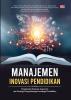
MANAJEMEN INOVASI PENDIDIKAN: Pendekatan Evaluasi, Supervisi, dan Strategi Pengembangan Lembaga Pendidikan
Keywords:
MANAJEMEN INOVASI PENDIDIKANSynopsis
Buku ini memuat rangkaian kajian mendalam yang mencerminkan kompleksitas pengelolaan lembaga pendidikan modern. Di dalamnya tersaji pembahasan mengenai evaluasi dan supervisi pembelajaran, strategi pengembangan lembaga, kepemimpinan dan kualitas layanan pendidikan, humas dan manajemen informasi, serta inovasi layanan pada lembaga pendidikan vokasi. Seluruh tema tersebut dirangkai untuk memberikan pemahaman komprehensif mengenai bagaimana lembaga pendidikan dapat berinovasi, memperkuat mutu, serta merespons dinamika lingkungan strategis secara berkelanjutan.
Harapannya, buku ini dapat memberikan manfaat bagi para akademisi, praktisi, mahasiswa, dan pembaca luas yang memiliki perhatian pada bidang manajemen dan inovasi pendidikan. Semoga karya ini dapat menjadi referensi yang memperkaya wawasan sekaligus mendorong praktik pengelolaan pendidikan yang lebih adaptif, inovatif, dan berkelanjutan. Selamat membaca!
Chapters
-
KATA PENGANTAR
-
DAFTAR ISI
-
01 BUILDING THE LEARNING ORGANIZATION
-
02 A STRATEGY FOR EDUCATIONAL CHANGE
-
03 MAKING SENSE OF ORGANIZATION
-
04 THE STRUCTURAL FRAME
-
05 HUMAN RESOURCE FRAME
-
06 THE POLITICAL FRAME AND THE SYMBOLIC FRAME
-
07 ORGANIZING GROUPS AND TEAMS DALAM PENDIDIKAN
-
08 BUILDING THE LEARNING INTERPERSONAL AND GROUP DYNAMIC (DINAMIKA ANTARPRIBADI DAN DINAMIKA KELOMPOK)
-
09 BUILDING THE LEARNING ORGANIZATIONAL CULTURAL IN ACTION
-
10 BUILDING THE LEARNING REFRAMING ETHIC AND SPIRIT
-
PROFIL PENULIS
Downloads
References
Senge, P. M. (1990). The fifth discipline: The art and practice of the learning organization.
New York: Doubleday/Currency
Senge, P. M., Kleiner, A., Roberts, C., Ross, R. B., & Smith, B. J. (1994). The fifth discipline fieldbook: Strategies and tools for building a learning organization. New York: Doubleday/Currency.
Senge, P. M., Kleiner, A., Roberts, C., Ross, R. B., Roth, G., & Smith, B. J. (1999). The dance of change: The challenges to sustaining momentum in a learning organization. New York: Doubleday/Currency.
Agustin, N., Faizah, N., Setiawati, M., & Utama, H. B. (2025). Integrasi Teknologi Dalam Kurikulum Pendidikan Untuk Meningkatkan Efektivitas Pembelajaran. Journal Educational Research and Development, 01(04), 407–411. https://jurnal.globalscients.com/index.php/jerd/article/view/460
Firdos, I. I., Permatasari, I., Rahmawati, M., & Wahyono, W. (2023). Peranan Teknologi Dalam Mengembangkan Inovasi Pembelajaran Pada Pendidikan Sekolah Dasar. Social, Humanities, and Educational Studies (SHES): Conference Series, 6(1), 33–38. https://jurnal.uns.ac.id/ SHES/article/view/ 71026/39393
Indrawati, S., Suidat, S., Maulidya, A. P., Nurcholifia, S., & Sidik, A. M. (2024). Manajemen Perubahan di Sekolah: Tantangan dan Strategi untuk Mencapai Kualitas Pendidikan yang Berkelanjutan. Educatus: Jurnal Pendidikan, 2(3), 8–15. https://ejournal. prismaindo.or.id/index.php/Educatus/article/view/21
Indy, R., Waani, F. J., & Kandowangko, N. (2019). Peran Pendidikan Dalam Proses Perubahan Sosial Di Desa Tumaluntung Kecamatan Kauditan Kabupaten Minahasa Utara (Vol. 12, Issue 4).
Nur, L., & Syafitri, H. (2024). Kontribusi Teori Perubahan Kurt Lewin terhadap Transformasi Belajar Contribution of Kurt Lewin’s Theory of Change to Learning Transformation. 2(2), 37–50. https://doi.org/ 10.58222/jptunasbangsa. v2i2.1083
Ratu Ajeng Galuh Pitaloka, Asbi Sadiki, & Gusmaneli. (2024). Perubahan Konsep Dasar Pendidikan DalamMeng hadapi Tantangan Globalisasi Di Dunia Pendidikan. Journal Educational Research and Development | E-ISSN : 3063-9158, 1(2), 112–114. https://doi.org/10.62379/jerd. v1i2.68
Siminto, S., Majdi, M., Hardiansyah, A., Rofi, A., & Gazali, A. (2025). Pembelajaran Berbasis Proyek: Mengembangkan Kreativitas dan Kemampuan Kolaboratif. Jurnal Pendidikan Dan Keguruan, 3(4), 308–320. https://jutepe-joln.net/index.php/ Jurperu/article/view/52
Sirait, R. A., & Dewi, E. Y. (2024). Peran Teknologi Pembelajaran Pada Desain Pembelajaran. Jurnal Budi Pekerti Agama Kristen Dan Katolik, 2(4), 232–242. https://doi.org/10. 61132/jbpakk.v2i4.773
Smith, D. (2024). Leading change: transformative strategies in educational leadership. In Educational Leadership. Academy of Educational Leadership Journal (Vol. 28, Issue 1).
Syafitri, L. N. H. (2024). Kontribusi Teori Perubahan Kurt Lewin terhadap Transformasi Belajar. Jurnal Pendidikan Tunas Bangsa, 2(2), 37–50. https://journal.bengkuluinstitute. com/index.php/jptunasbangsa/article/view/1083
Umami, S., & Wahyudi, K. (2025). Strategi Kepemimpinan Transformasional dalam Menghadapi Tantangan Kurikulum Merdeka Belajar di Sekolah. JIIP - Jurnal Ilmiah Ilmu Pendidikan, 8(3), 3550–3559. https://doi.org/ 10.54371/jiip.v8i3.7542
Wahyudi, N. G., & Jatun, J. (2024). Integrasi Teknologi dalam Pendidikan: Tantangan dan Peluang Pembelajaran Digital di Sekolah Dasar. Indonesian Research Journal on Education, 4(4), 444–451. http://www.irje.org/irje/article/ view/1138
Yuliana, Y., & Pangastuti, P. (2024). Inovasi Pembelajaran Berbasis Proyek dalam Kurikulum Merdeka: Meningkatkan Keterampilan Berpikir Kritis dan Kreatif Siswa Sekolah Dasar. Journal of Education and Pedagogy, 1(1), 7–12. https://doi.org/-10.62354/jep.v1i1.10
Yulianti, Pramudya Putri, M., Fauziyah, S., & Nadzifah, K. (2024). Analisis Tantangan Dan Peluang Kurikulum Merdeka Dalam Meningkatkan Kualitas Pembelajaran. https://doi.org/10.9644/sindoro.v3i9.252
Balogun, J., & Johnson, G. (2004). Organizational restructuring and middle manager sensemaking. Academy of Management Journal, 47(4), 523–549. https://doi.org/ 10.2307/20159600
Bao, X., et al. (2023). Sensemaking in crisis: Unpacking how teachers interpret and respond to online education as street-level bureaucrats. https://doi.org/10.1080/ 2331186X.2023.2290214
Boice, K. L., Jackson, J. R., Alemdar, M., Rao, A. E., Grossman, S., & Usselman, M. (2021). Supporting teachers on their STEAM journey: A collaborative STEAM teacher training program. Education Sciences, 11(3), Article 105. https://doi.org/10.3390/ educsci11030105
Brown, J. T. (2021). The language of leaders: Executive sensegiving strategies in higher education. American Journal of Education, 127(4), 547–575. https://doi.org/ 10.1086/712113
De Voto, C., & Fink, G. (2023). Navigating policy and local context in times of crisis: K–12 leader sensemaking during COVID-19. Educational Administration Quarterly, 59(3), 1–32. https://doi.org/10.1177/0013161X231163870
Dziubaniuk, O., Groop, C., Ivanova-Gongne, M., Nyholm, M., & Gugenishvili, I. (2024). Sensemaking of sustainability in higher educational institutions through the lens of discourse analysis. International Journal of Sustainability in Higher Education, 25(5), 1085–1102. https://doi.org/10. 1108/IJSHE-09-2023-0427
Ganon-Shilon, S. (2024). Principals’ sense-making and sense-giving of their professional role tensions: School leaders’ professionalism and creative mediation strategies during COVID-19 crisis. https://doi.org/10. 1177/17411432241264693
Gioia, D. A., & Chittipeddi, K. (1991). Sensemaking and sensegiving in strategic change initiation. Strategic Management Journal, 12(6), 433–448. https://doi.org/10. 1002/smj.4250120604
Haan, V. A. S., Margana, M., & Apriliani, M. K. (2025). Implementing the Merdeka Curriculum in English language teaching at Rumah Belajar Aksi-Inspirasi: A case study of strategies and challenges. Journal of Languages and Language Teaching, 13(2), 732–745. https://doi.org/10.33394/jollt.v13i2.12867
Latifa, H., Ratih, K., & Maryadi, M. (2023). Implementing the Merdeka Curriculum in English language teaching: A study of teacher learning steps. VELES: Voice of English Language Education Society, 7(3), 640–651. https://doi.org/10.29408/veles.v7i3.24049
Lowell, B. R., Fogelman, S. E., & McNeill, K. L. (2024). Organizational sensemaking during curriculum implementation: The dilemma of agency, role of collaboration, and importance of discipline-specific leadership. Science Education, 108(5), 1448–1473. https://doi.org/10.1002/sce.21885
Merrill, R. C. (2024). Sensemaking in higher education: The experiences of first-time academic leaders (Doctoral dissertation). Northeastern University Repository.
Norris, J. M. (2022). School leaders’ sensemaking and sensegiving. ISBN: 978-90-04-51720-2
Nurjamin, L. R., Nurohmah, K., & Hamzah, A. (2024). Navigating the Merdeka Curriculum: English transformational teachers' challenges with project-based learning. English Education and Applied Linguistics Journal (EEAL Journal), 7(2), 68–78.
Pan, Y., & Nehm, R. H. (2025). Large language model and traditional machine learning scoring of evolutionary explanations: Benefits and drawbacks. Education Sciences, 15(6), 676. https://doi.org/10.3390/ educsci15060676
Ravi, M., Kaur, K., Wright, C., et al. (2025). University staff and student perspectives on competent and ethical use of AI: Uncovering similarities and divergences. International Journal of Educational Technology in Higher Education, 22, Article 55. https://doi.org/10.1186/s41239-025-00557-7
Santiana, S. (2021). Optimizing LMS CANVAS for interactive online learning perceived by the students. Journal of English Education and Teaching (JEET). https://doi.org/10.33369/jeet.5.4.529-543
Steinsund, S. (2024). How did COVID-19 shape the leadership practices of Norwegian school principals? Sensemaking perspectives. International Studies in Educational Leadership, 18(1), 45–68. https://doi.org/10. 1080/00313831.2023.2250373
Weick, K. E. (1995). Sensemaking in organizations. Sage Publications.
Weick, K. E. (2001). Making sense of the organization. Blackwell Publishing.
Weick, K. E., Sutcliffe, K. M., & Obstfeld, D. (2005). Organizing and the process of sensemaking. Organization Science, 16(4), 409–421. https://doi.org/10.1287/orsc.1050.0133
Weick, K. E. (1995). Sensemaking in Organizations. Thousand Oaks: Sage Publications.
Weick, K. E., Sutcliffe, K. M., & Obstfeld, D. (2005). "Organizing and the Process of Sensemaking." Organization Science, 16(4), 409–421.
Maitlis, S., & Christianson, M. (2014). "Sensemaking in Organizations: Taking Stock and Moving Forward." Academy of Management Annals, 8(1), 57–125.
Fullan, M. (2007). The new meaning of educational change (4th ed.). Teachers College Press.
Weick, K. E. (1995). Sensemaking in organizations. Thousand Oaks, CA: Sage.
Weick, K. E. (2001). Making sense of the organization. Oxford: Blackwell Publishing.
West, M. A. (2012). Effective teamwork: Practical lessons from organizational research (3rd ed.). Wiley-Blackwell.
Taylor, J. R., & Van Every, E. J. (2000). The Emergent Organization: Communication as Its Site and Surface. Routledge.
Spillane, J. P., Reiser, B. J., & Reimer, T. (2002). Policy implementation and cognition: Reframing and refocusing implementation research. Review of Educational Research, 72(3), 387–431.
Bolman, L. G., & Deal, T. E. (2013). Reframing Organizations: Artistry, Choice, and Leadership (Vol. 30, Issue 4). Jossey-Bass, San Francisco. https://doi.org/10.1007/978-3-319-50036-2_7
Fite, M. K. (2023). School Principals Leadership Frame as a Factor to Improve Leadership Effectiveness: The Case of Primary Schools in Ambo City Administration. Journal of Sciencce and Sustainable Development (JSSD), 11(2), 21–33. https://doi.org/ https://doi.org/10.20372/au.jssd. 11.2.2023.0462
Jiang, H. (2020). Leadership in Perspective of the Organizational Frame. Open Access Library Journal, 07(12), 1–14. https://doi.org/10.4236/oalib.1107026
Riggle, C. M. (2016). Experiences of Women’s Center Professionals: A Qualitative Study of Women’s Center Directors in Student Affairs. The University of Georgia.
Sibarani, D. P. (2023). Leadership Management in the Concept of Total Quality Management in International Standard School. Improvement: Jurnal Ilmiah Untuk Peningkatan Mutu Manajemen Pendidikan, 10(1), 31–39. https://doi.org/10.21009 /improvement.v10i1.34583
Armstrong, M. (2020). A Handbook of Human Resource Management Practice (16th ed.). Kogan Page.
Bolman, L. G., & Deal, T. E. (2017). Reframing Organizations: Artistry, Choice, and Leadership (6th ed.). Jossey-Bass.
Edmondson, A. C. (2019). The Fearless Organization: Creating Psychological Safety in the Workplace for Learning, Innovation, and Growth. Wiley.
Goertzen, R. (2025). Human-Centered Leadership in the Digital Age. Harvard Business Review Press.
Herzberg, F. (1959). The Motivation to Work. John Wiley & Sons.
Hoy, W. K., & Miskel, C. G. (2013). Educational Administration: Theory, Research, and Practice (9th ed.). McGraw-Hill.
Imai, M. (1986). Kaizen: The Key to Japan’s Competitive Success. McGraw-Hill.
Maslow, A. H. (1943). A Theory of Human Motivation. Psychological Review, 50(4), 370–396.
Owens, R. G., & Valesky, T. C. (2021). Organizational Behavior in Education: Leadership and School Reform (12th ed.). Pearson.
Robbins, S. P., & Judge, T. A. (2019). Organizational Behavior (18th ed.). Pearson.
Armstrong, M. (2020). A Handbook of Human Resource Management Practice (16th ed.). Kogan Page.
Bolman, L. G., & Deal, T. E. (2017). Reframing Organizations: Artistry, Choice, and Leadership (6th ed.). Jossey-Bass.
dmondson, A. C. (2019). The Fearless Organization: Creating Psychological Safety in the Workplace for Learning, Innovation, and Growth. Wiley.
Goertzen, R. (2025). Human-Centered Leadership in the Digital Age. Harvard Business Review Press.
Kementerian Ketenagakerjaan Republik Indonesia. (2003). Undang-Undang Nomor 13 Tahun 2003 tentang Ketenagakerjaan. Jakarta: Sekretariat Negara.
Owens, R. G., & Valesky, T. C. (2021). Organizational Behavior in Education: Leadership and School Reform (12th ed.). Pearson.
Robbins, S. P., & Judge, T. A. (2019). Organizational Behavior (18th ed.). Pearson.
Armstrong, M. (2020). A Handbook of Human Resource Management Practice (16th ed.). Kogan Page.
Bolman, L. G., & Deal, T. E. (2017). Reframing Organizations: Artistry, Choice, and Leadership (6th ed.). Jossey-Bass.
Goertzen, R. (2025). Human-Centered Leadership in the Digital Age. Harvard Business Review Press.
Hastings, R., & Meyer, E. (2020). No Rules Rules: Netflix and the Culture of Reinvention. Penguin Press.
Hofstede, G. (2010). Cultures and Organizations: Software of the Mind (3rd ed.). McGraw-Hill.
PT Telkom Indonesia. (2022). Annual Sustainability Report 2022. Jakarta: Telkom Indonesia.
Telkom Indonesia. (2023). Human Resource Development Report. Jakarta: Telkom Indonesia.
Alvesson, M., & Spicer, A. (2016). The Stupidity Paradox: The Power and Pitfalls of Functional Stupidity at Work. Profile Books.
•Armstrong, M. (2020). A Handbook of Human Resource Management Practice (16th ed.). Kogan Page.
Bolman, L. G., & Deal, T. E. (2017). Reframing Organizations: Artistry, Choice, and Leadership (6th ed.). Jossey-Bass.
Edmondson, A. (2019). The Fearless Organization: Creating Psychological Safety in the Workplace for Learning, Innovation, and Growth. Wiley.
Fleming, P. (2019). The Death of Homo Economicus: Work, Debt and the Myth of Endless Accumulation. Pluto Press.
Gallup. (2023). State of the Global Workplace Report 2023. Gallup Press.
Goertzen, R. (2025). Human-Centered Leadership in the Digital Age. Harvard Business Review Press.
Hastings, R., & Meyer, E. (2020). No Rules Rules: Netflix and the Culture of Reinvention. Penguin Press.
Hofstede, G. (2010). Cultures and Organizations: Software of the Mind (3rd ed.). McGraw-Hill.
Bolman, L. G., & Deal, T. E. (2017). Reframing Organizations: Artistry, Choice, and Leadership (6th ed.). Jossey-Bass.
Pfeffer, J. (1992). Managing with Power: Politics and Influence in Organizations. Harvard Business School Press.
Goertzen, R. (2025). Human-Centered Leadership in the Digital Age. Harvard Business Review Press.
Hofstede, G. (2010). Cultures and Organizations: Software of the Mind (3rd ed.). McGraw-Hill.
Gallup. (2023). State of the Global Workplace Report 2023. Gallup Press.
Akmal, S., Usman, A. R., & Qamaruzzaman, Q. (2023). Political and Educational Messages in Serambi Indonesia: A Framing Analysis. Jurnal ASPIKOM, 8(2), 287. https://doi.org/10.24329/aspikom.v8i2.1270
Duran, A., & Ermiş, U. F. (2025). Integrating Generative AI in Education: Implications for School Leadership from Policy Documents Through Bolman and Deal’s Four Frame Theory. Bartın University Journal of Faculty of Education, 14(2), 416–440. https://doi.org/10.14686/ buefad.1435086
Holmes, W. T. (2024). Motivating language theory, the four frames, and change: an infused model. Development and Learning in Organizations, 38(2), 16–19. https://doi.org/ 10.1108/DLO-04-2023-0105
Islam, N. M., Laughter, L., Sadid-Zadeh, R., Smith, C., Dolan, T. A., Crain, G., & Squarize, C. H. (2022). Adopting artificial intelligence in dental education: A model for academic leadership and innovation. Journal of Dental Education, 86(11), 1545–1551. https://doi.org/10.1002/ jdd.13010
James, T. S. (2021). Assessing the policy effects of political leaders: a layered framework. In Policy Studies (Vol. 42, Issues 5–6, pp. 437–454). Routledge. https://doi.org/10.1080/01442872.2021.1949090
Li, L., Shi, L., & Zhao, R. (2023). A Vertical-Horizontal Integrated Neuro-Symbolic Framework towards Artificial General Intelligence. https://cis.temple.edu/~pwang/AGI-Intro.html
Whittle, A., Vaara, E., & Maitlis, S. (2023). The Role of Language in Organizational Sensemaking: An Integrative Theoretical Framework and an Agenda for Future Research. In Journal of Management (Vol. 49, Issue 6, pp. 1807–1840). SAGE Publications Inc. https://doi.org/ 10.1177/01492063221147295
Bolman, L. G., & Deal, T. E. (2017). Reframing Organizations: Artistry, Choice, and Leadership (6th ed.). San Francisco: Jossey-Bass.
Deal, T. E., & Peterson, K. D. (2016). Shaping School Culture: Pitfalls, Paradoxes, and Promises. San Francisco: Jossey-Bass.
Hoy, W. K., & Miskel, C. G. (2013). Educational Administration: Theory, Research, and Practice (9th ed.). New York: McGraw-Hill.
Pfeffer, J. (1992). Managing with Power: Politics and Influence in Organizations. Boston: Harvard Business School Press.
Schein, E. H. (2010). Organizational Culture and Leadership (4th ed.). San Francisco: Jossey-Bass.
Hofstede, G. (2011). Culture’s Consequences: Comparing Values, Behaviors, Institutions and Organizations Across Nations. Thousand Oaks, CA: Sage Publications.
Bush, T. (2011). Theories of Educational Leadership and Management (4th ed.). London: SAGE Publications.
Fullan, M. (2020). Leading in a Culture of Change. Teachers College Press.
Lunenburg, F. C. (2012). Power and Leadership: An Influence Process. International Journal of Management, Business, and Administration, 15(1), 1–9.
Yukl, G. (2013). Leadership in Organizations (8th ed.). Pearson Education.
Deal, T. E., & Peterson, K. D. (2009). Shaping School Culture: Pitfalls, Paradoxes, and Promises (2nd ed.). San Francisco, CA: Jossey-Bass.
Sergiovanni, T. J. (2001). The Principalship: A Reflective Practice Perspective. Boston, MA: Allyn & Bacon.
Firdaus, F. A. (2023). Strategi Pemberdayaan Sekolah sebagai Upaya Peningkatan Manajemen Pendidikan.
Gomo, N., Steyn, H., & Van Waveren, C. C. (2021). The Role Of The Project Management Office In Knowledge Transfer In A Matrix-Structured Organisation: A Case Study. South African Journal of Industrial Engineering, 32(4), 129–140. https://doi.org/10.7166/32-4-2517
Johnson, D. W., & Johnson, R. T. (2019). Cooperative Learning: The Foundation for Active Learning. Active Learning in Higher Education, 20(1), 35–44.
Kurniawan, A., Rasyid, M., & Hanifah, D. (2023). Digital Collaboration in Educational Management: Integrating Technology in Teacher Teams. Journal of Educational Innovation, 8(2), 121–138.
Mardiah, Syaifudin, M., & Andriani, T. (2023). Perilaku Kelompok Dalam Organisasi.
Munawir, M., Nasrullah, A. S., Washilah, H., & ’Adilah, M. F. (2023). Efektivitas Peningkatan Kemampuan Kinerja Guru Melalui Organisasi KKG. Jurnal Riset Pendidikan Dasar (JRPD), 4(2), 173. https://doi.org/ 10.30595/jrpd.v4i2.15731
Murtafiah, N. H., Yulianti, P. I., Nurjaman, I., & Ridwan. (2024). Konsep dasar struktur organisasi.
Nurdan, Gazalin, J., Nurlia, Fadli, & Irfan. (2025). Analisis Peran Kepemimpinan dalam Meningkatkan Kinerja Tim di Lingkungan Kerja Multikultural pada Kota Baubau. Jurnal Cendekia Ilmiah, 4(3).
Nurhayuni, Syaifudin, M., & Andriani, T. (2023). Peran Kepemimpinan Dalam Membangun Tim. Rahmawati, L., & Indrawati, S. (2024). Artificial Intelligence Integration in Educational Team Management. International Journal of Educational Technology, 11(2), 75–92.
Rosita, I. (2024). Gaya kepemimpinan, komunikasi, dan pengambilan keputusan dalam meningkatkan efektivitas manajemen pada lembaga pendidikan islam.
Rozek, A., & Salito. (2025). Analisis Konflik Organisasi Dan Strategi Penyelesaiannya Dalam Lingkungan Kerja Moderen A R T I C L E I N F O Abstrak (Vol. 1, Issue 3). https://journal.yapakama.com/index.php/JAMED
Setiawan, I., Pramono, D., & Hartono, W. (2022). Digital Leadership in Schools: Building Collaborative Culture Through ICT. Educational Management Review, 9(1), 11–27.
Sholeh, M. I. (2023). Strategi Efektif dalam Manajemen Pendidikan untuk Meningkatkan Kualitas Pembelajaran. Tarbawi Ngabar: Jurnal of Education, 4(2), 139–164. https://doi.org/10.55380/tarbawi. v4i2.462
Svari, N. M. F. D. (2023). Optimalisasi Perencanaan Administratif dalam Administrasi Pendidikan untuk Peningkatan Mutu Layanan Pendidikan di Indonesia.
Syukran, M., Agustang, A., Idkhan, A. M., & Rifdan. (2022). Konsep organisasi dan pengorganisasian dalam perwujudan kepentingan manusia.
Tamaya, V., Wellem, I., Modesta, M., & Mone, M. (2023). Pengaruh Kerjasama Tim dan Kemampuan Kerja Terhadap Kinerja Pegawai Pada Badan Pemberdayaan Masyarakat dan Desa Kabupaten Sikka. In Jurnal Penelitian Mahasiswa (Vol. 1)
Vangrieken, K., Dochy, F., Raes, E., & Kyndt, E. (2017). Teacher Collaboration: A Systematic Review. Educational Research Review, 15, 17–40.
Abu Bakar, H., & Sheer, V. C. (2013). The mediating role of perceived cooperative communication in the relationship between interpersonal exchange relationships and perceived group cohesion. Management Communication Quarterly, 27(3), 443–465. https://doi.org/10.1177/0893318913492564
Aidah, A., & Nugraha, M. S. (2024). Penerapan Psikologi Organisasi Dalam Meningkatkan Efektivitas Manajemen di Lembaga Pendidikan. Jurnal Tahsinia, 5(4), 568–582. https://jurnal. rakeyansantang.ac.id/ tahsinia/article/view/589
Amelia, A., Sembiring, A. W., Azzahra, N., Tanjung, L. A., & Aswaruddin, A. (2025). The Interpersonal Communication Process. TOFEDU : The Future of Education Journal, 4(2), 367–376. https://doi.org/ 10.61445/tofedu.v4i2.426
Anggraini, A. M., & Wijayanti, Q. N. (2024). Analisis Pengaruh Miskomunikasi Dalam Suatu Hubungan. Jurnal Media Akademik (JMA), 2(1), 1250–1259. https://jurnal. mediaakademik.com/index.php/jma/article/view/104
Bryan, A., & Loisa, R. (2024). Komunikasi Antara Pelatih dengan Pemain dalam Membangun Prestasi Tim Olahraga. Kiwari, 3(2), 275–281. https://doi.org/ 10.24912/ ki.v3i2.30178
Connelly, S., & Gooty, J. (2015). Leading with emotion: An overview of the special issue on leadership and emotions. The Leadership Quarterly, 26(4), 485–488. https://doi.org/10.1016/j.leaqua.2015.07.002
Fadhilah, R., & Hasmunir, H. (2025). Kejujuran Sebagai Dasar Komunikasi Yang Efektif. Insight Journal: Jurnal Komunikasi, Psikologi Dan Konseling, 1(1), 21–29.
Fahroni, A. (2024). Komunikasi Efektif dalam Proses Pembelajaran. Journal of Teacher Training and Educational Research, 2(2), 68–81. https://doi.org/ 10.71280/jotter.v2i2.397
Febrianti, I., Ayumi, M., Panjaitan, A., & Manurung, A. S. (2025). Peran Komunikasi Interpersonal dalam Membangun Identitas dan Budaya Organisasi. Jurnal Riset Sosial Humaniora Dan Pendidikan, 3(1), 60–70. https://doi.org/10.62383/risoma.v3i1.508
Feriandy, F., & Wahyu, E. R. (2023). Dinamika Kolaborasi Tim dan Efisiensi Kerja Kunci Keberhasilan Pencapaian Tujuan Organisasi. Jurnal Cahaya Mandalika, 3(2), 1763–1770. https://www.ojs. cahayamandalika.com/index. php/jcm/article/view/2395
Forsyth, D. R. (2019). Group dynamics (7th ed.). Cengage Learning.
Giraldo, L. F., & Passino, K. M. (2015). Dynamic task performance, cohesion, and communications in human groups. IEEE Transactions on Cybernetics, 46(10), 2207–2219. https://doi.org/10.1109/ TCYB.2015.2470225
Godbless, E. G., & Amaluwa, N. L. (2022). Managing group dynamics and effectiveness of university staff: Evidence from Nigeria. International Journal of Organizational Leadership, 11(2), 45–60. https://doi.org/10.33844/ ijol.2022.60625
Hadi, F., Amanda, T., Hati, J. T., & Manurung, A. S. (2024). Strategi Komunikasi Interpersonal Guru dalam Meningkatkan Minat Belajar Siswa. JICN: Jurnal Intelek Dan Cendikiawan Nusantara, 1(6), 10414–10420. https://jicnusantara.com/index.php/jicn/ article/view/2072
Hidayati, Y. (2023). Unsur Komunikasi Pada Proses Pembelajaran Di Taman Kanak-Kanak (TK) Tunas Jaya Desa Jelutung Kecamatan Sungailiat Kabupaten Bangka. KOMUNIKASIA: Journal of Islamic Communication and Broadcasting, 3(2), 108–116. https://doi.org/10.32923/kpi.v3i2.3684
Inda, I. (2024). Peran Komunikasi Efektif dalam Meningkatkan Keterlibatan Siswa di Lingkungan Sekolah Dasar Negeri Kota Lhokseumawe. Liwaul Dakwah: Jurnal Kajian Dakwah Dan Masyarakat Islam, 14(2), 181–193. https://journal.iainlhokseumawe.ac. id/index.php/liwauldakwah/article/view/5022
Kurniadini, S. Z., & Putranto, T. D. (2025). Pola Komunikasi Interpersonal Mahasiswa Indonesia (Review of Literature). Jurnal Ilmu Komunikasi, 15(2), 83–102. https://doi.org/10.15642/ jik.2025.15.2.83-102
Leithwood, K., & Sun, J. (2018). Transformational school leadership in challenging times. International Journal of Educational Management, 32(3), 612–627. https://doi.org/10.1108/IJEM-08-2017-0208
Lisbeth, F. H., Aprilia, L., & Fath, A. N. (2025). Komunikasi Intra dan Antar Personal. JICN: Jurnal Intelek Dan Cendikiawan Nusantara, 2(3), 1981–1989. https://jicnusantara.com/ index.php/jicn/article/view/4008
LMS SPADA Kemdikti. (n.d.). Dinamika kelompok. Retrieved from https://lmsspada.kemdiktisaintek. go.id
Marlina, D., Zahra, R., & Suhendi, S. (2024). Peran Komunikasi Intepersonal dalam Hubungan Mitra Kerja yang Berkelanjutan. Journal Central Publisher, 2(8), 2473–2479. https://doi.org/10.60145/jcp. v2i8.509
McAvoy, L. H., Mitten, D. S., Stringer, L. A., Steckhart, J. P., & Sproles, K. (1996). Group development and group dynamics in outdoor education. Research in Outdoor Education, 3(1), 51–63.
Mustafa, A., & Sopjani, A. (2023). Goal orientation and interpersonal relationships as success factors of group work. Open Education Studies, 5(1), 1–12. https://doi.org/10.1515/edu-2023-0001
Natsir, M., Rasul, N. M., & Khair, A. U. (2022). Analisis Pengaruh Unsur-Unsur Komunikasi Terhadap Brand Awareness Pada Media Pemasaran Youtube. Jurnal Ilmiah Manajemen, Ekonomi, & Akuntansi (MEA), 6(2), 1315–1335. https://www.journal. stiemb.ac.id/index. php/ mea/article/view/2126
Noman, M., Xu, J., Kaur, A., & Fang, K. (2024). The interplay of contextual leadership and teacher-related organizational outcomes: The mediating role of group cohesion. Educational Management Administration & Leadership. Advance online publication. https://doi.org/10.1177/17411432241230662
Nurbaiti, A., Ayu, U. M., Tyas, S. P., Ifada, B. M., & Laksana, A. (2024). Pengaruh Human Relations Mahasiswa dalam Menyelesaikan Konflik di Lingkup Pertemanan. Konsensus : Jurnal Ilmu Pertahanan, Hukum Dan Ilmu Komunikasi, 1(6), 52–59. https://doi.org/10.62383/konsensus.v1i6.447
Putra, F. K., Syalsabila, H. I., & Purwandari, E. (2024). Pengungkapan Diri (Self Disclosure) dalam Komunikasi Antar Pribadi Remaja. J-CEKI : Jurnal Cendekia Ilmiah, 4(1), 2114–2119. https://ulilalbabinstitute.co.id/ index.php/J-CEKI/article/view/6651
Ramadhani, N., Umaroh, Y., & Subandi, S. (2024). Keterampilan Komunikasi Interpersonal dalam Supervisi Pendidikan. Jurnal Media Akademik (JMA), 2(6). https://jurnal.mediaakademik.com/index. php/jma/article/view/378
Robbins, S. P., & Judge, T. A. (2017). Organizational behavior (17th ed.). Pearson Education.
Rozek, A., & Salito, S. (2025). Analisis Konflik Organisasi dan Strategi Penyelesaiannya Dalam Lingkungan Kerja Moderen. Jurnal Akuntansi, Manajemen, Dan Ilmu Pendidikan (JAMED), 1(3), 96–110. https://journal.yapakama.com/index.php/JAMED/article/view/284
Sabet, K. N., Ratu, M. R., Huky, S. E. P. R., Tasoin, A. A., Takaeb, A. E. L., & Nayoan, C. R. (2025). Dinamika Kelompok Dalam Konteks Pendidikan dan Organisasi. Jurnal Penelitian Multidisiplin Bangsa, 2(1), 180–186. https://ejournal.amirulbangun bangsapublishing. com/index.php/jpnmb/article/ view/467
Seftina, A., Sabila, F. P., Syaharani, N., Tanjung, N., & Mukhlasin, A. (2024). Dinamika Kelompok dan Pengaruh Terhadap Kinerja Organisasi. Socius: Jurnal Penelitian Ilmu-Ilmu Sosial, 1(11), 463–465. https://doi.org/10.5281/zenodo.12622688
Suhairi, S., Rahmah, M., Uljannah, A., Fauziah, N., & Musyafa, M. H. (2023). Peranan Komunikasi Antarpribadi Dalam Manajemen Organisasi. Innovative: Journal Of Social Science Research, 3(3), 4810–4823. https://j-innovative.org/index.php/ Innovative/article/view/2651
Syarif, M. W., Akbar, M., & Supriyati, Y. (2020). The effect of leadership behaviour, interpersonal communication, and work satisfaction on teacher’s work effectiveness. International Journal of Innovation, Creativity and Change, 11(12), 189–205.
Syarifah, W. (2025). Kajian Hirarki Kebutuhan dan Aktualisasi Diri Pada Anak Korban Blended Parenting. Dirosat: Journal of Islamic Studies, 10(1), 87–110. https://doi.org/10.28944/dirosat.v10i1.2149
Tania, F. N., S, M. A. H., Syahrahmanda, D. D., & Manurung, A. S. (2024). Strategi Komunikasi Interpersonal dalam Membangun Hubungan Guru dengan Siswa. JICN: Jurnal Intelek Dan Cendikiawan Nusantara, 1(6), 9845–9852. https://jicnusantara. com/index.php/jicn/ article/view/1787
Wardana, A. D. (2023, March 1). Dinamika kelompok: Tahapan pembentukan kelompok & masalah dalam dinamika kelompok. Kompasiana.
Wulandari, R., & Rahmi, A. (2018). Relasi Interpersonal Dalam Psikologi Komunikasi. Islamic Comunication Journal, 3(1), 56–73. https://doi.org/10.21580/ icj.2018.3.1.2678
Bass, B. M., & Riggio, R. E. (2006). Transformational leadership (2nd ed.). Psychology Press.
Blumentritt, T. P. (2004). Does small and mature have to mean dull? Journal of Small Business Strategy, 15(2), 1–13.
Burns, T., & Stalker, G. M. (1961). The management of innovation. Tavistock.
Chatman, J. A., & O’Reilly, C. A. (2016). Paradigm lost: Reinvigorating the study of organizational culture. Research in Organizational Behavior, 36, 199–224.
Eisenbeiss, S. A., van Knippenberg, D., & Boerner, S. (2008). Transformational leadership and team innovation. Journal of Applied Psychology, 93(6), 1438–1446.
Firmansyah, I., Rijanto, R., & Pitri, T. (2023). Impact of Organizational Culture and Discipline on Employee Performance: A Study of Cooperative Members. Jurnal Bisnis, Manajemen, Dan Ekonomi, 4(2), 176–191. https://doi.org/10.47747/ jbme.v4i2.1126
Harahap, J., Dahlena Nasution, M., Wulandari, S. U., Pulungan, Y. K., Wildan, M., Harahap, F. A., & Nasution, I. (2024). Manajemen Perubahan dalam Organisasi Pendidikan Menurut Kurt Lewin Ditinjau dari Tantangan dan Strategi. Jurnal Pendidikan Tambusai, 8(2), 25856–25859.
Harnelda, S., & Heri, H. (2024). Peran kepemimpinan transformasional dan budaya organisasi terhadap kinerja organisasi dengan komitmen sebagai intervening (Studi Kasus Bappeda Kabupaten Inhu, Riau). Jurnal Manajemen dan Bisnis Terapan.
Haris, A., & Tjahjono, H. K. (2021). Organizational culture and performance in Indonesian organizations. Jurnal Manajemen, 25(3), 450–468.
Jasmine, N., Haludin, G., Putri Widayanto, M., Asyifa, Z., Putri Martiza, S., & Swangsa, D. (2025). Perubahan Strategis di Perusahaan Fujifilm: Analisis Strategi Manajemen Perubahan Melalui Kotter’s 8 Step Change Model untuk Meningkatkan Kinerja dan Inovasi. Jurnal Cendekia Ilmiah, 4(2), 1518–1526.
Jazilah, K. (2023). Pengaruh budaya organisasi terhadap komitmen organisasi melalui motivasi kerja. Jurnal Ilmu Manajemen.
Kotter, J. P. (1995). Leading change: Why transformation efforts fail. Harvard Business Review, 73(2), 59–67.
Leso, L., et al. (2023). Leadership, culture, and innovation in modern organizations. Management Research Review, 46(3), 515–531.
Lestyowati, J. (2024). Membangun Budaya Knowledge Sharing pada Pegawai dalam Kerangka Learning Organization. Prosiding PITNAS 2024.
Margolis, J., & Mayo, A. (2023). Leadership and organizational behavior. Harvard Business Publishing.
Men, L. R. (2014). Strategic internal communication and employee engagement. Public Relations Journal, 8(2), 1–22.
Nurhalim, A. D. (2022). The Role of Organizational Culture in Realizing the Performance of an Organization. Primanomics : Jurnal Ekonomi & Bisnis, 20(3), 17–29. https://doi.org/10.31253/pe.v20i3.1194
Panuju, R. (2002). Motivasi kerja dan kinerja organisasi. Jurnal Administrasi Niaga, 3(1), 1–10.
Schein, E. H. (2010). Organizational Culture and Leadership, 4th ed. In Business and Management Series (Fourth Edi). Published by Jossey-Bass. https://doi.org/10.1108/ 01437731211229331
Senaratne, S., & Wang, C. (2018). The impact of culture on organizational change. Journal of Organizational Change Management, 31(1), 1–15.
Shahzadi, I., et al. (2014). Impact of employee motivation on organizational performance. International Journal of Business and Management, 9(2), 70–78.
Senge, P. M. (1994). The Fifth Discipline Fieldbook - Strategies for Building a Learning Organization. In Library Journal (5th Editio, Vol. 119, Issue 12, p. 107). Gopsons Papers Ltd.
Teece, D. J. (2018). Business models and dynamic capabilities. Long Range Planning, 51(1), 40–49.
Tsai, Y. (2011). Relationship between organizational culture, leadership behavior and job satisfaction. BMC Health Services Research, 11, 98. https://doi.org/10.1186/1472-6963-11-98
Utama, I. W. M. (2017; 2020). Budaya organisasi dan perubahan organisasi. Jakarta: Prenadamedia Group.
Acar, O. A., Tuncdogan, A., van Knippenberg, D., & Lakhani, K. R. (2024). Collective Creativity and Innovation: An Interdisciplinary Review, Integration, and Research Agenda. Journal of Management, 50(6), 2119–2151. https://doi.org/ 10.1177/ 01492063231212416
Berger, P. L., & Luckmann, T. (1966). The social construction of reality: A treatise in the sociology of knowledge. Anchor Books.
Cornell, S., & Hartmann, D. (2007). Ethnicity and race: Making identities in a changing world (2nd ed.). Pine Forge Press.
Fajar, A., Sanusi, A., & Arifin, S. (2024a). The Impact of Organizational Culture and Spiritual Leadership on Performance: Mediating Roles of Workplace Spirituality and Innovation. Revista de Gestão Social e Ambiental, 18(4), e07828. https://doi.org/ 10.24857/rgsa.v18n4-187
Fajar, A., Sanusi, A., & Arifin, S. (2024b). The Impact of Organizational Culture and Spiritual Leadership on Performance: Mediating Roles of Workplace Spirituality and Innovation. Revista de Gestão Social e Ambiental, 18(4), e07828. https://doi.org/ 10.24857/rgsa.v18n4-187
Fuadiy, Moch. R., Rozi, M. A. F., Arafah, N. N., Kamal, L., & Sunoko, A. (2025). Mapping the Digital Transformation of Education in Indonesia from 2012 to early 2025: A Bibliometric Analysis of Scopus-Indexed Publications. Journal of Educational Research and Practice, 3(2), 276. https://doi.org/ 10.70376/jerp.v3i2.390
Fuglsang, L., & Hansen, A. V. (2022). Framing improvements of public innovation in a living lab context: Processual learning, restrained space and democratic engagement. Research Policy, 51(1), 104390. https://doi.org/10.1016/j.respol.2021.104390
Jenkins, R. (2008). Social identity (3rd ed.). Routledge.
Kellermann, K. (1992). Communication: Inseparably linked to social cognition. In M. L. Knapp & G. R. Miller (Eds.), Handbook of interpersonal communication (pp. 151–179). Sage Publications.
Kupferberg, F. (2004). Ethnic entrepreneurship as innovation. In Biographical methods and professional practice (pp. 73–90). Policy Press. https://doi.org/ 10.51952/9781847425874.ch005
Li, B., Yu, W., Lei, Y., & Hu, M. (2023). How does spiritual leadership inspire employees’ innovative behavior? The role of psychological capital and intrinsic motivation. European Review of Applied Psychology, 73(6), 100905. https://doi.org/10.1016/ j.erap.2023.100905
Pargament, K. I. (1997). The psychology of religion and coping: Theory, research, practice. Guilford Press.
Phinney, J. S. (1990). Ethnic identity in adolescents and adults: Review of research. Psychological Bulletin, 108(3), 499–514.
Prenzel, P., Bosma, N., Schutjens, V., & Stam, E. (2024). Cultural diversity and innovative entrepre-neurship. Small Business Economics, 63(4), 1381–1414. https://doi.org/10.1007/s11187-024-00888-1
Ranasinghe, V. R., & Samarasinghe, S. M. (2019). The Effect of Workplace Spirituality on Innovative Work Behavior. International Business Research, 12(12), 29. https://doi.org/10.5539/ibr.v12n12p29
Reynolds, O., O’Dochartaigh, A., Secchi, E., Marshall, D., & Prothero, A. (2025). Framing innovation success, failure, and transformation: A systematic literature review. Journal of Product Innovation Management, 42(1), 194–219. https://doi.org/10.1111/jpim.12706
Senge, P. M. (1990). The fifth discipline: The art and practice of the learning organization. Doubleday.
Sue, D. W., & Sue, D. (2016). Counseling the culturally diverse: Theory and practice (7th ed.). Wiley.
Tehseen, S., Deng, P., Wu, B., & Gao, Y. (2023). Culture values and entrepreneurial innovativeness: A comparative study of Malaysian ethnic entrepreneurs. Journal of Small Business Management, 61(6), 2622–2655. https://doi.org/ 10.1080/00472778.2021.1934848
Watzlawick, P., Weakland, J. H., & Fisch, R. (1974). Change: Principles of problem formation and problem resolution. W. W. Norton.
Yin, X., Qi, L., Ji, J., & Zhou, J. (2023). How does innovation spirit affect R&D investment and innovation performance? The moderating role of business environment. Journal of Innovation and Knowledge, 8(3). https://doi.org/10.1016/j.jik.2023.100398
Downloads
Published
License

This work is licensed under a Creative Commons Attribution-ShareAlike 4.0 International License.