
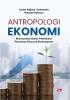
ANTROPOLOGI EKONOMI: Relevansinya Dalam memahami Fenomena Ekonomi Kontemporer
Keywords:
ANTROPOLOGI EKONOMI, FENOMENA EKONOMI, EKONOMI KONTEMPORERSynopsis
Antropologi ekonomi sebagai subdisiplin dalam ilmu antropologi telah memberikan kontribusi penting dalam memahami berbagai fenomena ekonomi yang kompleks. Buku ini hadir dengan tujuan menyajikan teori-teori fundamental antropologi ekonomi secara sistematis dan aplikatif, sehingga dapat digunakan sebagai alat analisis untuk memahami dinamika ekonomi kontemporer.
Berbeda dengan pendekatan konvensional yang cenderung mengulas sistem ekonomi tradisional atau primitif, buku ini lebih memfokuskan pada relevansi teori-teori antropologi ekonomi dalam menjelaskan fenomena ekonomi masa kini. Kami berkeyakinan bahwa teori-teori yang lahir dari kajian sistem ekonomi primitif justru memiliki daya explanatory yang kuat untuk menganalisis kompleksitas ekonomi modern.
Dalam buku ini, pembaca akan menemukan bagaimana teori fungsionalisme ekonomi Malinowski dapat menjelaskan fenomena menjamurnya kedai kopi sebagai ruang informal untuk transaksi bisnis strategis. Teori pemberian Marcel Mauss memberikan wawasan mendalam tentang mengapa hubungan bisnis dapat bertahan lama atau sebaliknya putus di tengah jalan—semuanya bermuara pada prinsip the gift yang menjadi fondasi reciprocity dalam relasi ekonomi. Hal ini sangat relevan dalam memahami dinamika usaha jasa seperti perbankan, koperasi, dan perdagangan.
Buku ini ditujukan untuk kalangan akademik, baik dosen maupun mahasiswa program sarjana, magister, dan doktor, serta dapat pula menjadi bacaan yang bermanfaat bagi khalayak umum yang tertarik memahami dinamika ekonomi dari perspektif antropologis. Penyajian yang lebih menekankan aspek teoretis dimaksudkan agar buku ini dapat berfungsi sebagai instrumen praktis untuk menganalisis dan menjelaskan berbagai fenomena ekonomi kontemporer
Chapters
-
PRAKATA
-
DAFTAR ISI
-
BAB 1 PENDAHULUAN
-
BAB 2 TEORI FUNGSIONALISME EKONOMI MALINOWSKI
-
BAB 3 TEORI PEMBERIAN MARCEL MAUSS
-
BAB 4 TEORI EMBEDDEDNESS KARL POLANYI
-
BAB 5 TEORI KELIMPAHAN PRIMITIF MARSHALL SAHLINS
-
BAB 6 STRUKTURALISME EKONOMI CLAUDE LÉVI-STRAUSS
-
BAB 7 DEBAT SUBSTANTIVIS VS FORMALIS DALAM ANTROPOLOGI EKONOMI
-
BAB 8 MARXISME STRUKTURAL MAURICE GODELIER
-
BAB 9 PERBANDINGAN DAN INTEGRASI TEORI DALAM ANTROPOLOGI EKONOMI
-
BAB 10 KESIMPULAN DAN MASA DEPAN ANTROPOLOGI EKONOMI
-
DAFTAR PUSTAKA
-
GLOSARI
-
TENTANG PENULIS
Downloads
References
Bohannan, P. (1955). "Some Principles of Exchange and Investment among the Tiv". American Anthropologist, 57(1): 60-70.
Bohannan, P. (1959). "The Impact of Money on an African Subsistence Economy". Journal of Economic History, 19(4): 491-503.
Bourdieu, P. (2005). The Social Structures of the Economy. Cambridge: Polity Press
Burling, R. (1962). "Maximization Theories and the Study of Economic Anthropology". American Anthropologist, 64(4): 802-821.
Cook, S. (1966). "The Obsolete 'Anti-Market' Mentality: A Critique of the Substantive Approach to Economic Anthropology". American Anthropologist, 68(2): 323-345.
Cook, S. (1973). "Economic Anthropology: Problems in Theory, Method, and Analysis". Dalam J.J. Honigmann (Ed.), Handbook of Social and Cultural Anthropology (hal. 795-860). Chicago: Rand McNally.
Dalton, G. (Ed.). (1968). Primitive, Archaic and Modern Economies: Essays of Karl Polanyi. Garden City: Anchor Books.
Firth, R. (1939). Primitive Polynesian Economy. London: Routledge.
Firth, R. (1967). "Themes in Economic Anthropology: A General Comment". Dalam R. Firth (Ed.), Themes in Economic Anthropology (hal. 1-28). London: Tavistock Publications.
Giddens, A. (1981). A Contemporary Critique of Historical Materialism. Berkeley: University of California Press.
Godelier, M. (1986). The Making of Great Men: Male Domination and Power among the New Guinea Baruya. Cambridge: Cambridge University Press.
Godelier, M. (1999). The Enigma of the Gift. Chicago: University of Chicago Press.
Gudeman, S. (1986). Economics as Culture: Models and Metaphors of Livelihood. London: Routledge & Kegan Paul.
Hann, C. & Hart, K. (Eds.). (2011). Economic Anthropology: History, Ethnography, Critique. Cambridge: Polity Press.
Herskovits, M.J. (1952). Economic Anthropology: A Study in Comparative Economics. New York: Knopf.
LeClair, E.E. Jr. & Schneider, H.K. (Eds.). (1968). Economic Anthropology: Readings in Theory and Analysis. New York: Holt, Rinehart and Winston.
Lévi-Strauss, C. (1949). Les Structures élémentaires de la parenté. Paris: Presses Universitaires de France.
Lévi-Strauss, C. (1958). Anthropologie structurale. Paris: Plon.
Malinowski, B. (1922). Argonauts of the Western Pacific: An Account of Native Enterprise and Adventure in the Archipelagoes of Melanesian New Guinea. London: Routledge & Kegan Paul.
Malinowski, B. (1935). Coral Gardens and Their Magic. London: George Allen & Unwin.
Mauss, M. (1925). "Essai sur le don: Forme et raison de l'échange dans les sociétés archaïques". L'Année sociologique, nouvelle série, 1: 30-186.
Mauss, M. (1954). The Gift: Forms and Functions of Exchange in Archaic Societies. London: Cohen & West.
Nash, M. (1966). Primitive and Peasant Economic Systems. San Francisco: Chandler Publishing Company.
Polanyi, K. (1944). The Great Transformation: The Political and Economic Origins of Our Time. New York: Farrar & Rinehart.
Polanyi, K. (1957). "The Economy as Instituted Process". Dalam K. Polanyi, C.M. Arensberg, & H.W. Pearson (Eds.), Trade and Market in the Early Empires (hal. 243-270). Glencoe: Free Press.
Sahlins, M. (1972). Stone Age Economics. Chicago: Aldine-Atherton.
Sahlins, M. (1974). "The Original Affluent Society". Dalam Stone Age Economics (hal. 1-39). London: Tavistock Publications.
Schneider, H.K. (1974). Economic Man: The Anthropology of Economics. New York: The Free Press.
Wilk, R. & Cliggett, L. (2007). Economies and Cultures: Foundations of Economic Anthropology. Boulder: Westview Press.
Wolf, E.R. (1982). Europe and the People Without History. Berkeley: University of California Press.
Published
License

This work is licensed under a Creative Commons Attribution-ShareAlike 4.0 International License.