
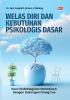
WELAS DIRI DAN KEBUTUHAN PSIKOLOGIS DASAR: Kunci Kebahagiaan Mahasiswa Dengan Dukungan Orang Tua
Keywords:
welas diri, psikologi, keluargaSynopsis
Buku ini hadir sebagai kompas bagi para mahasiswa untuk menemukan kembali ketenangan hidup melalui dua pilar utama: Welas Diri dan pemenuhan Kebutuhan Psikologis Dasar. Kita akan diajak memahami bahwa untuk menjadi tangguh, kita tidak perlu selalu keras pada diri sendiri. Sebaliknya, belajar menjadi sahabat bagi diri sendiri di saat gagal adalah kunci untuk bangkit kembali.
Namun, perjalanan ini tidak dilakukan sendirian. Dukungan orang tua tetap menjadi fondasi yang tak tergantikan. Kehadiran kasih sayang dan penerimaan dari keluarga adalah energi yang memvalidasi perasaan kita, memberikan rasa aman, dan membantu kita memenuhi kebutuhan jiwa yang paling mendasar.
"Welas Diri dan Kebutuhan Psikologis Dasar" bukan sekadar buku bacaan, melainkan sebuah refleksi tentang bagaimana cinta dari keluarga dan kelembutan pada diri sendiri dapat bersatu menciptakan kebahagiaan yang utuh. Buku ini dipersembahkan bagi setiap mahasiswa yang ingin berdamai dengan tuntutan hidup, serta bagi orang tua yang ingin menjadi rumah yang paling nyaman bagi pertumbuhan buah hatinya.
Chapters
-
KATA PENGANTAR
-
DAFTAR ISI
-
Bab 01 DUKUNGAN ORANG TUA
-
Bab 02 DUKUNGAN ORANG TUA PADA DEWASA MUDA
-
Bab 03 KEBAHAGIAAN
-
Bab 04 KONDISI KEBAHAGIAAN PADA MAHASISWA
-
Bab 05 KEBUTUHAN PSIKOLOGIS DASAR
-
Bab 06 WELAS DIRI
-
Bab 07 EFEK DUKUNGAN ORANG TUA TERHADAP KEBAHAGIAAN
-
DAFTAR PUSTAKA
-
PROFIL PENULIS
Downloads
References
Abidin, F. A., Joefiani, P., Koesma, R. E., Yudiana, W., & Siregar, J. R. (2021). The basic psychological need satisfaction and frustration scale: Validation in Indonesian adolescents. Journal of Legal, Ethical and Regulatory Issues, 24(1S).
Aditaputri, T. I., Novita, S., & Abidin, F. A. (2024). Relationship between perceived parental support and subjective well-being of emerging adults in Indonesia. Dewasa muda, 12(3), 333–345. https://doi.org/10.1177/21676968241234125
Aditaputri, R. A., Rahmayani, D. P., & Wirawan, H. (2024). Perceived parental support and student happiness in collectivist cultures: The Indonesian context. Unpublished manuscript.
Akhtar, H. (2019). Evaluasi properti psikometris dan perbandingan model pengukuran konstruk subjective well-being. Jurnal Psikologi, 18(1), 29-40. https://doi.org/10.14710/jp.18.1.29-40
Allen, A. B., Barton, J., & Stevenson, O. (2015). Presenting a self-compassionate image after an interpersonal transgression. Self and Identity, 14(1), 33-50. https://doi.org/10.1080/15298868.2014.946958
Allen, B. A., & Leary, M. R. (2010). Self-compassion, stress, and coping. Social and Personality Psychology Compass, 4(2), 107-118. https://doi.org/10.1111/j.1751-9004.2009.
00246.x
Amponsah, M. O., Milledzi, E. Y., Ampofo, E. T., & Gyambrah, M. (2018). Relationship between parental involvement and academic performance of senior high school students: The case of Ashanti Mampong Municipality of Ghana. American Journal of Educational Research, 6(1), 1–8. https://doi.org/10.12691/education-6-1-1
Angner, E. (2010). Subjective well-being. The Journal of Socio-Economics, 39(3), 361-368. https://doi.org/10.1016/j.socec.2009.12.001
Antaramian, S. (2015). Assessing psychological symptoms and well-being: Application of a dual-factor mental health model to understand college student performance. Journal of Psychoeducational Assessment, 33(5), 419–429. https://doi.org/10.1177/0734282914557727
Ante-Contreras, D. (2016). Distracted parenting: How social media affects parent-child attachment. Electronic Theses, Projects, and Dissertations. 292.
https://scholarworks.lib.csusb.edu/etd/292
Arnett, J. J. (2007). Dewasa muda: What is it, and what is it good for? Child development perspectives, 1(2), 68-73. https://doi.org/10.1111/j.1750-8606.2007.00016.x
Arnett, K. (2000). Learning to stand alone: The contemporary American transition to adulthood in cultural and historical context. Human Development, 41(5-6), 295-315. https://psycnet.apa.org/doi/10.1159/000022591
Arnett, J. J., Žukauskiene, R., & Sugimura, K. (2020). The new life stage of emerging adulthood at ages 18–29 years: Implications for mental health. The Lancet Psychiatry, 7(12), 996–1006. https://doi.org/10.1016/S2215-0366(20)30326-4
Aryanto, C. B., & Djajadisastra, F. W. (2018). The Adaptation Process of the Scale of Positive and Negative Experience and the Flourishing Scale into Bahasa Indonesia: A Preliminary study. The 6th ASEAN Regional Union of Psychological Societies (ARUPS) Congress, 97, 1-2. http://dx.doi.org/10.13140/RG.2.2.29432.55042
Babenko, O., & Oswald, A. (2018). The roles of basic psychological needs, self-compassion, and self-efficacy in the development of mastery goals among medical students. Medical Teacher, 41(4), 478–481. https://doi.org/10.1080/0142159x.2018.1442564
Bani-Melhem, S., Shamsudin, F. M., Abukhait, R., & Al-Hawari, M. A. (2023). Competitive psychological climate as a double-edged sword: A moderated mediation model of organization-based self-esteem, jealousy, and organizational citizenship behaviors. Journal of Hospitality and Tourism Management, 54, 139-151. https://doi.org/10.1016/j.jhtm.2022.12.011
Barnes, G. M., Reifman, A. S., Farrell, M. P., & Dintcheff, B. A. (2000). The effects of parenting on the development of adolescent alcohol misuse: A six‐wave latent growth model. Journal of Marriage and Family, 62(1), 175–186. https://doi.org/10.1111/j.1741-3737.2000.00175.x
Barrett, P. (2007). Structural equation modelling: Adjudging model fit. Personality and Individual Differences, 42(5), 815–824. https://doi.org/10.1016/j.paid.2006.09.018
Bartram, D. (2022). Is happiness u-shaped in age everywhere? A methodological reconsideration for Europe. National Institute Economic Review, 263(1), 1–15. https://doi.org/10.1017/nie.2022.1
Baumeister, R. F., & Leary, M. R. (1995). The need to belong: Desire for interpersonal attachments as a fundamental human motivation. Psychological Bulletin, 117(3), 497–529. https://doi.org/10.1037/0033-2909.117.3.497
Bayley, J., Wallace, L. M., & Choudhry, K. (2009). Fathers and parenting programmes: Barriers and best practice. Community Practitioner, 82(4), 28-31.
Becker, M., Cortina, K. S., Tsai, Y. M., & Eccles, J. S. (2014). Sexual orientation, psychological well-being, and mental health: A longitudinal analysis from adolescence to young adulthood. Psychology of Sexual Orientation and Gender Diversity, 1(2), 132. http://dx.doi.org/10.1037/
sgd0000038
Bennett-Goleman, T. (2002). Emotional alchemy: How the mind can heal the heart. Harmony.
Benson, J. E., Johnson, M. K., & Elder Jr, G. H. (2012). The implications of adult identity for educational and work attainment in young adulthood. Developmental psychology, 48(6), 1752-1758. http://dx.doi.org/10.1037/a0026364
Bentler, P. M. (1992). On the fit of models to covariances and methodology to the Bulletin. Psychological Bulletin, 112(3), 400–404. https://doi.org/10.1037/0033-2909.112.3.400
Bentler, P. M., & Bonett, D. G. (1980). Significance tests and goodness of fit in the analysis of covariance structures. Psychological Bulletin, 88(3), 588–606. http://dx.doi.org/10.1037/0033-2909.88.3.588
Beygi, Z., Solhi, M., Irandoost, S. F., & Hoseini, A. F. (2023). The relationship between social support and happiness in older adults referred to health centers in Zarrin Shahr, Iran. Heliyon, 9(9), e19529. https://doi.org/10.1016/
j.heliyon.2023.e19529
Brannan, D., Biswas-Diener, R., Mohr, C., Mortazavi, S. and Stein, N. (2013). Friends and family: A cross-cultural investigation of social support and subjective well-being among college students. Journal of Positive Psychology, 8(1), 65–75. http://dx.doi.org/10.1080/17439760.2012.743573
Bratko, D., Butkovic, A., Vukasovic Hlupic, T., & Pocrnic, M. (2022). Etiology of basic psychological needs and their association with personality: A twin study. Journal of Research in Personality, 97, 104201. https://doi.org/
10.1016/j.jrp.2022.104201
Breines, J. G., & Chen, S. (2013). Activating the inner caregiver: The role of support-giving schemas in increasing state self-compassion. Journal of Experimental Social Psychology, 49(1), 58-64. https://doi.org/10.1016/j.jesp.2012.07.015
Brougham, R. R., Zail, C. M., Mendoza, C. M., & Miller, J. R. (2009). Stress, sex differences, and coping strategies among college students. Current psychology, 28, 85-97. https://doi.org/10.1007/s12144-009-9047-0
Buchanan, D., Hargreaves, E., & Quick, L. (2022). Schools closed during the pandemic: Revelations about the well-being of ‘lower-attaining’ primary-school children. Education, 3-13, 1-14. https://doi.org/10.1080/
03004279.2022.2043405
Büchi, M., Festic, N., & Latzer, M. (2019). Digital overuse and subjective well-being in a digitized society. Social media and Society, 5(4), 1-12. https://doi.org/10.1177/
2056305119886031
Burke, T. J., Segrin, C., & Farris, K. L. (2018). Young adult and parent perceptions of facilitation: Associations with overparenting, family functioning, and student adjustment. Journal of Family Communication, 18(3), 233-247. http://dx.doi.org/10.1080/15267431.2018.1467913
Byrne, B. M. (2001). Structural equation modeling with AMOS, EQS, and LISREL: Comparative approaches to testing for the factorial validity of a measuring instrument. International Journal of Testing, 1(1), 55–86. http://dx.doi.org/10.1207/S15327574IJT0101_4
Camfield, L., & Skevington, S. M. (2008). On subjective well-being and quality of life. Journal of health psychology, 13(6), 764-775. http://dx.doi.org/10.1177/1359105308093860
Campbell, A. (1976). Subjective measures of well-being. American Psychologist, 31(2), 117-124. https://psycnet.apa.org/doi/10.1037/0003-066X.31.2.117
Caplan, G. (1974). Support systems and community mental health: Lectures on concept development. Contemporary Sociology, 5(2), 165.
Carpentier, M. Y., Mullins, L. L., Wolfe-Christensen, C., & Chaney, J. M. (2008). The relationship of parent self-focused negative attributions to ratings of parental overprotection, perceived child vulnerability, and parenting stress. Families, Systems, and Health, 26(2), 147–163. http://dx.doi.org/10.1037/1091-7527.26.2.147
Chae, J. (2015). “Am I a better mother than you?” Media and 21st-century motherhood in the context of the social comparison theory. Communication Research, 42(4), 503- 525. https://doi.org/10.1177/0093650214534969
Chang, J. H., Huang, C. L., & Lin, Y. C. (2015). Mindfulness, basic psychological needs fulfillment, and well-being. Journal of Happiness Studies, 16(5), 1149–1162. https://doi.org/10.1007/s10902-014-9551-2
Charoensukmongkol, P. (2018). The impact of social media on social comparison and envy in teenagers: The moderating role of the parent comparing children and in-group competition among friends. Journal of Child and Family Studies, 27(1), 69–79. https://doi.org/10.1007/
s10826-017-0872-8
Chen, B., Vansteenkiste, M., Beyers, W., Boone, L., Deci, E. L., Van der Kaap-Deeder, J., Duriez, B., Lens, W., Matos, L., Mouratidis, A., Ryan, R. M., Sheldon, K. M., Soenens, B., Van Petegem, S., & Verstuyf, J. (2014). Basic psychological need satisfaction, need frustration, and need strength across four cultures. Motivation and Emotion, 39(2), 216–236. https://doi.org/10.1007/
s11031-014-9450-1
Chen, C., Bian, F., & Zhu, Y. (2023). The relationship between social support and academic engagement among university students: The chain mediating effects of life satisfaction and academic motivation. BMC Public Health, 23(1), 2368. https://doi.org/10.1186/s12889-023-17301-3
Cheng, H., & Furnham, A. (2001). Attributional style and personality as predictors of happiness and mental health. Journal of Happiness Studies, 2, 307-327. http://dx.doi.org/10.1023/A:1011824616061
Chentsova Dutton, Y. E., Choi, I.-J., & Choi, E. (2020). Perceived parental support and adolescents’ positive self-beliefs and levels of distress across four countries. Frontiers in Psychology, 11, 353. https://doi.org/10.3389/
fpsyg.2020.00353
Chu, P. S., Saucier, D. A., & Hafner, E. (2010). Meta-analysis of the relationships between social support and well-being in children and adolescents. Journal of Social and Clinical Psychology, 29(6), 624-645. http://dx.doi.org/10.1521/
jscp.2010.29.6.624
Cripps, K., & Zyromski, B. (2009). Adolescents’ psychological well-being and perceived parental involvement: Implications for parental involvement in middle schools. RMLE Online, 33(4), 1–13. https://doi.org/10.1080/
19404476.2009.11462067
Cunha, M., Xavier, A., & Castilho, P. (2016). Understanding self-compassion in adolescents: Validation study of the Self-Compassion Scale. Personality and Individual Differences, 93, 56–62. http://dx.doi.org/10.1016
/j.paid.2015.09.023
Cutrona, C. E., Cole, V., Colangelo, N., Assouline, S. G., & Russell, D. W. (1994). Perceived parental social support and academic achievement: An attachment theory perspective. Journal of Personality and Social Psychology, 66(2), 369–378. https://doi.org/10.1037//0022-3514.66.2.369
Czyżowska, N., & Gurba, E. (2022). Enhancing meaning in life and psychological well- being among a european cohort of young adults via a gratitude intervention. Frontiers in Psychology, 12, 751081. https://doi.org/10.3389/fpsyg.2021.751081
D’Agostino, A., Grilli, G., & Regoli, A. (2019). The determinants of subjective well-being of young adults in Europe. Applied Research in Quality of Life, 14, 85-112. http://dx.doi.org/10.1007/s11482-017-9582-z
Daukantaitė, D., & Zukauskiene, R. (2012). Optimism and subjective well-being: Affectivity plays a secondary role in the relationship between optimism and global life satisfaction in the middle-aged women: Longitudinal and cross-cultural findings. Journal of happiness studies, 13, 1-16. http://dx.doi.org/10.1007/s10902-010-9246-2
Davids, E. L. (2022). The interaction between basic psychological needs, decision-making and life goals among emerging adults in South Africa. Social Sciences, 11(7), 316. https://doi.org/10.3390/socsci11070316
Deci, E. L., & Ryan, R. M. (2000). The “what” and “why” of goal pursuits: Human needs and the self-determination of behavior. Psychological Inquiry, 11(4), 227–268. https://doi.org/10.1207/S15327965PLI1104_01
Deci, E. L., & Ryan, R. M. (2008). Self-determination theory: A macrotheory of human motivation, development, and health. Canadian Psychology/Psychologie Canadienne, 49(3), 182-185. http://dx.doi.org/10.1037/a0012801
Deci, E. L., Ryan, R. M., Gagné, M., Leone, D. R., Usunov, J., & Kornazheva, B. P. (2001). Need satisfaction, motivation, and well-being in the work organizations of a former eastern bloc country: A cross-cultural study of self-determination. Personality and Social Psychology Bulletin, 27(8), 930–942. https://doi.org/10.1177/0146167201278002
Deci, E. L., Koestner, R., & Ryan, R. M. (1999). A meta-analytic review of experiments examining the effects of extrinsic rewards on intrinsic motivation. Psychological Bulletin, 125(6), 627–668. https://doi.org/10.1037/0033-2909.125.6.627
Deniz, M. E., Karakuş, Ö., Traş, Z., Eldeleklioğlu, J., Özyeşil, Z., & Hamarta, E. (2013). Parental attitude perceived by university students as predictors of subjective well- being and life satisfaction. Psychology, 4(3), 169-173. http://dx.doi.org/10.4236/psych.2013.43025
Dewanti, A. D. P., & Ayriza, Y. (2021). Pengaruh optimisme terhadap kebahagiaan pada mahasiswa yang mengerjakan tugas akhir. Acta Psychologia, 3(2), 119-126.
Diedrich, A., Grant, M., Hofmann, S. G., Hiller, W., & Berking, M. (2014). Self-compassion as an emotion regulation strategy in major depressive disorder. Behaviour Research and Therapy, 58, 43–51. https://doi.org/10.1016/j.brat.2014.05.006
Diener, E. (1984). Subjective well-being. Psychological bulletin, 95(3), 542-575. https://doi.org/10.1037/0033-2909.95.3.542
Diener, E. (2006). Guidelines for national indicators of subjective well-being and ill-being. Applied Research in Quality of Life, 1(2), 151–157. https://doi.org/10.1007/s11482-006-9007-x
Diener, E. (Ed.). (2009). Assessing well-being: The collected works of Ed Diener. Springer Science & Business Media.
Diener, E., & Chan, M. Y. (2011). Happy people live longer: Subjective well-being contributes to health and longevity. Applied Psychology: Health and Well-Being, 3(1), 1–43. https://doi.org/10.1111/j.1758-0854.2010.01045.x
Diener, E. D., Emmons, R. A., Larsen, R. J., &; Griffin, S. (1985). The satisfaction with life scale. Journal of Personality Assessment, 49(1), 71–75. https://doi.org/10.1207/s15327752jpa4901_13
Diener, E., & Ryan, K. (2009). Subjective well-being: A general overview. South African journal of psychology, 39(4), 391-406. https://doi.org/10.1177/008124630903900402
Diener, E., Lucas, R. E., & Oishi, S. (2002). Subjective well-being: The science of happiness and life satisfaction. Handbook of positive psychology, 2, 63-73. http://dx.doi.org/10.1093/oxfordhb/9780195187243.013.0017
Edwards, L. M., & Price, G. E. (2002). The relationship between perceived parenting style and hope in college students. Eric.
Elfida, D., Mansoer, W. W. D., Milla, M. N., & Takwin, B. (2022). Pemaknaan pengalaman bahagia pada orang Islam. Psympathic: Jurnal Ilmiah Psikologi, 8(2), 165–182. http://dx.doi.org/10.15575/psy.v8i2.12496
Erdfelder, E., Faul, F., & Buchner, A. (1996). GPOWER: A general power analysis program. Behavior Research Methods, Instruments, & Computers, 28(1), 1–11. https://doi.org/10.3758/bf03203630
Ewert, C., Vater, A., & Schröder-Abé, M. (2021). Self-compassion and coping: A meta-analysis. Mindfulness, 12(5), 1062–1077. https://doi.org/10.1007/s12671-020-01533-x
Feng, F., Li, H., & Zhang, T. (2024). The effect of physical activity on the subjective well-being of rural left-behind children: The mediating role of discrimination perceptions and loneliness. BMC psychology, 12(1), 455. https://doi.org/10.1186/s40359-024-01950-z
Ferrari, M., Hunt, C., Harrysunker, A., Abbott, M. J., Beath, T., & Einstein, D. A. (2019). Self-compassion interventions and psychosocial outcomes: A meta-analysis of RCTs. Mindfulness, 10(8), 1455–1473. https://doi.org/10.1007/
s12671-019-01134-6
Ferreira, S., Magalhães, E., & Prioste, A. (2020). Social support and mental health of young people in residential care: A qualitative study. Anuario de Psicología Jurídica, 30(1), 29-34. https://doi.org/10.5093/apj2019a12
Fingerman, K. L. (2017). Millennials and their parents: Implications of the new young adulthood for midlife adults. Innovation in Aging, 1(3). https://doi.org/
10.1093/geroni/igx026
Fingerman, K. L., Cheng, Y. P., Birditt, K., & Zarit, S. (2012). Only as happy as the least happy child: multiple grown children's problems and successes and middle-aged parents’ well-being. Journals of Gerontology Series B: Psychological Sciences and Social Sciences, 67(2), 184-193.
Fitriana, A., Murdiana, S., & Firdaus, F. (2021). Pengaruh perceived social support terhadap tingkat kecemasan mengerjakan skripsi pada mahasiswa di Kota Makassar. Pinisi Journal of Art, Humanity & Social Studies, 1(6), 70-76.
Gaine, G., Dubue, J., Purdon, S., & Abba-Aji, A. (2021). The relation between psychological need satisfaction in acute psychiatric hospital and recovery among emerging adults: A self-determination theory approach. Psychiatric Rehabilitation Journal, 44(2), 186-196. https://doi.org/
10.1037/prj0000459
Gal, E., Selanikyo, E., Bar-Haim Erez, A., & Katz, N. (2015). Integration in the vocational world: How does it affect quality of life and subjective well-being of young adults with ASD. International Journal of Environmental Research and Public Health, 12(9), 10820-10832. https://doi.org/10.3390/ijerph120910820
Garvin, G., & Putri, R. A. (2021). The relationship between optimism and subjective well-being in covid-19 pandemic context. In International Conference on Economics, Business, Social, and Humanities (ICEBSH 2021) (pp. 80-83). Atlantis Press.
Gazo, A. M., Mahasneh, A. M., & Al-Jobour, F. Q. (2023). Basic psychological needs and its relationship with self-compassion among university students. Islamic Guidance and Counseling Journal, 6(2). https://doi.org/10.25217/0020236395600
Gerber, Z., Davidovics, Z., & Anaki, D. (2021). The relationship between self-compassion, concern for others, and parental burnout in child’s chronic care management. Mindfulness, 12(12), 2920–2928. https://doi.org/10.1007/s12671-021-01752-z
Gilbert, P. (2014). The origins and nature of compassion focused therapy. British Journal of Clinical Psychology, 53(1), 6–41. https://doi.org/10.1111/bjc.12043
Gilbert, P., McEwan, K., Matos, M., & Rivis, A. (2021). Fears of compassion: Development, validation, and psychotherapy applications. Psychology and Psychotherapy: Theory, Research and Practice, 94(3), 354–374. https://doi.org/10.1111/papt.12279
Goldstein, J., & Kornfield, J. (2001). Seeking the heart of wisdom: The path of insight meditation. Shambhala Publications.
Gómez-Baya, D., Lucia-Casademunt, A., & Salinas-Pérez, J. (2018). Gender differences in psychological well-being and health problems among European health professionals: Analysis of psychological basic needs and job satisfaction. International Journal of Environmental Research and Public Health, 15(7), 1474. https://doi.org/10.3390/ijerph15071474
Gonzalez-Mendez, R., & Díaz, M. (2021). Volunteers’ compassion fatigue, compassion satisfaction, and post-traumatic growth during the SARS-CoV-2 lockdown in Spain: Self-compassion and self-determination as predictors. PLoS One, 16(9), e0256854. https://doi.org/10.1371/journal.pone.0256854
Gouveia, M. J., Carona, C., Canavarro, M. C., & Moreira, H. (2016). Self-compassion and dispositional mindfulness are associated with parenting styles and parenting stress: The mediating role of mindful parenting. Mindfulness, 7(3), 700–712. https://doi.org/10.1007/s12671-016-0507-y
Graham, C., & Ruiz Pozuelo, J. (2017). Happiness, stress, and age: How the U curve varies across people and places. Journal of Population Economics, 30(1), 225–264. https://doi.org/10.1007/s00148-016-0611-2
Grossmann, L., Luyckx, K., & Prinzie, P. (2023). The longitudinal link between personality and relationship quality in emerging adults: Mediation by identity? Dewasa muda, 11(4), 869-883. https://doi.org/10.1177/21676968231162884
Guertin, C., Pelletier, L., & Pope, P. (2020). The validation of the Healthy and Unhealthy Eating Behavior Scale (HUEBS): Examining the interplay between stages of change and motivation and their association with healthy and unhealthy eating behaviors and physical health. Appetite, 144, 104487. https://doi.org/10.1016/j.appet.2019.104487
Gunnell, K. E., Mosewich, A. D., McEwen, C. E., Eklund, R. C., & Crocker, P. R. E. (2017). Don’t be so hard on yourself! Changes in self-compassion during the first year of university are associated with changes in well-being. Personality and Individual Differences, 107, 43–48. https://doi.org/10.1016/j.paid.2016.11.032
Gurung, R. A. R. (2013). Health Psychology: A Cultural Approach. Wadsworth Publishing.
Harandi, T. F., Taghinasab, M. M., & Nayeri, T. D. (2017). The correlation of social support with mental health: A meta-analysis. Electronic physician, 9(9), 5212-5222. https://doi.org/10.19082/5212
Haring-Hidore, M., Stock, W. A., Okun, M. A., & Witter, R. A. (1985). Marital status and subjective well-being: A research synthesis. Journal of Marriage and the Family, 47(4), 947-953. https://doi.org/10.2307/352338
High, A. C., & Crowley, J. L. (2018). Gaps among desired, sought, and received support deficits and surpluses in support when coping with taboo marital stressors. Communication Research, 45, 319–338. https://doi.org/10.1177/ 0093650215626975.
Hill, N. E., & Taylor, L. C. (2004). Parental school involvement and children's academic achievement: Pragmatics and issues. Current directions in psychological science, 13(4), 161-164. https://doi.org/10.1111/j.0963-7214.2004.00298.x
Hodgins, H. S., Weibust, K. S., Weinstein, N., Shiffman, S., Miller, A., Coombs, G., & Adair, K. C. (2010). The cost of self-protection: Threat response and performance as a function of autonomous and controlled motivations. Personality and Social Psychology Bulletin, 36(8), 1101-1114. https://doi.org/10.1177/0146167210375618
Howell, R. T., Kern, M. L., & Lyubomirsky, S. (2007). Health benefits: Meta-analytically determining the impact of well-being on objective health outcomes. Health psychology review, 1(1), 83-136. https://doi.org/10.1080/17437190701492486
Hu, L., & Bentler, P. M. (1999). Cutoff criteria for fit indexes in covariance structure analysis: Conventional criteria versus new alternatives. Structural Equation Modeling: A Multidisciplinary Journal, 6(1), 1–55. https://doi.org/10.1080/10705519909540118
Jaffe, M., Gullone, E., & Hughes, E. K. (2010). The roles of temperamental dispositions and perceived parenting behaviours in the use of two emotion regulation strategies in late childhood. Journal of Applied Developmental Psychology, 31(1), 47–59. https://doi.org/10.1016/j.appdev.2009.07.008
Jiang, Y., Lu, C., Chen, J., Miao, Y., Li, Y., & Deng, Q. (2022). Happiness in university students: Personal, familial, and social factors: A cross-sectional questionnaire survey. International Journal of Environmental Research and Public Health, 19(8), 4713. https://doi.org/10.3390/ijerph19084713
Johnson, L. R., & Sandhu, D. S. (2007). Isolation, adjustment, and acculturation issues of international students: Intervention strategies for counselors. In H. D. Singaravelu & M. Pope (Eds.), A handbook for counseling international students in the United States (pp. 13–35). American Counseling Association.
Johnson, M. K. (2013). Parental financial assistance and young adults’ relationships with parents and well‐being. Journal of Marriage and Family, 75(3), 713–733. https://doi.org/10.1111/jomf.12029
Jones, M. K. (2015). Self-compassion and self-control: Is self-compassion possible after ego depletion? Towson University Institutional Repository.
Kahneman, D., Diener, E., & Schwarz, N. (Eds.). (1999). Well-being: Foundations of hedonic psychology. Russell Sage Foundation.
Kaufmann, S., Ciarrochi, J., Yap, K., & Fraser, M. I. (2023). Perceived parenting style and adolescent self-compassion: A longitudinal, within-person approach. Mindfulness, 14(11), 2745–2756. https://doi.org/10.1007/s12671-023-02232-2
Kerpelman, J. L., & Mosher, L. S. (2004). Rural African American adolescents' future orientation: The importance of self-efficacy, control and responsibility, and identity development. Identity, 4(2), 187-208. https://doi.org/10.1207/s1532706xid0402_5
Kerpelman, J. L., Eryigit, S., & Stephens, C. J. (2007). African American adolescents’ future education orientation: Associations with self-efficacy, ethnic identity, and perceived parental support. Journal of Youth and Adolescence, 37(8), 997–1008. https://doi.org/10.1007/s10964-007-9201-7
Keyes, C. L. (2006). Subjective well-being in mental health and human development research worldwide: An introduction. Social indicators research, 77, 1-10. https://doi.org/10.1007/s11205-005-5550-3
Kim-Prieto, C., Diener, E., Tamir, M., Scollon, C., & Diener, M. (2005). Integrating the diverse definitions of happiness: A time-sequential framework of subjective well- being. Journal of happiness Studies, 6, 261-300. http://dx.doi.org/10.1007/s10902-005-7226-8
Kobylińska, D., Zajenkowski, M., Lewczuk, K., Jankowski, K. S., & Marchlewska, M. (2020). The mediational role of emotion regulation in the relationship between personality and subjective well-being. Current Psychology, 41(10), 1-14. https://link.springer.com/article/
10.1007/s12144-020-00861-7
Kocayörük, E., Altıntas, E., & İçbay, M. A. (2015). The perceived parental support, autonomous-self and well-being of adolescents: A cluster-analysis approach. Journal of Child and Family Studies, 24, 1819-1828. https://doi.org/10.1007/s10826-014-9985-5
Kristjansson, A. L., Sigfusdottir, I. D., Karlsson, T., & Allegrante, J. P. (2011). The perceived parental support (PPS) scale: Validity and reliability in the 2006 youth in Europe substance use prevention survey. Child Indicators Research, 4(3), 515-528. http://dx.doi.org/10.1007
/s12187-010-9095-x
Kristoffersen, I. (2018). Great expectations: Education and subjective well-being. Journal of Economic Psychology, 66, 64–78. https://doi.org/10.1016/j.joep.2018.04.005
Kroshus, E., Hawrilenko, M., & Browning, A. (2021). Stress, self-compassion, and well- being during the transition to college. Social Science & Medicine, 269, 113514. https://doi.org/10.1016/j.socscimed.2020.113514
Kwon, J., Elliott, S., & Velardo, S. (2020). Exploring perceptions about the feasibility of educational video resources as a strategy to support parental involvement in youth soccer. Psychology of Sport and Exercise, 50, 101730. https://doi.org/10.1016/j.psychsport.2020.101730
Lathren, C., Bluth, K., & Park, J. (2019). Adolescent self-compassion moderates the relationship between perceived stress and internalizing symptoms. Personality and individual differences, 143, 36-41. https://doi.org/10.1016/j.paid.2019.02.008
Lathren, C. R., Bluth, K., & Zvara, B. J. (2020). Parent self-compassion and supportive responses to child difficult emotion: An intergenerational theoretical model rooted in attachment. Journal of Family Theory & Review, 12(3), 409–426. https://doi.org/10.1111/jftr.12387
Lau, E. Y. H., Chan, K. K. S., & Lam, C. B. (2018). Social support and adjustment outcomes of first-year university students in Hong Kong: Self-esteem as a mediator. Journal of college student development, 59(1), 129-134. http://dx.doi.org/10.1353/csd.2018.0011
Leary, M. R., Tate, E. B., Adams, C. E., Batts Allen, A., & Hancock, J. (2007). Self- compassion and reactions to unpleasant self-relevant events: the implications of treating oneself kindly. Journal of personality and social psychology, 92(5), 887-904. https://doi.org/10.1037/0022-3514.92.5.887
Lee, E. E., Govind, T., Ramsey, M., Wu, T. C., Daly, R., Liu, J., Tu, X. M., Paulus, M. P., Thomas, M. L., & Jeste, D. V. (2021). Compassion toward others and self- compassion predict mental and physical well-being: A 5-year longitudinal study of 1090 community-dwelling adults across the lifespan. Translational Psychiatry, 11(1), 397. https://doi.org/10.1038/s41398-021-01491-8
Lee, K. J., & Lee, S. M. (2022). The role of self-compassion in the academic stress model. Current Psychology, 41(5), 3195–3204. https://doi.org/10.1007/s12144-020-00843-9
LeFebvre, A., & Huta, V. (2020). Age and gender differences in Eudaimonic, hedonic, and extrinsic motivations. Journal of Happiness Studies, 22(4), 2299–2321. https://link.springer.com/article/10.1007/s10902-020-00319-4
Lemieux, T. (2006). Postsecondary education and increasing wage inequality. American Economic Review, 96(2), 195-199. https://doi.org/10.1257/000282806777211667
Lim, S. A., You, S., & Ha, D. (2015). Parental emotional support and adolescent happiness: Mediating roles of self-esteem and emotional intelligence. Applied Research in Quality of Life, 10(4), 631-646. http://dx.doi.org/10.1007/s11482-014-9344-0
Li, N., Zhao, S., Liu, C., Dai, K., & Huang, W. (2023). Exploring the relationship between perceived social support and college students’ autonomous fitness behavior: Chain mediating effect test. Frontiers in Psychology, 13, 1036383. https://doi.org/10.3389/fpsyg.2022.1036383
Lyubomirsky, S., King, L., & Diener, E. (2005). The benefits of frequent positive affect: Does happiness lead to success? Psychological bulletin, 131(6), 803-855. https://doi.org/10.1037/0033-2909.131.6.803
Macalli, M., Côté, S., & Tzourio, C. (2020). Perceived parental support in childhood and adolescence as a tool for mental health screening in students: A longitudinal study in the i-Share cohort. Journal of Affective Disorders, 266, 512-519. https://doi.org/10.1016/j.jad.2020.02.009
MacBeth, A., & Gumley, A. (2012). Exploring compassion: a meta-analysis of the association between self-compassion and psychopathology. Clinical Psychology Review, 32(6), 45e552. https://doi.org/10.1016
/j.cpr.2012.06.003
MacCallum, R. C., Browne, M. W., & Sugawara, H. M. (1996). Power analysis and determination of sample size for covariance structure modeling. Psychological Methods, 1(2), 130–149. https://doi.org/10.1037/1082-989X.1.2.130
Magnus, C. M. R., Kowalski, K. C., & McHugh, T.-L. F. (2010). The role of self- compassion in women’s self-determined motives to exercise and exercise-related outcomes. Self and Identity, 9(4), 363–382. https://doi.org/10.1080/
15298860903135073
Maharlouei, N., Cobb, S., Bazargan, M., & Assari, S. (2020). Subjective health and happiness in the United States: Gender differences in the effects of socioeconomic status indicators. Journal of Mental Health & Clinical Psychology, 4(2), 8–17. https://doi.org/10.29245/2578-2959/2020/2.1196
Marcia, J. E. (1966). Development and validation of ego-identity status. Journal of personality and social psychology, 3(5), 551. https://doi.org/10.1037/h0023281
Martela, F., Lehmus-Sun, A., Parker, P. D., Pessi, A. B., & Ryan, R. M. (2022). Needs and well-being across europe: Basic psychological needs are closely connected with well- being, meaning, and symptoms of depression in 27 european countries. Social Psychological and Personality Science, 14(5), 501–514. https://doi.org/10.1177/19485506221113678
Mills, J., Wand, T., & Fraser, J. A. (2018). Examining self-care, self-compassion and compassion for others: a cross-sectional survey of palliative care nurses and doctors. International Journal of Palliative Nursing, 24(1), 4-11. https://doi.org/10.12968/ijpn.2018.24.1.4
Moreira, H., Carona, C., Silva, N., Nunes, J., & Canavarro, M. C. (2015). Exploring the link between maternal attachment‐related anxiety and avoidance and mindful parenting: The mediating role of self‐compassion. Psychology and Psychotherapy: Theory, Research and Practice, 89(4), 369–384. https://doi.org/10.1111/papt.12082
Moreira, H., Gouveia, M. J., & Canavarro, M. C. (2018). Is mindful parenting associated with adolescents’ well-being in early and middle/late adolescence? The mediating role of adolescents’ attachment representations, self-compassion and mindfulness. Journal of Youth and Adolescence, 47(8), 1771–1788. https://doi.org/10.1007/s10964-018-0808-7
Neff, K. (2003a). Self-compassion: An alternative conceptualization of a healthy attitude toward oneself. Self And Identity, 2(2), 85-101. doi.org/10.1080/15298860309032.
Neff, K. (2003b). The development and validation of a scale to measure self-compassion. Self and Identity, 2, 223-250. https://doi.org/10.1080/15298860309027
Neff, K. D. (2009). The role of self-compassion in development: A healthier way to relate to oneself. Human development, 52(4), 211-214. https://doi.org/10.1159/000215071
Neff, K. D. (2016). The Self-Compassion Scale is a valid and theoretically coherent measure of self-compassion. Mindfulness, 7(1), 264–274. https://doi.org/10.1007/s12671-015-0479-3
Neff, K. D. (2023). Self-compassion: Theory, method, research, and intervention. Annual Review of Psychology, 74(1), 193–218. https://doi.org/10.1146/annurev-psych-032420-031047
Neff, K. D., & Costigan, A. P. (2014). Self-compassion, wellbeing, and happiness. Psychology in Österreich, 2(3), 114-119.
Neff, K. D., & Dahm, K. A. (2015). Self-compassion: What it is, what it does, and how it relates to mindfulness. In Handbook of Mindfulness and Self-Regulation (pp. 121– 137). Springer New York.
Neff, K. D., & Pommier, E. (2013). The relationship between self-compassion and other-focused concern among college undergraduates, community adults, and practicing meditators. Self and Identity, 12(2), 160-176. https://doi.org/10.1080/15298868.2011.649546
Neff, K. D., & Vonk, R. (2009). Self‐compassion versus global self‐esteem: Two different ways of relating to oneself. Journal of personality, 77(1), 23-50. https://doi.org/10.1111/
j.1467-6494.2008.00537.x
Neff, K. D., Hsieh, Y. P., & Dejitterat, K. (2005). Self-compassion, achievement goals, and coping with academic failure. Self and Identity, 4(3), 263-287. https://doi.org/10.1080/13576500444000317
Neff, K. D., Kirkpatrick, K. L., & Rude, S. S. (2007). Self-compassion and adaptive psychological functioning. Journal of Research in Personality, 41(1), 139–154. http://dx.doi.org/10.1016/j.jrp.2006.03.004
Neff, K. D., & McGehee, P. (2010). Self-compassion and psychological resilience among adolescents and young adults. Self and Identity, 9(3), 225–240. https://doi.org/10.1080/15298860902979307
Newman, D. B., Tay, L., & Diener, E. (2014). Leisure and subjective well-being: A model of psychological mechanisms as mediating factors. Journal of happiness studies, 15(3), 555-578. https://doi.org/10.1007/s10902-013-9435-x
Novianti, L. E., Wungu, E., & Purba, F. D. (2020). Quality of life as A predictor of happiness and life satisfaction. Jurnal Psikologi, 47(2), 93. https://doi.org/10.22146/jpsi.47634
Orkibi, H., & Ronen, T. (2017). Basic psychological needs satisfaction mediates the association between self-control skills and subjective well-being. Frontiers in Psychology, 8. https://doi.org/10.3389/fpsyg.2017.00936
Oswald, A. J., Proto, E., & Sgroi, D. (2015). Happiness and productivity. Journal of Labor Economics, 33(4), 789-822. https://doi.org/10.1086/681096
Papalia, D., & Martorell, G. (2021). Experience Human Development (14th ed.). McGraw Hill.
Pepping, C. A., Davis, P. J., O'Donovan, A., & Pal, J. (2015). Individual differences in self-compassion: The role of attachment and experiences of parenting in childhood. Self and Identity, 14(1), 104–117. http://dx.doi.org/10.1080/15298868.2014.955050
Poudel, A., Gurung, B., & Khanal, G. P. (2020). Perceived social support and psychological wellbeing among Nepalese adolescents: the mediating role of self-esteem. BMC psychology, 8(1), 1-8. https://doi.org/10.1186/s40359-020-00409-1
Proctor, C. (2014). Subjective well-being. Encyclopedia of quality of life and well-being research, 6437-6441.
Putri, F. E., & Muttaqin, D. (2022). The role of basic psychological need satisfaction as a mediator between friendship quality and life satisfaction. Psikohumaniora: Jurnal Penelitian Psikologi, 7(1), 15–26. https://doi.org/10.21580/pjpp.v7i1.10394
Rueger, S. Y., Malecki, C. K., Pyun, Y., Aycock, C., & Coyle, S. (2016). A meta-analytic review of the association between perceived social support and depression in childhood and adolescence. Psychological bulletin, 142(10), 1017-1067. https://doi.org/10.1037/bul0000058
Ryan, R. (2009). Self determination theory and well being. Social Psychology, 84(822), 848.
Ryan, R. M., & Deci, E. L. (2001). On happiness and human potentials: A review of research on hedonic and eudaimonic well-being. Annual review of psychology, 52(1), 141-166. http://dx.doi.org/10.1146/annurev.psych.52.1.141
Ryan, R. M., & Deci, E. L. (2017). Self-determination theory. Basic psychological needs in motivation, development, and wellness. The Guilford Press. https://doi.org/10.1521/978.14625/28806
Ryan, R. M., & Deci, E. L. (2024). Self-determination theory. In Encyclopedia of quality of life and well-being research (pp. 6229-6235). Springer International Publishing.
Ryan, R. M., Huta, V., & Deci, E. L. (2008). Living well: A self-determination theory perspective on eudaimonia. Journal of Happiness Studies, 9(1), 139–170. https://doi.org/10.1007/s10902-006-9023-4
Ryan, R. M., Patrick, H., Deci, E. L., & Williams, G. C. (2008). Facilitating health behaviour change and its maintenance: Interventions based on self-determination theory. European Health Psychologist, 10(1), 2-5.
Ryan, R. M., Rigby, C. S., & Przybylski, A. (2006). The motivational pull of video games: A self-determination theory approach. Motivation and Emotion, 30(4), 347–363. https://doi.org/10.1007/s11031-006-9051-8
Ryff, C. D. (1989). Happiness is everything, or is it? Explorations on the meaning of psychological well-being. Journal of Personality and Social Psychology, 57(6), 1069– 1081. https://doi.org/10.1037/0022-3514.57.6.1069
Saleem, M., Javaid, H., & Nisar, T. (2023). Basic psychological need satisfaction and students’ well-being: The mediating role of subjective vitality. Iranian Rehabilitation Journal, 21(3), 543–552. http://dx.doi.org/10.32598/irj.21.3.1920.1
Saputri, N. R., Sugiharto, D. Y. P., & Mulawarman, M. (2024). The effect of self- compassion and social support on the psychological well-being of foster children in Pekalongan City. Jurnal Bimbingan Konseling, 13(1), 1–8.
Seligman, M. (2018). PERMA and the building blocks of well-being. The journal of positive psychology, 13(4), 333-335. https://doi.org/10.1080/17439760.2018.1437466
Seligman, M. E. (2002). Authentic happiness: Using the new positive psychology to realize your potential for lasting fulfillment. Simon and Schuster.
Seligman, M. E. P., Rashid, T., & Parks, A. C. (2006). Positive psychotherapy. American Psychologist, 61(8), 774–788. https://doi.org/10.1037/0003-066x.61.8.774
Semyonov, M., & Lewin-Epstein, N. (2001). The impact of parental transfers on living standards of married children. Social Indicators Research, 54, 115-137. http://dx.doi.org/10.1023/A:1011081529592
Shamsi, S., & Sufi, S. (2017). The moderating role of integrative self-knowledge and self- control in the relationship between basic psychological needs and self-compassion. Avicenna Journal of Neuro Psycho Physiology, 4(4), 145–152. http://dx.doi.org/10.32598/ajnpp.4.4.145
Shaver, P. R., & Mikulincer, M. (2009). Adult attachment strategies and the regulation of emotion. In J. J. Gross (Ed.), Handbook of emotion regulation (pp. 446– 465). New York, Guilford Press.
Sheldon, K. M., & Kasser, T. (2001). Goals, congruence, and positive well-being: New empirical support for humanistic theories. Journal of humanistic psychology, 41(1), 30-50. https://doi.org/10.1177/0022167801411004
Shiner, R. L., Masten, A. S., & Tellegen, A. (2002). A developmental perspective on personality in dewasa muda: childhood antecedents and concurrent adaptation. Journal of Personality and Social Psychology, 83(5), 1165-1177. http://dx.doi.org/10.1037/0022-3514.83.5.1165
Shulman, L., Krause, D., & Cameron, M. (2009). The skills of helping individuals, families, groups and communities. Cengage Learning.
Slopen, N., Chen, Y., Priest, N., Albert, M. A., & Williams, D. R. (2016). Emotional and instrumental support during childhood and biological dysregulation in midlife. Preventive Medicine, 84, 90-96. https://doi.org/10.1016/j.ypmed.2015.12.003
Soenens, B., Park, S. Y., Mabbe, E., Vansteenkiste, M., Chen, B., Van Petegem, S., & Brenning, K. (2018). The moderating role of vertical collectivism in South-Korean adolescents’ perceptions of and responses to autonomy-supportive and controlling parenting. Frontiers in Psychology, 9, 1080. https://doi.org/10.3389/fpsyg.2018.01080
Soto, G. (2023). Community violence and adolescent aggression: The moderating role of perceived parental support [West Chester University]. https://digitalcommons.wcupa.edu/cgi/viewcontent.cgi?article=1195&context=all_do ctoral
Stam, K., Sieben, I., Verbakel, E., & de Graaf, P. M. (2016). Employment status and subjective well-being: the role of the social norm to work. Work, Employment and Society, 30(2), 309-333. https://doi.org/10.1177/0950017014564602
Stanley, P. J., Schutte, N. S., & Phillips, W. J. (2021). A meta-analytic investigation of the relationship between basic psychological need satisfaction and affect. Journal of Positive School Psychology, 5(1), 1–16. https://doi.org/10.47602/jpsp.v5i1.210
Steele, R. G., Hall, J. A., & Christofferson, J. L. (2020). Conceptualizing digital stress in adolescents and young adults: Toward the development of an empirically based model. Clinical Child and Family Psychology Review, 23(1), 15-26. https://doi.org/10.1007/s10567-019-00300-5
Stock, W. A., Okun, M. A., & Benin, M. (1986). Structure of subjective well-being among the elderly. Psychology and Aging, 1(2), 91-102. https://doi.org/10.1037//0882-7974.1.2.91
Stutts, L. (2022). Increasing self-compassion: Review of the literature and recommendations. Journal of Undergraduate Neuroscience Education, 20(2), A115–A119. https://doi.org/10.59390/wszk3327
Sugianto, D., Suwartono, C., & Sutanto, S. H. (2020). Reliabilitas dan validitas self- compassion scale versi bahasa Indonesia. Jurnal Psikologi Ulayat, 7(2), 177-191. http://dx.doi.org/10.24854/jpu02020-337
Surjadi, F. F., Lorenz, F. O., Wickrama, K. A. S., & Conger, R. D. (2011). Parental support, partner support, and the trajectories of mastery from adolescence to early adulthood. Journal of Adolescence, 34(4), 619-628. https://doi.org/10.1016/j.adolescence.2010.10.001
Sutton, A. (2018). Distinguishing between authenticity and personality consistency in predicting well-being: A mixed method approach. European Review of Applied Psychology, 68(3), 117-130. https://doi.org/10.1016/j.erap.2018.06.001
Temel, M., & Atalay, A. A. (2018). The relationship between perceived maternal parenting and psychological distress: Mediator role of self-compassion. Current Psychology, 39(6), 2203–2210. https://doi.org/10.1007/s12144-018-9904-9
Tomo, S. W., & Pierewan, A. C. (2018). Kebahagiaan dan usia di Indonesia. E-Societas, 7(4).
Toplu-Demirtaş, E., Kemer, G., Pope, A. L., & Moe, J. L. (2018). Self-compassion matters: The relationships between perceived social support, self-compassion, and subjective well-being among LGB individuals in Turkey. Journal of Counseling Psychology, 65(3), 372–382. https://doi.org/10.1037/cou0000261
Vansteenkiste, M., Ryan, R. M., & Soenens, B. (2020). Basic psychological need theory: Advancements, critical themes, and future directions. Motivation and Emotion, 44(2), 1–31. http://dx.doi.org/10.1007/s11031-019-09818-1
Vaux, A. (1990). An ecological approach to understanding and facilitating social support. Journal of Social and Personal Relationships, 7(4), 507–518. https://doi.org/10.1177/0265407590074007
Vungkhanching, M., Tonsing, J. C., & Tonsing, K. N. (2017). Psychological distress, coping and perceived social support in social work students. British Journal of Social Work, 47(7), 1999-2013. https://doi.org/10.1093/bjsw/bcw145
Walker, R., House, D., Emm-Collison, L., Salway, R., Tibbitts, B., Sansum, K., Reid, T., Breheny, K., Churchward, S., Williams, J. G., de Vocht, F., Hollingworth, W., Foster, C., & Jago, R. (2022). A multi-perspective qualitative exploration of the reasons for changes in the physical activity among 10–11-year-old children following the easing of the COVID-19 lockdown in the UK in 2021. International Journal of Behavioral Nutrition and Physical Activity, 19(1), 14. https://doi.org/10.1186/s12966-022-01356-3
Wang, P., et al. (2024). Family dynamics and digital distractions: A survey-based study on how co-parenting and parental phubbing shape preschoolers’ media use. Behavioral Sciences, 15(6), 752. https://doi.org/10.3390/bs14061123Vanteen
Wang, J., Fan, W., Cheung, F. M., Wang, Q., & Li, M. (2019). Personality and Chinese adolescents’ career exploration: The mediation effects of self-efficacy and perceived parental support. Journal of Pacific Rim Psychology, 13(28), e28.
Wang, Z., & Dong, S. (2019). Autonomy as core of creativity and compliance: Moderated moderation model of maternal parenting behaviors. Creativity Research Journal, 31(1), 74-82. https://doi.org/10.1017/prp.2019.16
Waterman, A. S. (1993). Two conceptions of happiness: Contrasts of personal expressiveness (eudaimonia) and hedonic enjoyment. Journal of personality and social psychology, 64(4), 678. http://dx.doi.org/10.1037/0022-3514.64.4.678
Wijaya, D. A. P., & Utami, M. S. (2021). Peran kepribadian kesungguhan terhadap krisis usia seperempat abad pada dewasa muda dengan dukungan sebagai mediator. Gadjah Mada Journal of Psychology (GamaJoP), 7(2), 143.
Wilson, J. M., Weiss, A., & Shook, N. J. (2020). Mindfulness, self-compassion, and savoring: Factors that explain the relation between perceived social support and well-being. Personality and Individual Differences, 152, 109568. https://doi.org/10.1016/j.paid.2019.109568
Wouters-Soomers, L., Van Ruysseveldt, J., Bos, A. E. R., & Jacobs, N. (2022). An individual perspective on psychological safety: The role of basic need satisfaction and self-compassion. Frontiers in Psychology, 13. https://doi.org/10.3389/fpsyg.2022.920908
Wu, Z., & Zhang, Y. (2023). Influences on the development of self-compassion in adolescents. International Journal of Education and Humanities, 10(1), 109–112. https://doi.org/10.54097/ijeh.v10i1.10933
Xin, Z. (2022). Perceived social support and college student engagement: Moderating effects of a grateful disposition on the satisfaction of basic psychological needs as a mediator. BMC Psychology, 10(1), 298. https://doi.org/10.1186/s40359-022-01015-z
Xing, Z., & Huang, L. (2014). The relationship between age and subjective well-being: Evidence from five capital cities in mainland China. Social indicators research, 117, 743-756. http://dx.doi.org/10.1007/s11205-013-0396-6
Yarnell, L. M., Stafford, R. E., Neff, K. D., Reilly, E. D., Knox, M. C., & Mullarkey, M. (2015). Meta-Analysis of gender differences in self-compassion. Self and Identity, 14(5), 499–520. http://dx.doi.org/10.1080/15298868.2015.1029966
Yovita, M., & Asih, S. R. (2018). The effects of academic stress and optimism on subjective well-being among first-year undergraduates. Diversity in Unity: Perspectives from Psychology and Behavioral Sciences, 559-563. http://dx.doi.org/10.1201/9781315225302-70
Yu, Z., & Chen, L. (2016). Income and well-being: Relative income and absolute income weaken negative emotion, but only relative income improves positive emotion. Frontiers in psychology, 7, 2012. https://doi.org/10.3389/fpsyg.2016.02012
Zeng, X., Wei, J., Oei, T. P., & Liu, X. (2016). The self-compassion scale is not validated in a Buddhist sample. Journal of Religion and Health, 55(6), 1996-2009. https://doi.org/10.1007/s10943-016-0205-z
Zessin, U., Dickhäuser, O., & Garbade, S. (2015). The relationship between self‐compassion and well‐being: A meta‐analysis. Applied Psychology: Health and Well‐Being, 7(3), 340-364. https://doi.org/10.1111/aphw.12051
Zhou, J., Huebner, E. S., & Tian, L. (2021). Co-developmental trajectories of psychological need satisfactions at school: Relations to mental health and academic functioning in Chinese elementary school students. Learning and Instruction, 74, 101465. https://Zessindoi.org/10.1016
/j.learninstruc.2021.101465
Published
License

This work is licensed under a Creative Commons Attribution-ShareAlike 4.0 International License.