
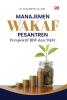
MANAJEMEN WAKAF PESANTREN PERSPEKTIF RBV DAN TQM
Keywords:
MANAJEMEN WAKAF, RESOURCE-BASED VIEW, TOTAL QUALITY MANAGEMENTSynopsis
Di tengah meningkatnya tuntutan transparansi dan profesionalisme lembaga filantropi Islam, pengelolaan wakaf pesantren di Indonesia menghadapi tantangan besar: bagaimana mengubah aset tradisional menjadi kekuatan strategis yang produktif dan berkelanjutan. Buku ini hadir sebagai jawaban atas kebutuhan tersebut.
Melalui pendekatan Resource-Based View (RBV) dan Total Quality Management (TQM), buku ini mengupas secara mendalam bagaimana wakaf tidak sekadar menjadi instrumen ibadah, tetapi juga dapat dikelola sebagai sumber daya unggulan yang mampu menciptakan keunggulan kompetitif bagi lembaga pendidikan Islam. Dengan menggabungkan perspektif strategis dan kualitas, pembaca diajak memahami bagaimana tata kelola wakaf yang efektif dapat meningkatkan kemandirian finansial, kualitas pendidikan, serta dampak sosial pesantren.
Buku ini tidak hanya menyajikan konsep teoritis, tetapi juga praktik nyata pengelolaan wakaf produktif di Indonesia. Disertai analisis lintas negara seperti Mesir, Turki, dan Malaysia, buku ini memperluas wawasan pembaca tentang model-model inovatif pengelolaan wakaf di dunia Islam.
Buku ini menawarkan kerangka integratif yang aplikatif—menghubungkan nilai-nilai maqāṣid al-syarī‘ah dengan strategi manajemen modern. Hasilnya adalah sebuah panduan komprehensif bagi akademisi, praktisi, pengelola pesantren, hingga pengambil kebijakan dalam mengoptimalkan potensi wakaf sebagai pilar pembangunan umat.
Buku ini menegaskan satu hal: ketika wakaf dikelola dengan strategi yang tepat dan kualitas yang terjaga, ia bukan hanya menjaga tradisi—tetapi juga membangun masa depan.
Chapters
-
KATA PENGANTAR
-
DAFTAR ISI
-
BAB 01. WAKAF PESANTREN
-
BAB 02. MANAJEMEN WAKAF DALAM BEBERAPA PERSPEKTIF
-
BAB 03. CROSS-CASE ANALISIS MANAJEMEN WAKAF DI INDONESIA
-
BAB 04. MANAJEMEN WAKAF DI INDONESIA
-
BAB 05. MANAJEMEN PENGEMBANGAN SUMBER DAYA PENDEKATAN RESOURCE BASED VIEW DI INDONESIA
-
BAB 06. MANAJEMEN WAKAF PENDEKATAN TOTAL QUALITY MANAGEMENT
-
BAB 07. INTEGRASI RBV DAN TQM DALAM MANAJEMEN WAKAF DI INDONESIA
-
DAFTAR PUSTAKA
-
GLOSARIUM
-
INDEKS
-
PROFIL PENULIS
Downloads
References
Buku
Aji, Prasetio, Manajemen Strategi Keunggulan Bersaing Berkelanjutan, (Yogyakarta: Ekuilibria, 2015).
Alwasilah, Chaedar, Pokoknya Kualitatif: Dasar-dasar Merancang dan Melakukan Penelitian Kualitatif, (Jakarta: PT. Dunia Pustaka Jaya, Cet. ke-3, 2006).
Azra, Azyumardi, Pendidikan Islam; Tradisi dan Modernisasi Menuju Milenium Baru, (Jakarta: Logos wacana Ilmu, 2000).
Bach, Stephen and Martin R. Edwards, Managing human resources: human resource management in transition, (UK: A John Wiley and Sons, Ltd., Publication, 2013, 5th ed.).
Bandura, A. Social Foundations of Thought and Action: A Social Cognitive Theory. (Prentice-Hall, 1986).
Barney, J. B., & Hesterly, W. S. Strategic Management and Competitive Advantage: Concepts. (London: Pearson, 2020).
Bass, B. M. Leadership and Performance Beyond Expectations. (Free Press, 1985).
Bass, B. M., & Riggio, R. E. Transformational Leadership. (Psychology Press, 2006).
Brigham, E. F., & Ehrhardt, M. C. Financial Management: Theory and Practice. (Cengage Learning, 2019).
Brown, Keith C. and Tiu, Cristian Ioan. "2. The Interaction of Spending Policies, Asset Allocation Strategies, and Investment Performance at University Endowment Funds" In How the Financial Crisis and Great Recession Affected Higher Education edited by Jeffrey R. Brown and Caroline M. Hoxby, 43-98. (Chicago: University of Chicago Press, 2014).
Dhofier, Zamkhsyari, Tradisi Pesantren, (Jakarta: LP3ES, 1982).
Drucker, P. F. Management Challenges for the 21st Century. (Harper Business, 1999).
Fattah, Nanang, Konsep Manajemen Berbasis Sekolah (MBS) Dan Dewan Sekolah, (Bandung:Pustaka Bani Quraisy, 2004).
Goetzmann, William N. and Oster, Sharon. "3. Competition among University Endowments" In How the Financial Crisis and Great Recession Affected Higher Education edited by Jeffrey R. Brown and Caroline M. Hoxby, 99-126. (Chicago: University of Chicago Press, 2014). https://doi.org/10.7208/9780226201979-005
Goleman, D. Social intelligence: The new science of human relationships. (Random House Publishing, 2006).
Greenleaf, R. K., Servant Leadership: A Journey into the Nature of Legitimate Power and Greatness. (Paulist Press, 2002).
Heifetz, R. A., & Linsky, M. Leadership on the Line: Staying Alive through the Dangers of Leading. (Harvard Business Review Press, 2002).
Hitt, M. A., Ireland, R. D., & Hoskisson, R. E. Strategic Management: Competitiveness and Globalization. (South-Western College Publishing, 2001).
Hudaya, Muhammad, Arif Pengembangan Wakaf Di Pondok Modern Di Jawa Tengah Batang (Studi Terhadap Pemikiran KH. Anang Rikza Masyhadi), (Tesis, Universitas Islam Indonesia, 2018).
Jaharuddin, Manajemen Wakaf Produktif Potensi, Konsep, dan Praktik, (Depok: Kaizen Sarana Edukasi, 2020).
Kaplan, R. S., & Norton, D. P. The Balanced Scorecard: Translating Strategy into Action. (Harvard Business Review Press, 1996).
Klaus, P. Communication breakdown: How smart managers can work better with people. (Forbes, 2010).
Kotler, P., & Keller, K. L. Marketing Management. (Pearson, 2016).
Mintzberg, H. The Nature of Managerial Work. (Harper & Row, 1973).
Mintzberg, H., Ahlstrand, B., & Lampel, J. Strategy Safari: A Guided Tour Through the Wilds of Strategic Management. (Free Press, 2005).
Moleong, Lexi J., Metodologi Penelitian Kualitatif, (Bandung: PT. Remaja Rosdakarya, Cet. ke-21, 2005).
Muhammad, A. D. Manajemen Wakaf Produktif di Era Modern. (Jakarta: Gramedia, 2020).
Mulyana, Dedi, Metodologi Penelitian Kualitatif: Paradigma Baru Ilmu Komunikasi dan Ilmu Sosial Lainnya, (Bandung: PT. Remaja Rosda Karya, 2006).
Oakland, J., TQM (Oxford: Heinemann, 1989).
Oakland, John S., Total quality management and operational excellence: text with cases. Fourth Edition. (New York: Routledge, 2014).
Obaidullah, M. Waqf-Based Microfinance: Realizing the Social Role of Islamic Finance. (Islamic Research and Training Institute, 2015).
Porter, M. E. Competitive Advantage: Creating and Sustaining Superior Performance. (Free Press, 1985).
Robbins, S. P., & Coulter, M. Management. (Pearson Education, 2016).
Robbins, S. P., & Judge, T. A. Organizational Behavior. (Pearson, 2018).
Rumelt, R. P. “Toward a strategic theory of the firm”. In Competitive Strategic Management. (Prentice-Hall, 1984).
Sale, D. Total Quality Management in Quality Assurance. Essentials of Nursing Management. (London: Palgrave, 1996), https://doi.org/10.1007/978-1-349-14197-5_2
Salim, M. Wakaf dan Ekonomi Islam: Konsep dan Implementasi. (Surabaya: Universitas Airlangga Press, 2021).
Sampurno, Knowledge Based Economy Sumber Keunggulan Daya Saing Bangsa, (Yogyakarta: Pustaka Pelajar, 2012).
Schein, Edgar H., Organizational Culture and Leadership, Fourth Edition, (San Francisco: Published by Jossey-Bass, 2010),
Setiadi, Doni, Wakaf Profesi dalam Perspektif Fiqih dan Undang-Undang di Indonesia. (Studi Kasus di Pondok Modern Di Jawa Tengah), (Semarang: Tesis, UIN Walisongo, 2019).
Setyawan, Wawan Tyas, Strategi Pengelolaan Wakaf Tunai Di Pondok Modern Di Jawa Tengah Batang Jawa Tengah, (Ponorogo: Tesis, Institut Agama Islam Negeri Ponorogo, 2023).
Steenbrink, Karel A., Pesantren, Madrasah dan Sekolah, (Jakarta: LP3ES, 1995).
Tjiptono, Fandy dan Diana, Anastasia, TQM Total Quality Management Edisi Revisi, (Yogyakarta: ANDI, 2002).
Widagdo, Suwignyo, Emy Kholifah Rachmaningsih, Yuniorita Indah Handayani, RESOURCE BASED VIEW; Strategi Bersaing Berbasis Kapabilitas dan Sumberdaya, (Jember: Mandala Press, 2019).
Yukl, G. Leadership in Organizations. (Pearson, 2013).
Zarkasyi, Imam, KH Imam Zarkasyi dari Gontor Merintis Pesantren Modern, (Jawa Timur: Gontor Press, 1996).
Zuhaili, Wahbah, Al-Fiqh al-Islāmī wa Adillatuhu, (Mesir: Dar al-Fikr al-Mu’ashir, 1985).
Jurnal
Abdillah, Wildan Army, "Human Resource Management: Application of Theory and Practice in Internal Organizations", Komitmen: Jurnal Ilmiah Manajemen, Vol. 3 No. 1, (2022).
Abdullah, M., & Ismail, A. G. Waqf as a framework for entrepreneurship. Humanomics, 33(4), (2017): 419-440.
Adisel, Adisel, Muhamad Suparji, Mufid Faruq Aziz, Niftah Handayani, and Winda Sari. “Model Kepemimpinan Kiai Di Pesantren Modern”. Jurnal Pendidikan Dasar Dan Sosial Humaniora 2 (4), (2023): 539-52, https://doi.org/10.53625/jpdsh.v2i4.5173.
Adnan, Raja Aishah binti Raja and Mahazan Abdul Mutalib, Muhammad Ridhwan Ab. Aziz. “Factors necessary for effective corporate waqf management for Malaysian public healthcare”. ISRA International Journal of Islamic Finance, Vol. 14 No. 1, (2022): 73-88. Emerald Publishing Limited. DOI 10.1108/IJIF-11-2019-0178.
Afif, Amirul bin Muhamat, Nizam, Mohammad bin Jaafar, “A Study on The Prospect of Waqaf (Endowment) Lands For Agricultural Activities: An Exploratory Study on Kota Setar District, Kedah”, Jurnal Pengurusan Awam, (2012), a paper presented at the Foundation of Islamic Finance Series: Islamic Banking Products, Theory, Practice and Issues: Second Conference 8-9 March 2011, Intercontinental Hotel, Kuala Lumpur, Malaysia.
Agustina, Fina Dwi, and Firli Rosakinanti, “Implementation of Electronic Voting in The Election of The Chairman of The Student Council (Dema) of Di Jakarta University”. Joistech: Journal of Information System and Technology 1 (1), (2024): 1-9. http://ejournal.di Jakarta.ac.id/index.php/joistech/article/view/246.
Akintona, Mustapha, “Investment Management Strategy: Yale University Endowment Model 2005-2016” (January 6, 2017). http://dx.doi.org/10.2139/ssrn.2895114.
Al Haziazi, M. “Development of Framework for Talent Management in the Global Context”. Open Journal of Business and Management, 9, (2021): 1771-1781, https://doi.org/10.4236/ojbm.2021.94096.
Al Hudori, Ahmad Husein Ritonga, Kaspul Anwar, Wildan Nur Hidayat, Al Mukaromah, "Kiai's leadership in human resource management of islamic boarding schools in jambi Indonesia" International Journal of Post Axial: Futuristic Teaching and Learning, Vol. 2, No. 1, (2024): 1-9, https://journal.amorfati.id/index.php/postaxial.
Alavi, M., & Gill, D. “Enhancing organizational effectiveness through leadership.” Journal of Management Education, 25(2), (2001): 240-259.
Alfiyan, Wahyu Nur, Luhur Prasetiyo, “Wakaf Produktif di Yayasan Addin As Shiddieq Pacitan Perspektif Total Quality Management (TQM)”, Journal of Sharia and Economic Law, Vol. 1, No. 1, (2021).
Alias, M., & Muhammad, S, “Sustainable development of waqf properties through collaboration with financial institutions: A case study of Malaysia”. Journal of Islamic Economics and Finance, 3(2), (2015): 72-84.
Alpay, S., & Haneef, M. A., “Waqf Sukuk: A New Islamic Financial Instrument for Infrastructure Development.” International Journal of Islamic Economics, 5(1), (2016): 33-47.
Amabile, T. M. (1996). Creativity in context. Boulder, CO: Westview Press.
Amaludin Ab. Rahman, Zaid Ahmad, Siti Zaleha Muhammad, “Comparative Best Practices, Challenges and Way Forward” Generation of Endowment Fund in Waqf Higher Education Institution: Application of Hybrid Model”, International Symposium on Waqf and Higher Education (Iswhe 2016) Istanbul, Turkey 28 – 30 May 2016.
Angelini, Danielle, Katherine Brophy, Robert Wondolowski, An Analysis of University Endowment Spending, WPI, see http://www.wpi.edu/Academics/Project
Anisa, Citra Ayu “Tingkat Manajemen dan Manajer Beserta Fungsi-Fungsi Manajemen.” Leadership: Jurnal Mahasiswa Manajemen Pendidikan, 2(2), (2021).
Ansori, Moh. Asep Zakariya, Egi Agustian Rahmat Sukendar, Ersa Morita Shelvira, Assyfa Ridzki Indirasari, Muhammad Azril Pebriansyah, and Tirta Saepul Bahri, “Interpretasi Ulama Tentang Signifikansi Konsep Wakaf Uang Dalam Peningkatan Kesejahteraan Sosial”. Economic Reviews Journal 3 (1), (2024): 581–592, https://doi.org/10.56709/mrj.v3i1.133.
Aragon, George O. and Jiang, Yuxiang and Joenvaara, Juha and Tiu, Cristian Ioan, Responsible Investing: Costs and Benefits for University Endowment Funds (March 22, 2022). Available at SSRN: https://ssrn.com/abstract=3446252 or http://dx.doi.org/10.2139/ssrn.3446252
Argenti, P. A. Corporate Communication. (McGraw-Hill Education, 2007).
Arifin, Z., & Turmudi, M., “Character of Education in Pesantren Perspective: Study of Various Methods of Educational Character at Pesantren in Indonesia.” Tribakti: Jurnal Pemikiran Keislaman, 30(2), (2019): 335-348, https://doi.org/10.33367/tribakti.v30i2.823.
Asni, Muhamad, Fathullah Al Haq, and Jasni Sulong, “Wakaf Tunai Dan Aplikasinya Dalam Undang-Undang Di Negara Asean: Cash Waqf and Its Application in ASEAN Countries’ Laws”. Jurnal Syariah 25 (2), (2017): 217-46. https://doi.org/10.22452/js.vol25no2.3.
Atabik, Ahmad “Manajemen Pengelolaan Wakaf Tunai di Indonesia” dalam Jurnal ZISWAF, Vol. 1, No. 1, (2014).
Attakora-Amaniampong, Elvis Andrews Salakpi, Freda Bonye, “Total Quality Management and its Impact on the Level of Customer Focus within Construction Project Management in Ghana” International Journal of Business and Management Invention, Volume 3 Issue 7, (2014): 36-48.
Ayub, Mohd Nasir, Surita Hartini Mat Hassan, Nazni Noordin, and Mohd Zool Hilmie Mohamed Sawal, “Application of Ijarah in Sustaining Educational Endowment at People’s Religious School (Sar): A Study in Penang, Perlis And Kedah” “Aplikasi Ijarah Ke Arah Melestarikan Wakaf Pendidikan Sekolah Agama Rakyat (Sar): Kajian Di Pulau Pinang, Perlis Dan Keda”. Jurnal Islam Dan Masyarakat Kontemporari 21 (2), (2020): 69-88, https://doi.org/10.37231/jimk.2020.21.2.484.
Baharun, H. “Total Moral Quality: A New Approach for Character Education in Pesantren.” Ulumuna, 21(1), (2017): 57-80. https://doi.org/10.20414/ujis.v21i1.1167
Bakhri, Saiful, Fuadah Johari, Hainnuraqma Binti Rahim, “Productive Waqf DevelopmentIn Improving Islamic Boarding School Independent Economics”, Tasharruf: Journal of Islamic Economics and Business, Page: 1-13, Vol. 04, No. 0109, (2023), e-ISSN/p-ISSN: 2962-8407/2962-1836
Baldwin, T. T., & Ford, J. K. Transfer of training: A review and directions for future research. Personnel Psychology, 41(1), (1988): 63-105.
Barney, J. B. “Organizational culture: Can it be a source of sustained competitive advantage?”, Academy of Management Review, 11(3), (1986): 656-665.
Barney, J. B. “Firm resources and sustained competitive advantage”, Journal of Management, 17(1), (1991): 99-120.
Basari, D., Sebgag, S., Noval, S. M., Mudrikah, A., & Mulyanto, A., “Human Resource Management Model in Islamic Boarding School-Based Private Madrasah Tsanawiyah. Nidhomul Haq”, Jurnal Manajemen Pendidikan Islam, 8(1), (2023): 14-30, https://doi.org/10.31538/ndh.v8i1.2884.
Basit, Abdul Diah Mutiara, Ummah Karimah, Thahirah Nur Adilla, Azizah Istiqomah, “Collective Leadership of Islamic Boarding Schools on the Element of Educators” Al-Ishlah: Jurnal Pendidikan Vol.15, 4 (2023): 5223-5233, ISSN: 2087-9490 EISSN: 2597-940X, DOI: 10.35445/alishlah.v15i4.2987, http://journal.staihubbulwathan.id/index.php/alishlah.
Basuki, Nanang, "Mengoptimalkan Modal Manusia: Strategi Manajemen Sumber Daya Manusia yang Efektif untuk Pertumbuhan Organisasi yang Berkelanjutan", Komitmen: Jurnal Ilmiah Manajemen, Vol. 4 No. 2, (2023).
Black, J. A., & Bright, D. S. “Enhancing team performance through informal communication: Empirical insights.” Journal of Organizational Effectiveness, 7(1), (2020): 45-63.
Brown, Keith C. and Tiu, Cristian Ioan and Garlappi, Lorenzo, “The Troves of Academe: Asset Allocation, Risk Budgeting, and the Investment Performance of University Endowment Funds” (2007). McCombs Research Paper Series No. FIN-03-07, or http://dx.doi.org/10.2139/ssrn.981436
Buhari, A. Taufiq. “Pengaruh Wakaf Dalam Kehidupan Ekonomi”. Syaikhuna: Jurnal Pendidikan Dan Pranata Islam 10 (2), (2019): 263-74. https://doi.org/10.36835/syaikhuna.v10i2.3728.
Cairns, R., & Garrard, K. A. ‘Learning from history is something that is important for the future’: Why Australian students think history matters. Policy Futures in Education, 22(3), (2024): 369-382. https://doi.org/10.1177/14782103231177615.
Campbell, John Y., "Investing and Spending: The Twin Challenges of University Endowment Management." Forum for the Future of Higher Education Symposium, Aspen, CO, June 8, 2011.
Carcasson, Martín, Sprain, Leah, "Beyond Problem Solving: Reconceptualizing the Work of Public Deliberation as Deliberative Inquiry", Communication Theory (2015) International Communication Association.
Cejnek, Georg and Franz, Richard and Randl, Otto and Stoughton, Neal M., A Survey of University Endowment Management Research (November 25, 2013). Journal of Investment Management, Third Quarter (2014), Available at SSRN: https://ssrn.com/abstract=2205207 or http://dx.doi.org/10.2139/ssrn.2205207
Che, Natasha Xingyuan, "Factor Endowment, Structural Coherence, and Economic Growth", International Monetary Fund WP/12/165, (2012).
Cherry, Todd L., Stephan Kroll, & Jason F. Shogren, "The Impact of Endowment Heterogeneity and Origin on Public Good Contributions: Evidence From the Lab" Journal of Economic Behavior & Organization Volume 57 Issue 3, (2005): 357-365 [DOI:10.1016/j.jebo.2003.11.010]
Chun, R., Davies, G. E-reputation: The role of mission and vision statements in positioning strategy. J Brand Manag 8, (2001): 315–333 https://doi.org/10.1057/palgrave.bm.2540031
Ciptono, Wakhid Slamet, “Hierarchical Level of Managers’ Abilities, A Moderator between Quality Management Practices and Company Financial Performance.” Gadjah Mada International Journal of Business, Vol. 9, No. 3, (2007): 295–334.
Dahlgaard, J. J., Reyes, L., Chen, C., Dahlgaard-Park, Su Mi, “Evolution and future of total quality management: management control and organisational learning,” Total quality management and business excellence (Online), (2019), https://doi.org/10.1080/14783363.2019.1665776.
Darajat, Deden Mauli, Rosyidin, Iding, Fahrudin, Dedi, “Pesantren and madrasa-based digital literacy practices: The case of the Di Jakarta Islamic Boarding School, Jakarta.” Islamic Communication Journal, 7(2), (2022): 257-272. doi:https://doi.org/10.21580/icj.2022.7.2.13619
Darmawan, Rizky, Shulthoni, M., & Stiawan, D. Pengaruh Sistem Cashless Payment Sebagai Sarana Transaksi Utama Di Pondok Modern Di Jawa Tengah. Sahmiyya: Jurnal Ekonomi Dan Bisnis, 3(1), (2024): 16–22. Retrieved from https://e-journal.uingusdur.ac.id/sahmiyya/article/view/1856
Dasuki, Rima Elya, “Manajemen Strategi: Kajian Teori Resource Based View”, Coopetition: Jurnal Ilmiah Manajemen, Vol XII, No 3, (2021).
Dharmarianti, D. P., Hasanah, N., Irfany, M. I., & Haq, D. A. “Waqf Management in Pesantren: A Case Study of Lembaga Wakaf Daarut Tauhiid.” The Economic Review of Pesantren, 3(1), (2024). https://doi.org/10.58968/erp.v3i1.417
Diba, F. “Implementing Entrepreneurship Practice and Networks Building Through Collaboration at Bussiness Festival Event at Di Jakarta University”. Nusantara Science and Technology Proceedings, 2023(36), (2023): 78-85. https://doi.org/10.11594/nstp.2023.3711
Dierickx, I., & Cool, K. “Asset stock accumulation and sustainability of competitive advantage”. Management Science, 35(12), (1989): 1504-1511.
Dimitrova, Vanya, Olga Mancheva-Ali, “Planning and Time Management”, International Conference Knowledge-Based Organization Vol. XXIV, No. 1, (2018).
Edmondson, A. C. “Psychological safety and learning behavior in work teams.” Administrative Science Quarterly, 44(2), (1999): 350-383.
Edwards, Raymond, “An Elaboration of the Administrative Theory of the 14 Principles of Management by Henri Fayol”, International Journal for Empirical Education and Research, Vol-1, No-1, (2018).
Fachrizal, Reyhan, M., Aulya Safitri, N., Fitriani, R., & Syarifudin, H. E. Management in pesantren education institutions. Educenter: Jurnal Ilmiah Pendidikan, 2(2), (2023): 209–217, https://doi.org/10.55904/educenter.v2i2.767.
Fardows, Nayer, Daud Nayer, Agnes Nayer, Sarah Nayer Jaffar, “Enhancing quality assurance in higher education through strategic endowment fund management: case studies and best practices”, The Business and Management Review, Volume 14 Number 3 December 2023, Conference proceedings of the Centre for Business & Economic Research, ICGEEE-2023, 8-9 December
Fatimatuzzahroh, F., Abdoellah, O., & Sunardi, S. “The Potential of Pesantren in Sustainable Rural Development.” Jurnal Ilmiah Peuradeun, 3(2), (2015): 257-278, Retrieved from http://journal.scadindependent.org/index.php/jipeuradeun/article/view/66.
Fauzi, M. “Fundraising Ziswaf dan Kewirausahaan di Pondok Pesantren Modern Di Jawa Tengah, Batang, Jawa Tengah”. Jurnal Bingkai Ekonomi (JBE), 4(1), (2019): 59-68, Retrieved from https://itbsemarang.ac.id/sijies/index.php/jbe33/article/view/71.
Ferdous, Jannatul, “Organization Theories: From Classical Perspective”, International Journal of Business, Economics and Law, Vol. 9, Issue 2, (2016).
Fitriansyah, Iqbal, Nurul Iman, Azid Syukrani, "Peran Kepemimpinan Pendidikan dalam Membangun Ideologi di Pondok Pesantren Darul Falah Ponorogo" Ta’lim Diniyah: Jurnal Pendidikan Agama Islam (Journal of Islamic Education Studies), Vol. 3, No. 1, (2022).
Gabriela-Livia, Curpănaru, “Total Quality Management – An Instrument for Improving Organizational Efficiency”, American Journal of Engineering Research (AJER), Volume-10, Issue-05, (2021): 105-110.
Gandrita, Daniel Mandel. "Improving Strategic Planning: The Crucial Role of Enhancing Relationships between Management Levels" Administrative Sciences 13, no. 10, (2023): 211, https://doi.org/10.3390/admsci13100211.
Garini, Dwi Putri, Rahman, Muhammad Zaki, "Strategi Manajemen Sumber Daya Manusia dalam Meningkatkan Kinerja Pegawai Dinas Komunikasi dan Informatika Kota Banjar", Co-Value: Jurnal Ekonomi, Koperasi & Kewirausahaan, Volume 15, Nomor 1, (2024).
Goklas, Andri, Setyo Riyanto, Jenny Sihombing, E. Nurzaman AM., Denok Sunarsi, "Management of Organizational Performance: the Role of Human Resource Management Strategy" Jurnal Administrare: Jurnal Pemikiran Ilmiah dan Pendidikan Administrasi Perkantoran, Vol. 8, Issue 1, (2021): 245-254, http://ojs.unm.ac.id/index.php/administrare/index
Grant, R. M. “Toward a knowledge-based theory of the firm”, Strategic Management Journal, 17(S2), (1996): 109-122.
Gupta, Jyoti, Georges Hirsch, “Managing the planning process: Recent trends and challenges”. European Management Journal, Volume 4, Issue 2, (1986): 82-88.
Haerunisa, Della, Munir, Muhammad Misbakul, Muhibban, and Ryan Bianda. “Collective Endowments; Perspective of Islamic Law and Positive Law in the Construction of Mosques”. Al-Akhbar: Jurnal Ilmiah Keislaman 9 (2), (2023): 51-65, https://ejournal.unma.ac.id/index.php/aa/article/view/7045.
Haidlir, Banu Muhammad; musthofa, budiman Mahmud; and Mukhlish, Basuki Muhammad, "Analysis of global tourism and creative economy trends to support Jakarta as a global city," Journal of Indonesian Tourism and Policy Studies: Vol. 9: Iss. 1, Article 1, (2024), https://scholarhub.ui.ac.id/jitps/vol9/iss1/1.
Hakim, A. "Manajemen Wakaf Produktif: Studi Kasus pada Lembaga Pendidikan Islam." Jurnal Manajemen dan Keuangan Islam, 12(3), (2021): 150-165.
Handayani, Trini, Aji Mulyana, Cucu Solihah, Azzahra Salsabila Ramadani, Kayla Andini Putri, Endang Setyowati, “Social Conflict Resolution Related to Bullying Cases Through The Deliberation System Based on Pancasila Perspective” Semarang Law Review (SLR)/Volume 5, Nomor 2 (2024).
Hasan, Mohammad, Muhammad Taufiq, Hüseyin Elmhemit, "Digital Transformation of Islamic Education in Pesantren Madura", Tadris: Jurnal Pendidikan Islam; Vol. 18 No. 2, (2023), DOI: 10.19105/tjpi.v18i2.10535.
Hasan, Zunaidah Ab, Azhana Othman, Khalilah Ibrahim, Mohd Ab Malek Md Shah, Abd. Halim Mohd Noor, “Managementof Waqf Assets in Malaysia”, International Journal of Nusantara Islam, Vol.03 No.01, (2015): (59–68), DOI: http://dx.doi.org/10.15575/ijni.v3i1.412.
Hasanah, R., & Mulyadi, A. "Inovasi Digital dalam Pengelolaan Wakaf di Indonesia." Jurnal Ekonomi Syariah Indonesia, 8(1), (2023): 20-35.
Hasbullah, Mushaddad, Syahnaz Sulaiman, Hakimah Hamir, and Azman Ab Rahman. “Model Tabdir Urus Zakat Universiti Awam: Perbandingan Pusat Wakaf Dan Zakat (PWZ) Dan Pusat Pengurusan Wakaf, Zakat Dan Endowmen (WAZAN): Zakat Management Model In Public Universities: A Comparison Between Pusat Wakaf Dan Zakat (PWZ) And Pusat Pengurusan Wakaf, Zakat Dan Endowmen (Wazan)”. Journal of Fatwa Management and Research 29 (2), (2024):127-43, https://doi.org/10.33102/jfatwa.vol29no2.590.
Hasbullah, Nurul Adilah, and Asmak Ab Rahman. “Endowment and Waqf Funds in Malaysian Higher Education: A Conceptual Study”. Jurnal Syariah 29 (1), (2021):127-54. https://doi.org/10.22452/js.vol29no1.6.
Hassan, A., & Shahid, M. Management and development of the waqf assets in Malaysia. Jurnal Pengurusan, 30(2), (2010): 73-80.
Hassan, N., Abdul-Rahman, A., & Yazid, Z. “Developing a New Framework of Waqf Management.” International Journal of Academic Research in Business and Social Sciences, 8(2), (2018): 287–305.
Herlena, Winceh & Abdul Mujib, Strategi Penghimpunan, Pengelolaan dan Penyaluran Wakaf Tunai Jurnal Hukum Bisnis Islam Vol. 13, No. 2, (2021).
Hidayah, Nur & Mutiara, Tira, “Behavioral Intention and Use of Behavior in a Digital-Based Cash Waqf System”, The 10th International Conference on Cyber and IT Service Management (CITSM 2022), Yogyakarta, September 20-21, (2022).
Hj Mohiddin, Hjh Mas Nooraini. “Model Integrasi Wakaf Pengajian Tinggi Di Brunei Darussalam: Integrated Waqf Model for Higher Education for Brunei Darussalam”. International Journal of Islamic Economics and Finance Research 5, (2022): 17-40, https://doi.org/10.53840/ijiefer66.
Huda, Miftahul, “Wakaf dan Kemandirian Pesantren dari Tebuireng Hingga Gontor,” Jurnal Islamica, Volume 7, Nomor 1, (2012).
Huda, Nurul, Nova Rini, Yosi Mardoni, Desti Anggraini, Khamim Hudori, “Manajemen Pengelolaan Wakaf di Indonesia Timur” dalam Jurnal Ekuitas: Jurnal Ekonomi dan Keuangan.
Ibrahim, M. "Manajemen Wakaf Produktif di Lembaga Pendidikan Islam." Jurnal Ekonomi Islam, 9(2), (2021): 120-130.
Ibrahima, Duski, Ahmad Zainuria, Miftachul Hudab, “Empowering Wakaf (Islamic endowment) for Economic Development: An Insightful Value of Nazir Waqf in Indonesia,” UMRAN International Journal of Islamic and Civilizational Studies, 01 (2020): 103-114, www.http://jurnalumran.utm.my/index.php/umran.
Ilahi, M. T. “Kiai: Figur Elite Pesantren. Ibda`”. Jurnal Kajian Islam Dan Budaya, 12 (2), (2014): 137–148, https://doi.org/10.24090/ibda.v12i2.442.
Isamail, Mohamad Zaim, Muhammad Ikhlas Rosele, and Mohd Anuar Ramli. “Pemerkasaan Wakaf Di Malaysia: Satu Sorotan”. Labuan E-Journal of Muamalat and Society (LJMS) 9 (2015): 1-13, https://doi.org/10.51200/ljms.v9i.2983.
Iskandar, Farid Izda, “Fundraising Strategy of Cash Waqf in Pondok Modern Di Jawa Tengah in 2019”, Journal of Islamic Economics and Philanthropy (JIEP). VOL. 02, No. 04, (2019).
Ismail, C., Salim, N., & Hanafiah, N. “Administration and Management of Waqf Land in Malaysia: Issues and Solutions.” Mediterranean Journal Of Social Sciences, 6(4), (2015): 613, Retrieved from https://www.mcser.org/journal/index.php/mjss/article/view/7122.
Ismail, M., & Habib, S. “Community-Based Waqf Projects: The Role of Local Participation in Success Stories.” Journal of Islamic Development, 9(3), (2014): 23-38.
Izfanna, D. and Hisyam, N.A. "A comprehensive approach in developing akhlaq: A case study on the implementation of character education at Pondok Pesantren Di Jakarta", Multicultural Education & Technology Journal, Vol. 6 No. 2, (2012): 77-86, https://doi.org/10.1108/17504971211236254.
Jahar, Asep Saepudin, “Filantropi dan Keberlangsungan Ormas Islam”, dalam Jurnal Al-Risalah, Forum Kajian Hukum dan Sosial Kemasyarakatan, Vol. 16, No. 1, (2016): 71-93.
Jahar, Asep Saepudin, “Transformasi Gerakan Ekonomi Islam Kontemporer”, dalam Jurnal MIQOT, Vol. XXXIX No. 2, (2015).
Jonyo, Bonn O., Caren Ouma, Zachary Mosoti, "The Effect of Mission and Vision on Organizational Performancе within Private Universities in Kenya", European Journal of Educational Sciences, EJES, Vol. 5, No. 2, (2018).
Kahf, M. “Waqf and Its Sociopolitical Aspects: A Critique of Western Perspectives.” Islamic Economic Studies, 10(2), (2003): 1-18.
Kamaruddin, Muhammad Iqmal Hisham and Masruki, Rosnia and Hanefah, Mustafa Mohd, “Waqf Management Practices: Case Study in a Malaysian Waqf Institution.” World Journal of Social Sciences, Vol. 8, No. 3, (2018): 1-12, https://ssrn.com/abstract=3269171.
Kamarudin, H., & Ab Rahman, S. “Community participation in waqf projects: A case study of Malaysian waqf institutions.” Journal of Islamic Philanthropy, 5(3), (2019): 47-59.
Kaplan, R. S., & Mikes, A. Managing risks: A new framework. Harvard Business Review, 90(6), (2012): 48-60.
Karatas, M., & Sandikci, O. Charity in Islamic societies: The waqf as a social and economic institution. Journal of Economic Perspectives, 25(3), (2011): 59-80.
Kareska, Katerina, “The Role of Planning as a Fundamental Management Function for Achieving Effectiveness in Business Organizations” (2017), Available at SSRN: https://ssrn.com/abstract=3022761 or http://dx.doi.org/10.2139/ssrn.3022761.
Karimi, Yadollah, Sharifah Latifah Syed Abdul Kadir, "The Impact of Organisational Culture on the Implementation of TQM: Empirical Study in the Iranian Oil Company" American Journal of Industrial and Business Management, Vol. 2, No. 4, (2012).
Khamid, Bayu Azizi, Abdul Saipon, M. Irfanudin Kurniawan, “Manajemen Keuangan Melalui Pembayaran Cashless Berbasis RFID Di Pondok Pesantren Di Jakarta 2 Cipining Bogor”. Journal of International Multidisciplinary Research 2 (2), (2024): 332-39, https://doi.org/10.62504/5nrfs775.
Khamis, Siti, and Marhanum Che Mohd Salleh. “Study on The Efficiency of Cash Waqf Management in Malaysia”. Journal of Islamic Monetary Economics and Finance 4 (1), (2018): 61–84, https://doi.org/10.21098/jimf.v4i1.732.
Khorasani, Sasan Torabzadeh, Maryam Almasifard, “Evolution of Management Theory within 20 Century: A Systemic Overview of Paradigm Shifts in Management”, International Review of Management and Marketing, 7(3), (2017): 134-137.
Khosim, Ali, and Busro Busro. “Konsep Nazhir Wakaf Profesional Dan Implementasinya Di Lembaga Wakaf NU Dan Muhammadiyah”. Al-Awqaf: Jurnal Wakaf Dan Ekonomi Islam 11 (1), (2020): 49-74, https://doi.org/10.47411/al-awqaf.v11i1.28.
Khotimah, Khusnul, “Pandangan Berbasis Sumber Daya (Rbv) Dalam Pembahasan Organisasi Ekonomi”, FuturE: Jurnal Manajemen dan Akuntansi.
Komariah, Nur, “Pendidikan Berbasis Full Day School”, Hikmah, Jurnal Pendidikan Islam Vol. 5, No. 2, (2016): 183.
Komarudin, T., Damiri, A., & Jalaludin, J. Pengelolaan Wakaf Produktif Tanah Sawah Di Yayasan Islam Pondok Pesantren Miftahul Jannah Jatibaru Kecamatan Jatisari Karawang. EKSISBANK (Ekonomi Syariah Dan Bisnis Perbankan), 4(1), (2020): 1-10, https://doi.org/10.37726/ee.v4i1.93.
Kopaneva, I. M. Left in the Dust: Employee Constructions of Mission and Vision Ownership. International Journal of Business Communication, 56 (1), (2019): 122-145, https://doi.org/10.1177/2329488415604457.
Korthals, Michiel, “Deliberations on the Life Sciences: Pitfalls, Challenges and Solutions”, Journal of Public Deliberation, Volume 7, Issue 1, (2011).
Kultsum, Umi, Abdulloh Hadziq, "Improving the Quality of Pesantren through Quality Management Santri at the Pesantren Al-Iman Bulus", Santri: Journal of Pesantren and Fiqh Sosial, Vol. 2 No. 1, (2021), DOI: https://doi.org/10.35878/santri.v2i1.283 ISSN (e): 2722-8223, https://journal.ipmafa.ac.id/index.php/santri 35.
Kusniya, Dela, Siti Mujanah, “The Role of Creativity Innovation and Resilience on Employee Performance at Nusantara Garment Company Surabaya”. Journal of Applied Management and Business, Vol. 3, No. 1, (2022): 36 – 45.
Liaw, K. Thomas, “Investment Strategies and Returns of University Endowment Funds”, Review of Business, Vol 40, Issue 1, (2020): 51.
Lippman, S. A., & Rumelt, R. P. “Uncertain imitability: An analysis of interfirm differences in efficiency under competition”, The Bell Journal of Economics, 13(2), (1982): 418-438.
Locke, E. A., & Latham, G. P. “Building a practically useful theory of goal setting and task motivation: A 35-year odyssey.” American Psychologist, 57(9), (2002): 705-717.
Lubis, Nurul Wardani, “Resource Based View (RBV) in Improving Company Strategic Capacity”, Research Horizon, Vol.2, no.6, (2022): 587-596, Website: https://journal.lifescifi.com/index.php/RH/index.
Lukitawati, Barliana, Riris Aishah, “Islamic Boarding School International Program in View of Integrated Marketing Communication Syariah (Study on Darunajah Islamic Boarding School)”, Proceedings of the 4th International Colloquium on Interdisciplinary Islamic Studies in conjunction with the 1st International Conference on Education, Science, Technology, Indonesian and Islamic Studies, ICIIS and ICESTIIS 2021, 20-21 October 2021, Jambi, Indonesia.
Madanchi, Mehdi, Shadi Shahverdiani, Fatemeh Hamidifar, “Endowment and Charity Financing Model to Develop Science and Technology”, International Journal of Finance and Managerial Accounting, Vol.1, No.4, (2016), With Cooperation of Islamic Azad University – UAE Branch 55.
Mahamood, S.M. and Ab Rahman, A., "Financing universities through waqf, pious endowment: is it possible?", Humanomics, Vol. 31 No. 4, (2015): 430-453, https://doi.org/10.1108/H-02-2015-0010.
Mahmassani, S. “Waqf empowerment for the autonomy of Islamic boarding school (pesantren); study of modern Islamic boarding school (pondok) Di Jawa Tengah Batang”. Journal of Islamic Economics Management and Business (JIEMB), 2(2), (2021): 1-22, doi: https://doi.org/10.21580/jiemb.2020.2.2.6845.
Mahmood, Ziarab and Muhammad Basharat, Zahid Bashir, “Review of Classical Management Theories”, International Journal of Social Sciences and Education ISSN: 2223-4934, Volume: 2 Issue, (2012): 512.
Manaf, Sofwan, Matnur Ritonga, “Lecturer Resource Development Design of Di Jakarta University Jakarta From 2023 To 2031”. Evaluasi: Jurnal Manajemen Pendidikan Islam 8 (1), (2024): 82-92, https://doi.org/10.32478/8s1xpg70.
Marfuah, Siti, Abdul Saipon, M. Irfanudin Kurniawan, “Implementasi Gerakan Literasi Dalam Meningkatkan Minat Membaca Dan Menulis Santriwati Di Pondok Pesantren Di Jakarta 2 Cipining Bogor”. Journal of International Multidisciplinary Research 2 (2), (2024): 380-85, https://doi.org/10.62504/tjgx5a48.
Marzuki, M., Miftahuddin, M., & Murdiono, M. “Multicultural Education in Salaf Pesantren and Prevention of Religious Radicalism in Indonesia.” Jurnal Cakrawala Pendidikan, 39(1), (2020): 12-25, doi:https://doi.org/10.21831/cp.v39i1.22900.
Masqon, Dihyatun, “Dynamic of Pondok Pesantren as Indegenous Islamic Education Centre In Indonesia”, Jurnal TSAQAFAH, Vol. 7, No. 1, (2011), https://doi.org/10.21111/tsaqafah.v7i1.114.
Mastur, Mastur, Anggun Nurma Dinda, Puput Wulandari, Aina Rizqiya Rahmah, and Siti Rubiyati. “Pengaruh Pemberian Beasiswa Terhadap Motivasi Belajar Mahasiswa Universitas Di Jakarta”. Jurnal Pendidikan Tambusai 7 (2), (2023): 6647-52, https://doi.org/10.31004/jptam.v7i2.7274.
Mastur, Putra Hafidz, Eka Fitriani, Dzulfikar, Risya Oriza Sativa, “Improving Employee Performance Through Workload and Work Motivation at the Di Jakarta Islamic Boarding School”, Journal of Applied Management Research (JAMR) -Vol. 3, No. 2, (2023), Published online on the journal's web page: http://jurnal.usahid.ac.id/index.php/jamre DOI: http://dx.doi.org/10.36441/jamr.
Maulidia, Peni, Hasan Darojat, and Ahmad Syaifullah. “Community Empowerment in Improving IMTAQ and Science and Technology in Ulujami Village”. Jurnal Pengabdian Dan Pemberdayaan Masyarakat Indonesia 3 (7), (2023): 337-48, https://doi.org/10.59247/jppmi.v3i7.92.
Mbalamula1a, Yazidu Saidi, Majiyd Hamis Suru a, Abdallah Jacob Seni, “Utility of Henri Fayol’s Fourteen Principles in the Administration Process of Secondary Schools in Tanzania”, International Journal of Education and Research, Vol. 5, No. 6, (2017).
McClelland, D. C. Testing for competence rather than for "intelligence". American Psychologist, 28(1), (1973): 1-14.
McElhaney, Robert Louie Stanton, "The Effects of Higher Education Endowment Management Practices on Endowment Performance" (2010). Dissertations. 437. https://aquila.usm.edu/dissertations/437
McLean, J, “Fayol - Standing the test of time”. Manager: British Journal of Administrative Management, 74, (2011): 32-33.
Md Nawi, Noor Hisham, and Marwan Ismail. “Falsafah Wakaf Pendidikan Tinggi: Satu Semakan Semula”. Journal of Techno-Social 10 (2), (2018), https://penerbit.uthm.edu.my/ojs/index.php/JTS/article/view/3680.
Md Nawi, Noor Hisyam, Marwan Ismail, And Mohd Kamil Ahmad. “Falsafah Wakaf Pendidikan Tinggi; Analisis Epistemologi Dan Aksiologi”. Human Sustainability Procedia, (2018), https://publisher.uthm.edu.my/periodicals/index.php/hsp/article/view/1127.
Medaline, Onny. "Cash Endowment (Wakaf Tunai) Development in the Era of the ASEAN Economic Community." Addin, vol. 10, no. 2, (2016): 405-430, doi:10.21043/addin.v10i2.1304.
Men, L. R. “Strategic internal communication: Transformational leadership, communication channels, and employee satisfaction.” Management Communication Quarterly, 28(2), (2014): 264-284.
Mohamed, Noraini, Muhammad Akramin Kamarul Zaman, and Mohd Noor Daud. “Implementation of Cash Waqf, Wakaf Perak Ar Ridzuan (WPAR) 2016-2021: Pelaksanaan Wakaf Tunai, Wakaf Perak Ar Ridzuan (WPAR) 2016-2021”. AL-MAKRIFAH Journal of Knowledge and Learning in Islamic Tradition and Culture 1 (1), (2023): 1-14, https://doi.org/10.37134/almakrifah.vol1.1.1.2023.
Mohiddin, Dr Hjh Mas Nooraini Hj. “Kredibiliti Wakaf Dalam Menangani Isu Pembiayaan Pengajian Tinggi”. International Research Journal Of Shariah, Muamalat And Islam (IRJSMI) 2 (4), (2020): 09-21, https://gaexcellence.com/index.php/irjsmi/article/view/79.
Mu’allim, Amir, Pengaruh Pengelolaan Wakaf di Mesir Terhadap Pengelolaan Harta Wakaf Pendidikan di Indonesia (Studi terhadap Ijtihad dalam Pengelolaan Wakaf Pendidikan di UII dan Pondok Modern Gontor), Jurnal AKADEMIKA, Vol. 20, No. 01, (2015).
Mubarak, A. “The impact of leadership commitment on pesantren education quality.” Indonesian Journal of Islamic Education, 3(1), (2015): 45-60.
Mubarok, Acep Zoni Saeful, “Prospek Nazhir Wakaf Global Berbasis Pesantren di Era Digital”, dalam Jurnal Bimas Islam, Vol 13 No. 1.
Muhamad, Nor, Nasrul Hisyam, Abdul Hafiz Abdullah, Sulaiman Shakib Mohd Noor, and Mohd Rilizam Rosli. “Wakaf di Negeri Johor: Latar Belakang dan Potensi (Waqf in State of Johor: Background and Potential)”. UMRAN - International Journal of Islamic and Civilizational Studies 6 (2-2), (2019), https://doi.org/10.11113/umran2019.6n2-2.380.
Muhamad, Nor, Nasrul Hisyam, Mohd Arafat Jaafar, Muhibbuddin Abdullah, Nurul Atikah Nizaludin, Mohd Muslim Salleh, and Mohd Muammar Mohd Zin. “Konsep Maqasid Syariah Dalam Pengurusan Wakaf (Maqasid Shariah in Waqf Management)”. Umran - International Journal of Islamic and Civilizational Studies 2 (3), (2015), https://doi.org/10.11113/umran2015.2n3.21.
Munadi, Muhammad, “Pengelolaan Endowment Fund di Perguruan Tinggi Malaysia: Studi Kasus di Universitas Teknologi Malaysia”, Al-Ulum, Volume 17, Number 2, (2017): 306-331.
Munir, Zainal Arifin, “Revitalisasi Manajemen Wakaf Sebagai Penggerak Ekonomi Masyarakat”, dalam Jurnal de Jure, Jurnal Syariah dan Hukum, Volume 5, Nomor 2, (2013): 162-171.
Mursyidah, Azizah, and Miftahul Anwar. “Productive Waqf Model in Di Jakarta Islamic Boarding School and Its Development for Educational Institutions”. Journal of Noesantara Islamic Studies 1 (1), (2024): 39-50, https://journal.ypidathu.or.id/index.php/ijnis/article/view/806.
Mustaffa, Najibah, and Mohd Zamro Muda. “Pengurusan Wakaf Pendidikan Di Institusi Pengajian Tinggi Malaysia: Satu Sorotan Literatur”. International Journal of Management Studies 21 (2), (2014): 63-81, https://e-journal.uum.edu.my/index.php/ijms/article/view/10412.
Mutmainah, Mutmainah. “Wakaf Dan Pengembangan Pendidikan Islam di Indonesia”. Syaikhuna: Jurnal Pendidikan Dan Pranata Islam 8 (1), (2017): 107-24, https://doi.org/10.58223/syaikhuna.v8i1.3061.
Muzakkir, “Wakaf Uang Dan Implikasi Sosial Perspektif Ushul Fiqh”. TAFAQQUH 4 (2), (2024): 1-21, https://doi.org/10.70032/weq3qb81.
Nahapiet, J., & Ghoshal, S. Social capital, intellectual capital, and the organizational advantage. Academy of Management Review, 23(2), (1998): 242-266.
Niemeyer, Simon, Francesco Veri, John S. Dryzek, And André Bächtiger. “How Deliberation Happens: Enabling Deliberative Reason.” American Political Science Review 118, no. 1, (2024): 345–62, https://doi.org/10.1017/S0003055423000023.
Nizar, Adril M. Mukhlis Nasrulloh, “Implementasi Hidden Curriculum Tentang Nilai Kemandirian di Madrasah Aliyah Di Jakarta 2 Cipining Bogor”. Journal of International Multidisciplinary Research 2 (3), (2024): 29-33, https://doi.org/10.62504/x8696k10.
Noor, A., Johari, F., & Sabri, H. “Waqf management and administration in Malaysia: Its implementation from the perspective of Islamic governance.” Asian Economic and Financial Review, 4(9), (2014): 123-132.
Oburu, A. O. “Effective project time management”. International Academic Journal of Information Sciences and Project Management, 3(6), (2020): 47-55
Osman, Ahmad Zamri, “Accountability of Waqf Management: Insight From Praxis of Nongovernmental Organisation (NGO)”, Seventh International Conference – The Tawhidi Epistemology: Zakat and Waqf Economy, Bangi (2010): 154.
Othman, Normala, and Siti Wan Sita Hakim. “Persepsi Mahasiswa UPM Terhadap Peranan Dan Keberkesanan Pusat Pengurusan Wakaf, Zakat Dan Endowmen (WAZAN): UPM Students’ Perception of the Role and Effectiveness of the Waqf, Zakat and Endowment Management Center (WAZAN)”. Sains Insani 8 (2), (2023): 249-56, https://doi.org/10.33102/sainsinsani.vol8no2.545.
Patahuddin, Askar, Azwar Iskandar, Jujuri Perdamaian Dunia, Md Noor Hussin, and Mohd Farid Ravi Abdullah. “Al-Falāḥ in Productive Endowments: Case Study in South Sulawesi, Indonesia: Konsep Wakaf Produktif Al-Falāḥ: Kajian Kes Di Sulawesi Selatan, Indonesia”. Al-Irsyad: Journal of Islamic and Contemporary Issues 5 (2), (2020): 404-14. https://doi.org/10.53840/alirsyad.v5i2.119.
Perawironegoro, Djamaluddin, Wantini, Ridha Makky, Muhammad Irfanuddin Kurniawan, “The Performance of Pesantren as Islamic Education, A Case Study”, Edukasi Islami: Jurnal Pendidikan Islam, VOL: 12/NO: 03, (2023), DOI: 10.30868/ei.v12i03.3094.
Petlenko, Yulia, Andriy Stavytskyy and Ganna Kharlamova, “Is the endowment fund a panacea for the financial autonomy of classical universities in Ukraine? Problems and Perspectives in Management, 19(3), (2021): 396-407, doi:10.21511/ppm.19(3).2021.32.
Prasetyanto, Pramundityo, Anis Chariri, Pengaruh Struktur Kepemilikan dan Kinerja Intellectual Capital Terhadap Nilai Perusahaan (Studi Empiris pada Perusahaan Keuangan di BEI Periode Tahun 2009 – 2011), Diponegoro Journal of Accounting, Volume 2, Nomor 2, (2013).
Prihadi, Anas, “Wakaf Klasik Dan Implementasi Wakaf Di Indonesia”. ZISWAF ASFA JOURNAL 1 (1), (2023): 69-89, https://doi.org/10.69948/ziswaf.7.
Pryor, M. Golden, and Taneja, S. "Henri Fayol, practitioner and theoretician – revered and reviled", Journal of Management History, Vol. 16 No. 4, (2010): 489-503. https://doi.org/10.1108/17511341011073960.
Qurrata, Vika Annisa, Bagus Shandy Narmaditya, Linda Seprillina, Nor Ermawati Binti Hussain, “The Implementation And Development Of Productive Waqf In Indonesia: Case At Malang Islamic Hospital”, Humanities & Social Sciences Reviews, Vol 7, No 4, (2019): 533-537, https://doi.org/10.18510/hssr.2019.7471.
Qurrata, Vika Annisa, Ermita Yusida, Nor Ermawati Hussain, Santi Merlinda, Vidya Purnamasari, Linda Seprillina, “Effectiveness of Cash Waqf Management in Improving Community Welfare: Challenges and Opportunities”, Review of Integrative Business and Economics Research, Vol. 10, Supplementary Issue 1.
Rafique, A. “Islamic Fintech and Waqf Management: Revolutionizing Charity Collection and Distribution.” Journal of Islamic Finance, 12(1), (2020): 45-56.
Rahadian, M. Dani, “Penerapan Konsep Resources-Based View (RBV) Dalam Upaya Mempertahankan Keunggulan Bersaing Perusahaan”, Jurnal Ilmu Administrasi, Volume 14, Nomor 1, (2017).
Rahman, Abd, Wasliman, Iim, Hanafiah, Yosal Iriantara, “The Implementation of Strengthening Character Education Program through Scouts Extracurricular Activities in Islamic Senior High School”, Journal of Educational Research and Evaluation, Volume 5, Issue4, (2021): 633-644.
Rahmawati, S. & Fathurrahman, M. "Inovasi Digital dalam Pengelolaan Wakaf di Pesantren." Journal of Islamic Studies and Humanities, 7(1), (2022): 50-65.
Rahmawati, S., & Hasan, N. "Strategi Optimalisasi Wakaf untuk Pengembangan Pesantren." Journal of Islamic Economic and Social Studies, 10 (2), (2022): 45-60.
Rahmi, Cinta, “Waqf Management Strategy of Pondok Modern Di Jawa Tengah Batang Central Java in Developing Islamic Education Institutions”. Ganesha International Proceeding of Multidisciplinary, 1(1), (2024), https://prosiding.stieganesha.ac.id/index.php/gipm/article/view/3.
Ramli, Mohd, Asharaf, Abdullaah Jalil, Norman Hamdan, Khairuneezam Mohd. Noor, Siti Suriani Othman, H.M. Rachmat Effendi, and Edi Setiadi. “Pengurusan Dana Wakaf Tunai Bagi Pembangunan Ekonomi Umat Islam: Pengalaman Yayasan Wakaf Malaysia (YWM): Cash Wakaf Fund Management For The Economic Development Of Muslims: The Experience Of Yayasan Wakaf Malaysia (YWM)”. International Journal of Islamic Economics and Finance Research 5 (2022): 41-53, https://doi.org/10.53840/ijiefer67.
Randa, Fransiskus dan Ariyanto Solon, Pengaruh Modal Intelektual Terhadap Nilai Perusahaan (Studi Empiris pada Perusahaan Manufaktur yang Terdaftar di Bursa Efek Indonesia), Jurnal Sistem Informasi Manajemen dan Akuntansi, Vol 10, No 1, (2012).
Rashid, Fatin Dayana, Razi Yaakob, Hanif Md Lateh, and Najibatul Islahiah Nik Ruslan. “Penelitian Terhadap Wakaf Kediaman Dan Pendidikan di Malaysia Menerusi Komperatif Negara Terpilih [Research on Residential and Education Endowment in Malaysia through Comparative Selected Countries]”. Jurnal Islam Dan Masyarakat Kontemporari 23 (3), (2022): 40-57, https://doi.org/10.37231/jimk.2022.23.3.696.
Rashid, Syed Khalid, “Potential of Waqf in Contemporary World (July 2018).” Journal of King Abdulaziz University: Islamic Economics, Vol. 31, No. 2, (2018), https://ssrn.com/abstract=3465391.
Rassanjani, Saddam, Herizal, Mukhrijal, Wais Alqarni, Bustami Usman, “Managing creativity and innovation in the 4th industrial revolution: Learning from giants”. Journal of Innovation in Business and Economics, Vol. 05 No. 01, (2021): 15-22.
Razak, Dzuljastri Abdul, Nor Azizan Che Embi, Marhanum Che Mohd Salleh, Faaza Fakhrunnas, “A Study on Sources of Waqf Funds for Higher Education in Selected Countries, Adam Akademi, 6/1 (2016): 113-128.
Razali, Ruslan, Amiruddin, "Availability of Waqf System in Support of Development of Three Dayah Education in Aceh", Al-Ishlah: Jurnal Pendidikan, Vol.14, 2 (2022): 2281-2290, DOI: 10.35445/alishlah.v14i1.1380, http://journal.staihubbulwathan.id/index.php/alishlah.
Rebetak, Filip & Bartosova, Viera, “Non-profit organization’s endowment as a source of financing to improve its sustainability”, SHS Web of Conferences 91, 01027, (2021), https://doi.org/10.1051/shsconf/20219101027.
Rifin, Mohamad Khairul Izwan, Wan Kamal Mujani, Mohd Syakir Mohd Taib, Nur Aqidah Suhaili, Nur Azlin Ismail, “Comparative Best Practices, Challenges and Way Forward” Waqf and Endowment in Private University Malaysia, International Symposium on Waqf and Higher Education (Iswhe 2016) Istanbul, Turkey 28 – 30 May 2016.
Rohmah, S. Manajemen Kepemimpinan Santri di Pesantren Modern. Jurnal Pendidikan Islam, 12(3), (2021): 45-59.
Rohmaningtyas, N. “Pengumpulan Wakaf Berbasis Pesantren: Studi Kasus di Pondok Modern Darussalam Gontor dan Pondok Modern Di Jawa Tengah”. ADILLA: Jurnal Ilmiah Ekonomi Syari’ah, 1(1), (2018): 1-21, https://doi.org/https://doi.org/10.52166/adilla.v1i1.728
Rose, Robert; Hölzle, Katharina; Björk, Jennie, “More than a quarter century of Creativity and Innovation Management”. The journal's characteristics, evolution, and a look ahead, Creativity and Innovation Management, ISSN 1467-8691, Wiley, Hoboken, NJ, Vol. 29, Iss. 1, (2020): 5-20, https://doi.org/10.1111/caim.12361.
Rosen, Harvey S. Alexander J. W. Sappington; “What Do University Endowment Managers Worry About? An Analysis of Alternative Asset Investments and Background Income”. Education Finance and Policy, 11 (4), (2016): 404–425, doi: https://doi.org/10.1162/EDFP_a_00193.
Rosidin, Saiful, Arizqi Ihsan Pratama, Ahmad Farid, “Manajemen Pendidikan Kepramukaan Dalam Membentuk Karakter Siswa Di SMP Di Jakarta 2 Cipining Bogor”. Holistik Analisis Nexus 1 (5), (2024): 44-51. https://doi.org/10.62504/jimr455.
Rozza, Dian Silvia, Arifin, Syamsul, M. Nurul Humaidi, Ahmad Danis, “Islamic Education Policy in Islamic Boarding Schools to Encounter The Flow of GlobalizationResearch and Development” Journal of Education, Vol. 10, No. 1, (2024): 286–295, DOI: http://dx.doi.org/10.30998/rdje.v10i1.21961 e–ISSN 2657-1056, Available online at https://journal.lppmunindra.ac.id/index.php/RDJE.
Saad, N., & Anuar, H. “Digital waqf: Enhancing transparency and efficiency in waqf management.” Journal of Islamic Finance and Technology, 8(1), (2020): 101-115.
Sadeq, A. M. “Waqf, perpetual charity, and poverty alleviation.” International Journal of Social Economics, 29(1/2), (2002): 135-151.
Saidi, Megat, Muhammad Ikhwan, Mat Noor Mat Zain, and Salmy Edawati Yaacob. “Wakaf Service From An Islamic Point Of View: Wakaf Perkhidmatan Menurut Perspektif Islam”. Al-Qanatir: International Journal of Islamic Studies 31 (2), (2023): 141-49. https://al-qanatir.com/aq/article/view/759.
Salazar, Luján, Armando, Luis, “The Resource-Based View and the Concept of Value the Role of Emergence in Value Creation”, Mercados y Negocios, no. 35, (2017), Universidad de Guadalajara, México. https://www.redalyc.org/articulo.oa?id=571864085002
Saptono, Imam T. “Pengembangan Instrumen Wakaf Berbasis Investasi Sosial Studi Wakaf Linkeded Sukuk”. Al-Awqaf: Jurnal Wakaf Dan Ekonomi Islam 11 (2), (2020): 117-28, https://doi.org/10.47411/al-awqaf.v11i2.20.
Sari, Dwi Mutiara, Ab. Aziz Yusof, and Anura Ibrahim. “Sinergi Wakaf Dan Keusahawanan di University College Bestari: Waqf-Entrepreneurship Synergy at University College Bestari”. Jurnal Syariah 26 (1), (2018): 41-70. https://doi.org/10.22452/js.vol26no1.3.
Sazonov, S., Kharlamova, E., Chekhovskaya, I. and Polyanskaya, E., "Mechanism of determination of effectiveness of spending assets of endowment funds on the basis of mathematical models", International Journal of Educational Management, Vol. 31 No. 1, (2017): 21-29, https://doi.org/10.1108/IJEM-02-2016-0040.
Setiawan, Edi, “Pengelolaan Wakaf Pondok Pesantren Al-Hikmah Sirampog Kabupaten Brebes” INFERENSI, Jurnal Penelitian Sosial Keagamaan, Vol. 10, No. 2, (2016).
Setyawan, Edy, Asep Saepullah, Fitri Fahrunnisa, “Pengelolaan dan Pendayagunaan Tanah Wakaf di Pondok Pesantren Assalafiyah Luwungragi Brebes”, Mahkamah: Jurnal Kajian Hukum Islam, Vol. 3, No. 2, (2018).
Shaikh, S., Khoso, I., & Channa, N. The Nexus Between Time Management Behaviors and Work-Life Balance of Employees. Etikonomi, 22(1), (2023): 119–130, https://doi.org/10.15408/etk.v22i1.22385.
Shukri, A., Zakaria, R., & Wahid, H. “Collaboration in waqf management: Enhancing sustainability through strategic partnerships.” International Journal of Islamic Management, 6(4), (2019): 95-110.
Shulthoni, M., & Saad, N. “Waqf fundraising management: a conceptual comparison between traditional and modern methods in the waqf institutions.” Indonesian Journal of Islam and Muslim Societies, 8(1), (2018): 57-86, doi: https://doi.org/10.18326/ijims.v8i1.57-86.
Shunhaji, A. Efektivitas Penempatan Santri dalam Organisasi di Pondok Pesantren Di Jakarta. Jurnal Manajemen Pendidikan Islam, 8(2), (2022): 120-130.
Shunhaji, Akhmad and Hartanto, Dodi. “Karakteristik Manajemen Organisasi Santri: (Studi Kasus Pada Islamic Boarding Di Jakarta)”. Jurnal Statement: Media Informasi Sosial dan Pendidikan 10 (2), (2021): 9-18, https://doi.org/10.56745/js.v10i2.93.
Siddiq, Achmad, “Wakaf Produktif dan Problematikanya di Dunia Pesantren”, Jurnal Millah, Vol. XI, N o 1, (2011).
Siddiq, Mohammad, “Pembelajaran Bahasa Arab di Pondok Pesantren Di Jakarta(Studi Etnografi)” dalam Jurnal Almakrifah, Vol. 14 (1), (2017).
Smith, Ken G., Terence R. Mitchell, and Charles E. Summer. “Top Level Management Priorities in Different Stages of the Organizational Life Cycle.” The Academy of Management Journal 28, no. 4 (1985): 799–820, https://doi.org/10.2307/256238.
Smith, Richard, “University Endowments: Wealth, Income, Asset Allocation, and Spending”, Journal of Applied Finance; Tampa Vol. 25, Iss. 1, (2015): 21-30.
Solfema, Syafruddin Wahid, Alim Harun Pamungkas, “The Development of Character through Extra-Curricular Programs”, Advances in Social Science, Education and Humanities Research, volume 335, 1st International Conference on Education, Social Sciences and Humanities (ICESSHum 2019).
Songgirin, Amin, “The Urgency of Cadre Education System at Di Jakarta Cipining Islamic Boarding School”, AL-BANJARI, hlm. 260-274 Vol. 19, No.2, (2020), http://jurnal.iain-antasari.ac.id/index.php/index/index.
Staley, David J., “A History of The Future”, History and Theory, Theme Issue 41 (2002): 72-89.
Stanko, T., Kuznetsov, I., Zhirosh, O., Lavrova, S., Chernyskova, E., & Chernogortseva, S. The development of the university via the development of the endowment. в F. Matos, M. D. F. Ferreiro, I. Salavisa, & Á. Rosa (Ред.), Proceedings of the 16th European Conference on Innovation and Entrepreneurship, ECIE 2021 (стр. 972-976). (Proceedings of the European Conference on Innovation and Entrepreneurship, ECIE). Academic Conferences and Publishing International Limited, (2021), https://doi.org/10.34190/EIE.21.03.
Stepanova, Alla, Iryna Horbas’, Oksana Derkach, and Tetyana Ovcharenko. “Endowment As a Fundraising Tool of the Research University”. European Journal of Sustainable Development 9 (2), (2020): 366, https://doi.org/10.14207/ejsd.2020.v9n2p366.
Sudiarti, Sri, Wahyu Sarvina, & Nurul Jannah. “Analysis of The Role of Santri in The Development of Pesantren Business Units (Case Study of Di Jakarta Islamic Boarding School, South Jakarta)”. Jurnal Ekonomi Syariah, Akuntansi Dan Perbankan (JESKaPe), 6(2), (2022): 237–251, https://doi.org/10.52490/jeskape.v6i2.706.
Suhadi, Suhadi, Sudijono Sastroatmodjo, Dani Muhtada, and Isnani Isnani. “Increasing Literacy on Land Endowment Law for Students of Al-Muhtada Research Islamic Boarding School in Semarang City”. Jurnal Pengabdian Hukum Indonesia (Indonesian Journal of Legal Community Engagement) 5 (2), (2022): 259-74, https://doi.org/10.15294/jphi.v5i2.59835.
Suharto, T., & Subki, M. “Public-Private Partnerships in Waqf: Case Studies from Indonesia.” Journal of Islamic Social Finance, 4(2), (2018): 201-217.
Sukma, H. Ating, “Perspektif the Resource Based View (RBV) Dalam Membangun Competitive Advantage”, Ad-Deenar Jurnal Ekonomi Dan Bisnis Islam
Sulaiman, Syahnaz, and Aznan Hasan. “Strategi Pembangunan Dan Pelaburan Wakaf Secara Lestari Menurut Perspektif Syariah”. Jurnal Syariah, 24 (2), 2017, https://doi.org/10.22452/js.vol24no2.3.
Suryono, Fajar, Mohd Rumaizuddin Bin Ghazali, and Muhammad Bin Hashim. “Leadership Caderization Development at Pesantren Di Jakarta”. East Asian Journal of Multidisciplinary Research 2 (6), (2023): 27-48. https://doi.org/10.55927/eajmr.v2i6.4563.
Sya'bani, Akmaludin, “Wakaf Uang (Cash Waqf, Waqf An-NuqãD); Telaah Teologis Hingga Praktis” Jurnal El-Hikam Vol. 9, No. 1, (2016).
Syahrul, Mukhneri Mukhtar, Maruf Akbar, “Kiai's Leadership in Managing Human Resources”, Advances in Social Science, Education and Humanities Research, volume 387.
Syihabudin, Faris, Muhammad Mukhlish Nasrulloh, and Abdul Saipon. “Konsep Manajemen Pengasuhan Dalam Meningkatkan Kedisiplinan Beribadah Santri Putra Di Pondok Pesantren Di Jakarta 2 Cipining Bogor”. JIS: Journal Islamic Studies 1 (3), (2023): 443-55, https://qjurnal.my.id/index.php/jis/article/view/569.
Talapatra, S., Uddin, M. and Rahman, M. “Development of an Implementation Framework for Integrated Management System Based on the Philosophy of Total Quality Management”. American Journal of Industrial and Business Management, 8, (2018): 1507-1516, doi: 10.4236/ajibm.2018.86101.
Tavo, K., & Rasmus, R. “The Role of Planning in Management: Strategies to Achieve Organizational Success.” Sharia Oikonomia Law Journal, 2(2), (2024): 106–115, https://doi.org/10.55849/solj.v2i2.1148.
Trkman, P. “The critical success factors of business process management”. International Journal of Information Management, 30, (2010): 125-134.
Tsai, W. “Knowledge transfer in intraorganizational networks: Effects of network position and absorptive capacity on business unit innovation”. Academy of Management Journal, 44(5), (2001): 996-1004.
Udwadia, Firdaus E. “Creativity and innovation in organizations: Two models and managerial implications Author links open overlay panel”. Technological Forecasting and Social Change, Volume 38, Issue 1, (1990): 65-80.
Urif, Usman, Mahillatul Fajria, and Ulfatu Rahmi. “Zakat and Wakaf (Endowments) Role in Muslims Economic Development of Islamic Economic Perspective”. ISLAMIKA 1 (2), (2019): 133-53, https://doi.org/10.36088/islamika.v1i2.299.
Valente, Sabina, Sergio Dominguez-Lara, and Abílio Lourenço. “Planning Time Management in School Activities and Relation to Procrastination: A Study for Educational Sustainability”, Sustainability 16, no. 16, (2024): 6883, https://doi.org/10.3390/su16166883.
Wahab, Abdul, Giyoto, Abdul Matin bin Salman, “Productive Waqf Management in Pondok Modern Di Jawa Tengah, Batang District, Indonesia”, International Journal of Multicultural and Multireligious Understanding (IJMMU), Vol. 10, No. 2, (2023).
Wahid, A. “Pesantren as a Critical Agent of Change in the Development of Civil Society.” Journal of Indonesian Islam, 6(2), (2012): 251-273.
Wardhana, Akhmad Kusuma, "The Application of Waqfand Endowment Fund Based on the Principles in the Sharia Maqashid Pillar Society" Prosperity: Journal of Society and Empowerment, Vol. 1 No. 2 (2021): 107-119, DOI: 10.21580/prosperity.2021.1.2.8829.
Wren, D.A. "Henri Fayol: learning from experience", Journal of Management History (Archive), Vol. 1 No. 3, (1995): 5-12, https://doi.org/10.1108/1355252951009511.
Wren, D.A., Bedeian, A.G. and Breeze, J.D. "The foundations of Henri Fayol’s administrative theory", Management Decision, Vol. 40 No. 9, (2002): 906-918, https://doi.org/10.1108/00251740210441108.
Yasin, M. Strategi Peningkatan Kinerja Santri melalui Pendekatan Kompetensi. Jurnal Ilmu Pendidikan Islam, 5(1), (2020): 87-95.
Yeng, Sin Kit, Muhammad Shahar Jusoh, Noormaizatul Akmar Ishak, “The Impact of Total Quality Management (TQM) on Competitive Advantage: A Conceptual Mixed Method Study in The Malaysia Luxury Hotel Industries”, Academy of Strategic Management Journal Volume 17, Issue 2, (2018).
Yulianti, N. "Strategi Optimalisasi Wakaf untuk Pendidikan." Islamic Economic Review, 11(3), (2023): 85-99.
Zainal, Muhammad Isradi, Wahyu Ismail Kurnia, Kuswandi Arifin, Seherdi Siman, “Analysis on The Total Quality Management (TQM) Practices Towards Business Performance; A Case Study”, Jurnal Aplikasi Manajemen dan Bisnis, Vol. 7, No. 2, (2021).
Zainal, Veithzal Rivai. “Pengelolaan Dan Pengembangan Wakaf Produktif”. Al-Awqaf: Jurnal Wakaf Dan Ekonomi Islam 9 (1), (2020): 1-16, https://doi.org/10.47411/al-awqaf.v9i1.32.
Zarkasyi, Hamid Fahmy, "Modern Pondok Pesantren: Maintaining Tradition in Modern System" Jurnal TSAQAFAH, Vol. 11, No. 2, ( 2015).
Zehira, Cemal, Öznur Gülen Ertosunb, Songül Zehirc, Büşra Müceldilli, “Total Quality Management Practices’ Effects on Quality Performance and Innovative Performance”, on International Conference on Leadership, Technology and Innovation Management, Procedia - Social and Behavioral Sciences 41, (2012): 273-280.
Zubaidi, A., & Ridlo M. A. “Existence of Islamic Boarding Schools; Efforts to Build a Modern Education Mindset. Edunesia: Jurnal Ilmiah Pendidikan, 4(2), (2023): 749-762.
Zulkifli, M. F., & Alhabshi, S. M. “Leadership and succession planning in waqf institutions”. Journal of Islamic Philanthropy and Social Development, 1(1), (2015): 45-59.
Website
Published
License

This work is licensed under a Creative Commons Attribution-ShareAlike 4.0 International License.