
PELATIHAN DAN PENGEMBANGAN SUMBER DAYA MANUSIA
Keywords:
PELATIHAN DAN PENGEMBANGAN, SUMBER DAYA MANUSIASynopsis
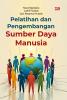
Dalam era persaingan global yang semakin ketat, pelatihan dan pengembangan tidak lagi dipandang sebagai kegiatan tambahan, melainkan sebagai strategi utama untuk membangun kompetensi, produktivitas, serta daya saing organisasi. Buku berjudul “Pelatihan dan Pengembangan Sumber Daya Manusia” ini disusun untuk memberikan pemahaman yang komprehensif mengenai pentingnya pelatihan dan pengembangan dalam meningkatkan kualitas sumber daya manusia, baik di tingkat individu maupun organisasi. Materi dalam buku ini mencakup konsep dasar, perencanaan program, metode pelatihan, evaluasi efektivitas, hingga kaitannya dengan pengembangan karier dan manajemen kinerja. Dengan demikian, buku ini diharapkan dapat menjadi referensi yang bermanfaat bagi mahasiswa, akademisi, praktisi, maupun pembaca umum yang tertarik mendalami bidang manajemen sumber daya manusia.
Chapters
-
KATA PENGANTAR
-
DAFTAR ISI
-
Bab 1 Pengantar Pelatihan dan Pengembangan Karyawan
-
Bab 2 Pelatihan Strategis
-
Bab 3 Analisis Kebutuhan Penilaian
-
Bab 4 Pembelajaran dan Transfer Pelatihan
-
Bab 5 Desain Program
-
Bab 6 Evaluasi Pelatihan
-
Bab 7 Metode Pelatihan Tradisional
-
Bab 8 Metode Pelatihan Berbasis Teknologi
-
Bab 9 Hubungan antara Pelatihan, Pengembangan dan Karier
-
Bab 10 Tanggung Jawab Sosial: Hukum Isu-Isu, Mengelola Keragaman, dan Tantangan Karier
-
Bab 11 Masa Depan Pelatihan dan Pengembangan
-
Bab 12 Kontroversi Penerimaan Beasiswa Negara: Kasus Dwi Sasetyaningtyas dan LPDP
-
DAFTAR PUSTAKA
-
PROFIL PENULIS
Downloads
References
Aguinis, H., & Kraiger, K. (2009). Benefits of training and development for individuals, teams, organizations, and society. Annual Review of Psychology.
Anderson, T. (2011). The theory and practice of online learning. International Review of Research in Open and Distributed Learning.
Arthur, W., Bennett, W., Edens, P. S., & Bell, S. T. (2003). Effectiveness of training in organizations: A meta-analysis. Journal of Applied Psychology.
Baldwin, T. T., & Ford, J. K. (1988). Transfer of training: A review and directions for future research. Personnel Psychology.
Barney, J. (1991). Firm resources and sustained competitive advantage. Journal of Management.
Becerra-Fernandez, I., & Sabherwal, R. (2015). Knowledge management: Systems and processes (2nd ed.). Routledge.
Becker, G. S. (1964). Human capital: A theoretical and empirical analysis. University of Chicago Press.
Bersin, J. (2013). The blended learning book: Best practices, proven methodologies, and lessons learned. Pfeiffer.
Blanchard, P. N., & Thacker, J. W. (2019). Effective training: Systems, strategies, and practices (5th ed.). Pearson.
Bovens, M. (2007). Analysing and assessing accountability: A conceptual framework. European Law Journal.
Bratucu, R. (2025). What is agile instructional design? A flexible approach to training.
Campion, M. A., Fink, A. A., Ruggeberg, B. J., Carr, L., Phillips, G. M., & Odman, R. (2011). Doing competencies well. Personnel Psychology.
Cascio, W. F., & Aguinis, H. (2019). Applied psychology in human resource management. Pearson.
Chernikova, O., Heitzmann, N., Stadler, M., Holzberger, D., Seidel, T., & Fischer, F. (2020). Simulation-based learning in higher education: A meta-analysis. Review of Educational Research, 90(4), 499–541. https://doi .org/10.3102/0034654320933544
Ciricillo, V., Mina, A., & Ricci, A. (2024). Digital technologies, labor market flows and training: Evidence from Italian employer–employee data. Technological Forecasting & Social Change. https://doi.org/10.1016/j.techfore. 2024.123735
Clark, R. C., & Mayer, R. E. (2016). E-learning and the science of instruction. Wiley.
CNBC Indonesia. (2026). Nasib Dwi Sasetyaningtyas dari “Cukup Aku yang WNI” sampai kena blacklist.
Davenport, R. (2005). Does knowledge management still matter? T+D, 19–25.
Davenport, T. H., & Harris, J. G. (2017). Competing on analytics: The new science of winning. Harvard Business Review Press.
Dessler, G. (2020). Human resource management (16th ed.). Pearson.
Development and Learning in Organizations. (2025). Equipped and informed: The role of digital literacy and generative AI in achieving sustainability outcomes. Emerald Publishing.
Dixon, R. A. (2021). Developing a structured OJT program: The case of a small manufacturing company in a rural region. Journal of Research in Technical Careers, 5(2), 63–78. https://doi.org/10.9741/2578-2118.1105
Dowling, P. J., Festing, M., & Engle, A. D. Sr. (2017). International human resource management (7th ed.). Cengage Learning.
Faisal-E-Alam, M., & Islam, A. R. M. T. (2025). Exploring the hierarchical framework of the Kirkpatrick model in training evaluation from a developing country. Evaluation and Program Planning, 113, 102696. https://doi.org/10.1016/j.evalprogplan.2025.102696
Ford, J. K., Baldwin, T. T., & Prasad, J. (2018). Transfer of training: The known and the unknown. Annual Review of Organizational Psychology and Organizational Behavior, 5, 201–225.
Gallup, A. (2024). What we know about registered apprenticeship: A systematic review. Economic Development Quarterly, 38(1), 25–39. https://doi.org /10.1177/08912424231196792
Garvin, D. A., Edmondson, A. C., & Gino, F. (2008). Is yours a learning organization? Harvard Business Review.
Gery, G. (1991). Electronic performance support systems. Performance Improvement Quarterly.
Giday, D. G., & Elantheraiyan, P. (2023). A study on the effect of training on employee performance. Social Sciences & Humanities Open, 8, 100567. https://doi.org/10.1016 /j.ssaho.2023.100567
Gorman, P., Moore, R., Blake, D., & Phillips, M. G. (2004). Effectiveness of structured on-site training. Journal of Vocational Education and Training, 56(3), 387–408.
Grossman, R., & Salas, E. (2016). The transfer of training: What really matters. International Journal of Training and Development, 20(2), 103–120.
Hamori, M. (2023). Self-directed learning in MOOCs. Journal of Business Research, 157, 113590.
Hervelin, J. (2025). Firm retention and productivity of apprentices. Empirical Economics, 68, 1265–1280.
Hosen, S., et al. (2023). Training & development and work performance. Heliyon.
Kaplan, A. M., & Haenlein, M. (2010). Users of the world, unite! Business Horizons.
Kianto, A., et al. (2017). Knowledge-based HRM practices. Journal of Business Research.
Kolb, A. Y., & Kolb, D. A. (2017). Experiential learning theory. Experiential Learning & Teaching in Higher Education, 1(1), 7–44.
Kolb, D. A. (2014). Experiential learning and simulation-based training. Simulation & Gaming.
Krugman, P., & Wells, R. (2018). Economics. Worth Publishers.
Lemmetty, S., & Collin, K. (2020). Self-directed learning in ICT work. Vocations and Learning, 13, 47–70.
Macpherson, R. (2025). Rapid eLearning development vs traditional methods explained.
Manyika, J., et al. (2017). Jobs lost, jobs gained. McKinsey Global Institute.
Margolis, F. H., & Bell, C. R. (1984). Managing the learning process. Lakewood Publications.
Mayer, R. E. (2009). Multimedia learning. Educational Psychologist.
Mayer, R. E. (2014). Cognitive theory of multimedia learning. Computers & Education, 63, 135–144.
Mondy, R. W., & Martocchio, J. J. (2016). Human resource management (14th ed.). Pearson.
Noe, R. A. (2020). Employee training and development (8th ed.). McGraw-Hill Education.
Noe, R. A., Hollenbeck, J. R., Gerhart, B., & Wright, P. M. (2020). Human resource management: Gaining a competitive advantage. McGraw-Hill Education.
Noe, R. A., Hollenbeck, J. R., Gerhart, B., & Wright, P. M. (2021). Fundamentals of human resource management. McGraw-Hill Education.
Piskurich, G. (2006). Rapid instructional design. Pfeiffer.
Robbins, S. P., & Judge, T. A. (2017). Organizational behavior (17th ed.). Pearson.
Salas, E., Tannenbaum, S. I., Kraiger, K., & Smith-Jentsch, K. A. (2012). The science of training and development in organizations. Psychological Science in the Public Interest, 13(2), 74–101.
Salas, E., et al. (2019). The science of training and development. Psychological Science in the Public Interest.
Sellberg, C., & Lindwall, O. (2026). Simulation-based training. Instructional Science, 54, Article 9.
Senge, P. M. (1990). The fifth discipline. Doubleday.
Shahen, A. (2024). Comparing traditional vs agile instructional design.
Sharma, S., Garg, S., & Mittal, S. (2015). Impact analysis of ICT teaching aids. Procedia Social and Behavioral Sciences.
Siemens, G. (2013). Massive open online courses. IRRODL.
Sultan, N. (2010). Learning management systems. International Journal of Information Management.
Tannenbaum, S. I., & Yukl, G. (1992). Training and development in work organizations. Annual Review of Psychology.
Thiagarajan, S. (2000). Rapid instructional development. In ASTD handbook.
Towler, A., & Dipboye, R. (2001). Trainer expressiveness and outcomes. Journal of Applied Psychology.
Udeh, S. O. U., et al. (2025). Gamification in training. Journal of Workplace Learning, 37(9), 206–224.
United Nations Development Programme. (1997). Governance for sustainable human development.
Wenger-Trayner, E., & Wenger-Trayner, B. (2015). Communities of practice.
Wenzel, M., Krause, T. A., & Schmidt, S. (2019). Transfer of training review. Human Resource Development Review, 18(3), 341–376.
Weinstein, M. (2018). Designing a holistic approach to learning. Training, 26–29.
Published
License

This work is licensed under a Creative Commons Attribution-ShareAlike 4.0 International License.