
FILSAFAT UNTUK CALON DOKTOR
Keywords:
filsafat, dokter, kesehatanSynopsis
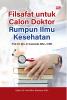
Buku berjudul Filsafat untuk Calon Doktor Rumpun Ilmu Kesehatan ini hadir di hadapan pembaca sebagai sebuah jembatan yang menghubungkan dua dunia yang seringkali dianggap terpisah, yaitu filsafat dan kesehatan. Dunia kesehatan, dengan segala kemajuan teknologinya, seringkali terfokus pada aspek biologis dan mekanistis dari tubuh manusia. Sementara itu, filsafat mengajak kita untuk merenungkan makna, nilai, dan hakikat dari eksistensi manusia, termasuk pengalaman sehat, sakit, dan penderitaan. Kebutuhan untuk mengintegrasikan kebijaksanaan filosofis ke dalam praktik klinis menjadi semakin mendesak di era modern. Kompleksitas tantangan kesehatan tidak lagi dapat dijawab hanya dengan pendekatan teknis, melainkan menuntut pemahaman yang mendalam tentang kemanusiaan.
Penulisan buku ini didasari oleh keyakinan bahwa tenaga kesehatan yang unggul bukan hanya seorang teknisi yang terampil, melainkan seorang pemikir kritis yang memiliki kepekaan etis dan pemahaman holistik terhadap pasien. Urgensi dari buku ini terletak pada upaya membekali mahasiswa kesehatan dengan kerangka berpikir filosofis untuk menganalisis dilema etis, memahami dimensi subjektif dari penyakit, dan membangun hubungan terapeutik yang lebih manusiawi. Tujuannya adalah untuk mencetak para profesional kesehatan yang tidak hanya kompeten secara klinis, tetapi juga bijaksana dalam setiap pengambilan keputusan yang menyangkut kehidupan manusia. Selamat membaca!
Chapters
-
PRAKATA
-
KATA PENGANTAR
-
DAFTAR ISI
-
BAB 01 PENGANTAR FILSAFAT DAN RELEVANSINYA DI DUNIA KESEHATAN
-
BAB 02 ONTOLOGI KESEHATAN: HAKIKAT SEHAT, SAKIT, DAN MANUSIA
-
BAB 03 EPISTEMOLOGI KESEHATAN: SUMBER DAN KEBENARAN ILMU MEDIS
-
BAB 04 AKSIOLOGI KESEHATAN: NILAI, ETIKA, DAN MORALITAS
-
BAB 05 BIOETIKA DAN PRINSIP DASAR MORAL MEDIS
-
BAB 06 LOGIKA DAN PENALARAN KLINIS (CLINICAL REASONING)
-
BAB 07 FILSAFAT ILMU DAN METODE ILMIAH KESEHATAN
-
BAB 08 FILSAFAT MANUSIA DAN PSIKOLOGI KESEHATAN
-
BAB 09 ETIKA PROFESI DAN TANGGUNG JAWAB SOSIAL KESEHATAN
-
BAB 10 FILSAFAT TEKNOLOGI KESEHATAN DAN DIGITALISASI
-
BAB 11 DILEMA MORAL DALAM PELAYANAN KESEHATAN MODERN
-
BAB 12 FILSAFAT KOMUNIKASI DAN HUBUNGAN TERAPEUTIK
-
BAB 13 KESEHATAN DALAM PERSPEKTIF SOSIAL DAN BUDAYA (SOSIO-FILSAFAT)
-
BAB 14 REFLEKSI FILOSOFIS DAN PENGEMBANGAN DIRI TENAGA KESEHATAN
-
GLOSARIUM
-
REFERENSI
-
PROFIL PENULIS
Downloads
References
● Adebayo, A., et al. (2023). Cultural competence in healthcare: A systematic review of the literature. Journal of Immigrant and Minority Health, 25(4), 923-937. https://doi.org/10.1007/s10903-023-01478-5
● Ahtisham, S., Jacquot, E., & Carre, A. (2022). Systems biology and bioinformatics: A paradigm shift in modern biology and medicine. Journal of Medical and Biological Engineering, 42(4), 517-530. https://doi.org/10.1007/s40846-022-00720-3
● Ahuja, A. S. (2019). The impact of artificial intelligence in medicine on the future role of the physician. PeerJ, 7, e7702. https://doi.org/10.7717/peerj.7702
● Al-Husseini, F. (2023). Integrating religious values in end-of-life decision-making: A framework for clinicians. Journal of Palliative Care, 38(2), 210-218. https://doi.org/10.1177/08258597221102558
● Alligood, M. R. (2022). Nursing theorists and their work (10th ed.). Elsevier.
● Anjum, R. L., & Copeland, S. (2021). Causality in medicine: The case of COVID-19. Journal of Evaluation in Clinical Practice, 27(4), 823-830. https://doi.org/10.1111/jep.13531
● Anjum, R. L., & Copeland, S. (2021). Uncertainty in modern medicine: A critical review. Journal of Evaluation in Clinical Practice, 27(4), 815-822. https://doi.org/10.1111/jep.13524
● Astuti, R. W. (2020). Pentingnya Visi Pribadi dan Profesional dalam Pengembangan Karier Keperawatan. Jurnal Keperawatan Indonesia, 23(1), 1-8.
● Baker, P., et al. (2020). Corporate power and the commercial determinants of health: a review of the evidence. The Lancet, 396(10267), 1995-2008. https://doi.org/10.1016/S0140-6736(20)32386-8
● Ballantyne, A. (2018). Clinical equipoise, informed consent and the ethics of clinical research. Journal of Medical Ethics, 44(9), 627-632. http://dx.doi.org/10.1136/medethics-2018-104882
● Barwell, J., et al. (2021). The "right not to know" in the context of genomic testing: A systematic review. Genetics in Medicine, 23(11), 2056-2065. https://doi.org/10.1038/s41436-021-01258-7
● Baylis, F. (2019). Altered Inheritance: CRISPR and the Ethics of Human Genome Editing. Harvard University Press.
● Bayuo, J. (2025). Indigenous African Philosophy as a Paradigm for Health and Social Care Research: A Philosophical and Methodological Discussion. Nursing Inquiry, 32. https://doi.org/10.1111/nin.70002
● Beauchamp, T. L., & Childress, J. F. (2019). Principles of Biomedical Ethics (8th ed.). Oxford University Press.
● Bernat, J. L. (2021). The history and importance of informed consent. Neurology: Clinical Practice, 11(3), 254-260. https://doi.org/10.1212/CPJ.0000000000001044
● Bester, J. C., Cole, C. M., & Kodish, E. (2022). The limits of informed consent for an overwhelmed patient: clinicians’ role in protecting patients and preventing overwhelming. Journal of Medical Ethics, 48(11), 971-976. http://dx.doi.org/10.1136/medethics-2021-107386
● Blease, C., et al. (2020). The power of shared decision-making: a philosophical perspective. Journal of Medical Ethics, 46(8), 514-521. http://dx.doi.org/10.1136/medethics-2019-105953
● Bostrom, N. (2016). Superintelligence: Paths, Dangers, Strategies. Oxford University Press.
● Bramstedt, K. A. (2021). The ethics of organ trafficking: A critical analysis of the arguments. Journal of Medical Ethics and History of Medicine, 14, 1-10.
● Braun, E. (2022). The ontology of disease: A reply to critics. Journal of Medicine and Philosophy, 47(3), 329–347. https://doi.org/10.1093/jmp/jhac007
● Breilh, J. (2023). The social determination of health and the transformation of rights and ethics. Global Public Health, 18. https://doi.org/10.1080/17441692.2023.2193830
● Callister, L. C. (2019). The cultural meaning of childbirth. Journal of Perinatal Education, 28(2), 65-72. https://doi.org/10.1891/1058-1243.28.2.65
● Camus, A. (2022). Existentialism in times of pandemic: A philosophical approach. International Journal of Ethics and Society, 4(1), 23-31.
● Caplan, A. L. (2020). The ethics of organ transplantation. Oxford University Press.
● Carel, H. (2021). The phenomenology of illness and its implications for the clinical encounter. The Lancet Psychiatry, 8(8), 717–724. https://doi.org/10.1016/S2215-0366(21)00078-X
● Chen, J. H., & Asch, S. M. (2017). Machine learning and prediction in medicine , beyond the peak of inflated expectations. New England Journal of Medicine, 376(26), 2507–2509. https://doi.org/10.1056/NEJMp1702071
● Chen, L., & Rodriguez, F. (2023). When values collide: A qualitative study on moral distress in intensive care units. Journal of Medical Ethics, 49(5), 315-322. http://dx.doi.org/10.1136/jme-2022-108512
● Chen, S., & Qin, Y. (2023). Ethics, Biomedical Education and Health Promotion. International Healthcare Review (online). https://doi.org/10.56226/46
● Clay, B. R., & D'Alessandro, A. M. (2023). A review of organ allocation systems in the United States. Transplantation Reviews, 37(2), 100742. https://doi.org/10.1016/j.trre.2023.100742
● Cohen, I. G., & Mello, M. M. (2018). Big data, big pharma, and the challenge of health privacy. JAMA, 320(3), 235–236. https://doi.org/10.1001/jama.2018.8473
● Cohen, I. G., & Mello, M. M. (2024). Who's liable when AI harms patients? JAMA, 331(2), 111–112. https://doi.org/10.1001/jama.2023.25099
● Conrad, P., & Barker, K. K. (2010). The social construction of illness: Key insights and policy implications. Journal of Health and Social Behavior, 51(1_suppl), S67–S79. https://doi.org/10.1177/0022146510383495
● Coronado-Vázquez, V., Martín, M., Salinas, S., Carr, S., Martínez, F., & Montero, Á. (2025). Integrating medical humanities in undergraduate medical education: a curricular model aligned with the InspirE5 framework. BMC Medical Education, 25. https://doi.org/10.1186/s12909-025-07772-w
● Corrigan, P. W., & Watson, A. C. (2002). The paradox of self-stigma and mental illness. Clinical Psychology: Science and Practice, 9(1), 35–53. https://doi.org/10.1093/clipsy.9.1.35
● Coyne, E., et al. (2021). Communication and conflict resolution skills for nurses: A scoping review. Journal of Nursing Management, 29(7), 1851-1863. https://doi.org/10.1111/jonm.13328
● Cruess, R. L., & Cruess, S. R. (2021). The social contract and the medical profession: a guide for medical education. Medical Teacher, 43(3), 256-261. https://doi.org/10.1080/0142159X.2020.1812613
● Dahlberg, H., Dahlberg, K., & Holmberg, C. (2024). The search for meaning in health care inquiries: introducing qualitative meaning analysis. International Journal of Qualitative Studies on Health and Well-being, 19. https://doi.org/10.1080/17482631.2024.2382809
● De Proost, J., et al. (2022). The ethics of preimplantation genetic testing for aneuploidy (PGT-A): A systematic review. Human Reproduction Update, 28(5), 697-720. https://doi.org/10.1093/humupd/dmac017
● De Tilio, R. (2022). Health-disease process and the social determination of health. Ciência & Saúde Coletiva, 27(9), 3505–3514. https://doi.org/10.1590/1413-81232022279.11792021
● Djulbegovic, B., & deductive, T. I. (2023). A new framework for clinical reasoning. Journal of Clinical Epidemiology, 157, 137-145. https://doi.org/10.1016/j.jclinepi.2023.02.016
● Djulbegovic, B., Ioannidis, J. P., & Morris, L. (2021). The role of intuition in medical decision making: A conceptual and empirical critique. Journal of General Internal Medicine, 36(8), 2445–2449. https://doi.org/10.1007/s11606-020-06513-3
● Doukas, D. J., Ozar, D. T., Darragh, M., De Groot, J. M., Carter, B. S., & Stout, N. (2021). Virtue and care ethics & humanism in medical education: a scoping review. BMC Medical Education, 21(1), 32. https://doi.org/10.1186/s12909-021-03051-6
● Dumitrescu, R. (2025). The role of humanism in medical practice and medical education - Anarrative review and bibliometric analysis. Journal of Educational Sciences. https://doi.org/10.35923/jes.2025.1.05
● Ekmekci, P. E. (2023). A philosophical look at the concept of health. Philosophy, Ethics, and Humanities in Medicine, 18(1), 5. https://doi.org/10.1186/s13010-023-00135-2
● Emanuel, E. J., et al. (2022). An ethical framework for global vaccine allocation. Science, 375(6585), 1116-1118. https://doi.org/10.1126/science.abl9182
● Emanuel, E. J., Persad, G., Upshur, R., Thome, B., Parker, M., Glickman, A., Zhang, C., Boyle, C., Smith, M., & Phillips, J. P. (2020). Fair allocation of scarce medical resources in the time of Covid-19. New England Journal of Medicine, 382(21), 2049-2055. https://doi.org/10.1056/NEJMsb2005114
● Emanuel, E. J., Wendler, D., & Grady, C. (2000). What makes clinical research ethical? JAMA, 283(20), 2701–2711. https://doi.org/10.1001/jama.283.20.2701
● Evans, J. H. (2021). The Human Gene Editing Debate. Oxford University Press.
● Ezenwa, M. O., et al. (2021). The role of culture in pain perception and management: a narrative review. Pain Management Nursing, 22(5), 556-564. https://doi.org/10.1016/j.pmn.2021.03.007
● Falk, R. H. (2022). Caring as a communicative practice: a philosophical inquiry. Nursing Philosophy, 23(4), e12401. https://doi.org/10.1111/nup.12401
● Fernandez, N., & Sturmberg, J. (2025). Fostering Physician‐Patient Partnerships: The Importance of Embracing the Ontological and Epistemological Understandings of Knowledge. Health Expectations : An International Journal of Public Participation in Health Care and Health Policy, 28. https://doi.org/10.1111/hex.70484
● Ferreira, N., Pereira, A., & Nunes, R. (2024). Ontology of doctor and patient relationship and bioethics: from Aristotle’s teleology to Pellegrino’s philosophy of medicine. Medicine, Health Care, and Philosophy, 28, 113 - 119. https://doi.org/10.1007/s11019-024-10239-2
● Ferretti, F., & Piras, F. (2023). Reductionism and holism in psychiatry: a philosophical and historical analysis. History and Philosophy of the Life Sciences, 45(1), 8. https://doi.org/10.1007/s40656-023-00547-2
● Fidler, D. P. (2010). The challenges of global health governance. Council on Foreign Relations.
● Fido, D., & Kotera, Y. (2023). The role of ikigai in promoting well-being and preventing burnout in healthcare professionals: A systematic review. International Journal of Mental Health and Addiction, 21, 2351–2368. https://doi.org/10.1007/s11469-021-00709-3
● Forbat, L., et al. (2020). Family mediation in palliative care: A systematic review. Palliative Medicine, 34(5), 577-588. https://doi.org/10.1177/0269216319897282
● Frankl, V. E. (2006). Man's Search for Meaning. Beacon Press.
● Frith, L. (2021). The ethics of surrogacy: A reproductive justice perspective. Bioethics, 35(1), 90-102. https://doi.org/10.1111/bioe.12789
● Fuchs, T. (2021). The circularity of the mind-body problem: A phenomenological and enactive perspective. Frontiers in Psychology, 12, 693457. https://doi.org/10.3389/fpsyg.2021.693457
● Fuller, J. (2021). The problem of correlation versus causation in clinical medicine. The Journal of the Royal College of Physicians of Edinburgh, 51(1), 7-10. https://doi.org/10.4997/JRCPE.2021.102
● G-cash, C. R., et al. (2022). Neuroimaging of consciousness: a review of methods and findings. NeuroImage, 250, 118942. https://doi.org/10.1016/j.neuroimage.2022.118942
● Gale, N. (2014). The sociology of traditional, complementary and alternative medicine. Sociology Compass, 8(8), 980-993. https://doi.org/10.1111/soc4.12188
● Garcia, H., & Miralles, F. (2017). Ikigai: The Japanese Secret to a Long and Happy Life. Penguin Books.
● Garland, E. L., & Howard, M. O. (2018). Mindfulness-based treatment of chronic pain: A review of the evidence. JAMA Internal Medicine, 178(1), 77–86. https://doi.org/10.1001/jamainternmed.2017.6200
● Garrard, E., & Wilkinson, S. (2021). The expressivist objection to prenatal testing: a critique. Journal of Medical Ethics, 47(12), e111. http://dx.doi.org/10.1136/medethics-2020-106828
● Gensler, L. J. (2023). The philosophy of suffering and its clinical implications. Journal of Palliative Medicine, 26(4), 562-568. https://doi.org/10.1089/jpm.2022.0463
● Gittell, J. H., Logan, C., & Cronenwett, J. (2022). Relational coordination and the healthcare quadruple aim: A systematic review. Health Care Management Review, 47(3), 252-264. https://doi.org/10.1097/HMR.0000000000000325
● Goldenberg, M. J. (2021). Vaccine Hesitancy: Public Trust, Expertise, and the War on Science. University of Pittsburgh Press.
● Graber, M. L., et al. (2017). A call for a new paradigm for medical error disclosure and prevention. The Joint Commission Journal on Quality and Patient Safety, 43(11), 555-564. https://doi.org/10.1016/j.jcjq.2017.07.003
● Grace, P. (2025). Contrasting Relativism, Absolutism and Pragmatism for Utility in Healthcare Ethics. Revisiting Drummond's Article on Relativism. Nursing Philosophy, 26. https://doi.org/10.1111/nup.70041
● Greenhalgh, T., Sivan, M., & MacIntyre, C. R. (2022). Evidence-based medicine for a complex world: A pragmatist approach. The Lancet, 400(10368), 2124-2126. https://doi.org/10.1016/S0140-6736(22)01648-5
● Gruen, R. L., et al. (2022). Physician advocacy: a call to action. The Lancet, 400(10350), 411-413. https://doi.org/10.1016/S0140-6736(22)01297-9
● Guerrasio, J., & Aagaard, E. M. (2021). A new paradigm for clinical reasoning remediation. Medical Teacher, 43(11), 1282-1288. https://doi.org/10.1080/0142159X.2021.1947265
● Harris, J. (2021). The ethics of gene therapy and the specter of a biological underclass. Bioethics, 35(1), 4-5. https://doi.org/10.1111/bioe.12836
● Hart, J. L., et al. (2023). The paradox of prolonging life versus prolonging dying in the ICU: a scoping review. Journal of Pain and Symptom Management, 65(3), e238-e251. https://doi.org/10.1016/j.jpainsymman.2022.11.006
● Hollenberg, D., & Muzzin, L. (2010). Epistemological challenges to integrative medicine: an anti-colonial perspective on the combination of complementary/alternative and biomedical treatments. Health Sociology Review, 19(3), 319-331. https://doi.org/10.5172/hesr.2010.19.3.319
● Holm, S. (2021). The ethical debate on abortion: A philosophical review. Philosophy Compass, 16(11), e12779. https://doi.org/10.1111/phc3.12779
● Hooker, C. (2021). Kuhn's Structure of Scientific Revolutions and its influence on medicine: A fifty-year retrospective. Journal of Medicine and Philosophy, 46(4), 405-423. https://doi.org/10.1093/jmp/jhab014
● Huddle, T. S. (2020). Medical professionalism and the survival of a noble profession. The American Journal of the Medical Sciences, 360(4), 312-317. https://doi.org/10.1016/j.amjms.2020.06.014
● Hvidt, E., Ulsø, A., Thorngreen, C., Søndergaard, J., & Andersen, C. (2022). Weak inclusion of the medical humanities in medical education: a qualitative study among Danish medical students. BMC Medical Education, 22. https://doi.org/10.1186/s12909-022-03723-x
● Im, E. O., & Meleis, A. I. (2023). Situation-specific theories: A middle-range theorizing strategy for the future of nursing science. Advances in Nursing Science, 46(1), 3-15. https://doi.org/10.1097/ANS.0000000000000438
● Johnston, B., & Halter, M. (2022). Dignity in the care of older people: A concept analysis. Nursing Ethics, 29(3), 674-691. https://doi.org/10.1177/09697330211043969
● Johnston, B., & Smith, L. (2023). Fostering a culture of psychological safety and speaking up in healthcare teams. BMJ Leader, 7(2), 123-128. http://dx.doi.org/10.1136/leader-2022-000675
● Jonas, W. B. (2018). The vitalism debate: A philosophical and scientific perspective. Global Advances in Health and Medicine, 7, 216495611879133. https://doi.org/10.1177/2164956118791337
● Jongsma, K. R., & van de Vathorst, S. (2021). The patient is dead, long live the patient! The ethics of post-mortem ventilation. Journal of Medical Ethics, 47(12), e104. http://dx.doi.org/10.1136/medethics-2020-106726
● Kaldjian, L. C. (2022). Phronesis and the practice of medicine: Clinical wisdom in the midst of uncertainty. Journal of Medicine and Philosophy, 47(3), 348-361. https://doi.org/10.1093/jmp/jhac008
● Keown, J. (2018). The slippery slope argument and the euthanasia debate. The Cambridge Quarterly of Healthcare Ethics, 27(4), 545-560. https://doi.org/10.1017/S096318011800030X
● Kerasidou, A. (2023). The commercialisation of healthcare: a critical ethical analysis. Journal of Medical Ethics, 49(6), 389-394. http://dx.doi.org/10.1136/jme-2022-108421
● Kerrache, B., & Goui, D. (2025). The Concept of Health in the Philosophy of Medical Sciences. Philosophia: International Journal of Philosophy. https://doi.org/10.46992/pijp.26.1.a.4
● Kiecolt-Glaser, J. K., Fagundes, C. P., & Andridge, R. (2022). Stress, inflammation, and health: The role of the microbiome. Annual Review of Psychology, 73, 229-253. https://doi.org/10.1146/annurev-psych-020821-115301
● Kim, S. Y. H. (2021). An evidence-based ethics of surrogate decision making. The American Journal of Bioethics, 21(5), 4-18. https://doi.org/10.1080/15265161.2021.1906233
● Kinsella, E. A., & Caty, M. (2022). Phronesis as professional knowledge: practical wisdom in the professions. In The Routledge International Handbook of Professionalism and Professional Knowledge. Routledge.
● Kissane, D. W., et al. (2022). Meaning and purpose therapy for advanced cancer patients: A randomized controlled trial. Journal of Clinical Oncology, 40(6), 564-573. https://doi.org/10.1200/JCO.21.01815
● Kozlowska, K. (2020). The body speaks: A developmental framework for understanding and treating somaticizing children and adolescents. The Journal of Pediatrics, 227, 28-35.e1. https://doi.org/10.1016/j.jpeds.2020.07.034
● Lachman, V. D. (2021). The role of virtue ethics in nursing leadership. Nursing Ethics, 28(3), 435-446. https://doi.org/10.1177/0969733020958778
● Lalumera, E. (2025). Health Concepts in Medicine and the Role of Philosophy. Philosophy of Medicine. https://doi.org/10.5195/pom.2025.220
● Lavoie, M., et al. (2021). The meaning of hope in palliative care: a systematic review of qualitative studies. Palliative Medicine, 35(3), 481-495. https://doi.org/10.1177/0269216320984857
● Lee, R. M., et al. (2019). Purpose in life and risk of all-cause mortality: A meta-analysis. JAMA Network Open, 2(5), e194572. https://doi.org/10.1001/jamanetworkopen.2019.4572
● Le-Scherban, F., et al. (2021). Structural racism and health: A conceptual framework for quantifying the health impacts of U.S. housing policies. Health Affairs, 40(4), 560-568. https://doi.org/10.1377/hlthaff.2020.02123
● Link, B. G., & Phelan, J. C. (2014). Stigma and its public health implications. The Lancet, 383(9926), 1429-1439. https://doi.org/10.1016/S0140-6736(13)62043-9
● Lu, D. (2024). Reclaiming subjectivity in medicine: a phenomenological approach to the patient encounter. Philosophy, Ethics, and Humanities in Medicine, 19(1), 2. https://doi.org/10.1186/s13010-024-00142-9
● Lupton, D. (2012). Medicine as culture: Illness, disease and the body (3rd ed.). Sage Publications.
● Majumder, M. A., & Beacon, T. (2023). Ethical challenges in assisted reproductive technologies. The New England Journal of Medicine, 388(12), 1123-1131. https://doi.org/10.1056/NEJMra2208108
● Mamede, S., & Schmidt, H. G. (2021). The role of reflection in medical education and practice: A systematic review. Medical Education, 55(11), 1234-1247. https://doi.org/10.1111/medu.14588
● Malterud, K., Guassora, A. D., & Reventlow, S. (2020). The medical gaze and the patient's voice: A historical-discursive analysis of risk-benefit assessments in general practice. Social Science & Medicine, 265, 113331. https://doi.org/10.1016/j.socscimed.2020.113331
● Marquis, D. (2022). A future like ours and the ethics of abortion. In The Oxford Handbook of Applied Ethics. Oxford University Press.
● Marschollek, P., et al. (2022). Truth-telling and the ethics of breaking bad news: A survey of physicians' attitudes. Journal of Medical Ethics, 48(11), 964-970. http://dx.doi.org/10.1136/medethics-2021-107312
● Martucci, G., Pereira, J., Busa, C., Centeno, C., Csikos, A., Franchini, L., Elsner, F., Raccichini, M., Mihailescu-Marin, M., Mosoiu, D., Bernabé, S., Scherg, A., & Consorti, F. (2023). Online learning in palliative care education of undergraduate medical students: a realist synthesis. Palliative Care and Social Practice, 17. https://doi.org/10.1177/26323524231218279
● Mawikere, L., & Tendean, L. (2021). Pengembangan Visi Profesional dan Implikasinya terhadap Kinerja Perawat. Jurnal Ilmiah Kesehatan, 10(2), 112-119.
● McFarland, A., & MacDonald, A. (2022). The biopsychosocial-spiritual model of health and the role of spirituality in palliative care. Current Opinion in Supportive and Palliative Care, 16(4), 205-211. https://doi.org/10.1097/SPC.0000000000000628
● Meier, D. E., et al. (2023). Addressing clinician burnout: The need for a systems approach. New England Journal of Medicine, 388(2), 97-99. https://doi.org/10.1056/NEJMp2212353
● Melo-Martín, I. de. (2023). Uncertainty in science and medicine: A philosophical inquiry. Bioethics, 37(1), 2-3. https://doi.org/10.1111/bioe.13123
● Metselaar, S. (2023). Translational bioethics as a two-way street. Developing clinical ethics support instruments with and for healthcare practitioners. Bioethics. https://doi.org/10.1111/bioe.13225
● Misund, A. R., et al. (2020). Dehumanization in healthcare: a concept analysis. Scandinavian Journal of Caring Sciences, 34(4), 843-853. https://doi.org/10.1111/scs.12792
● Missoni, E., & Tediosi, F. (2020). Global Health Governance and Policy: A Critical Introduction. Routledge.
● Monteiro, S. D., Sherbino, J., & Sibbald, M. (2021). The critical role of logic in clinical reasoning. The Clinical Teacher, 18(6), 629-634. https://doi.org/10.1111/tct.13386
● Moopen, N. (2021). The I-Thou relationship in nursing: A Buberian perspective. Nursing Philosophy, 22(3), e12351. https://doi.org/10.1111/nup.12351
● Moreira, N. B., & Tims, C. (2023). The integration of traditional and complementary medicine in the Brazilian Unified Health System: A policy analysis. Journal of Ethnopharmacology, 308, 116275. https://doi.org/10.1016/j.jep.2023.116275
● Morgan, P., et al. (2021). The effectiveness of mindfulness-based interventions for medical students: A systematic review and meta-analysis. Academic Medicine, 96(7), 1063-1073. https://doi.org/10.1097/ACM.0000000000004008
● Morreim, E. H. (2023). Resolving Medical Conflicts: A Guide for Clinicians, Families, and Mediators. Springer.
● Mukhalalati, B., Elshami, S., Eljaam, M., Hussain, F., & Bishawi, A. (2022). Applications of social theories of learning in health professions education programs: A scoping review. Frontiers in Medicine, 9. https://doi.org/10.3389/fmed.2022.912751
● Munarwan, M., & Haryani, H. (2023). Primum Non Nocere: Medical Error from the Perspective of Beneficence and Non-Maleficence. Journal of Law and Sustainable Development, 11(4), e536. https://doi.org/10.55908/sdgs.v11i4.536
● Nass, S. J., et al. (2020). Health data privacy under the GDPR: A practitioner's guide. O'Reilly Media.
● National Academies of Sciences, Engineering, and Medicine. (2020). Heritable Human Genome Editing. The National Academies Press. https://doi.org/10.17226/25665
● Nettleton, S. (2019). The sociology of medically unexplained symptoms: A critical review. Social Science & Medicine, 224, 110-117. https://doi.org/10.1016/j.socscimed.2019.01.038
● Nogueira, V., Furtado, M., Guedes, M., De Freitas, M., Moreira, T., & Pessoa, V. (2022). Terminal care: philosophical reflection from ethical and moral perspectives. Escola Anna Nery. https://doi.org/10.1590/2177-9465-ean-2022-0054en
● Northoff, G., & Stanghellini, G. (2021). The experiencing body: a phenomenological and neurobiological account. The Lancet Psychiatry, 8(8), 707-716. https://doi.org/10.1016/S2215-0366(21)00077-8
● O’Sullivan, E., & Rahamim, J. (2020). Logical fallacies in clinical reasoning and their cognitive mechanisms. Diagnosis, 7(4), 283-289. https://doi.org/10.1515/dx-2020-0012
● Oakley, J. (2021). Virtue ethics and its application to medical practice. In The Cambridge Handbook of Applied Ethics. Cambridge University Press.
● Ooms, G., & Ghaffar, A. (2021). The blind spot in the patent waiver debate for COVID-19 vaccines. The Lancet Global Health, 9(7), e914-e915. https://doi.org/10.1016/S2214-109X(21)00216-9
● Özdemir, V. (2022). The Hippocratic Oath in the 21st century: A new social contract for precision medicine and digital health. OMICS: A Journal of Integrative Biology, 26(4), 187-191. https://doi.org/10.1089/omi.2022.0031
● Pell, R. F. (2023). Cognitive biases and logical fallacies in medicine: A guide for trainees and clinicians. Cureus, 15(8), e43444. https://doi.org/10.7759/cureus.43444
● Perrin, A. (2023). Assessing capacity in children and young people: a practical approach. Archives of Disease in Childhood - Education and Practice Edition, 108(2), 114-119. http://dx.doi.org/10.1136/archdischild-2021-323223
● Pilkington, F. B. (2021). A Gadamerian approach to therapeutic communication: The fusion of horizons. Nursing Inquiry, 28(4), e12423. https://doi.org/10.1111/nin.12423
● Powers, M., Faden, R. R., & Tilburt, J. C. (2020). Justice in the allocation of scarce health resources. The Lancet, 395(10229), 1032-1033. https://doi.org/10.1016/S0140-6736(20)30678-3
● Pratt, B., & De Vries, J. (2023). Where is knowledge from the global South? An account of epistemic justice for a global bioethics. Journal of Medical Ethics, 49, 325 - 334. https://doi.org/10.1136/jme-2022-108291
● Price, W. N., & Cohen, I. G. (2019). Privacy in the age of medical big data. Nature Medicine, 25(1), 37–43. https://doi.org/10.1038/s41591-018-0272-7
● Ramvi, E., Hellstrand, I., Jensen, I., Gripsrud, B., & Gjerstad, B. (2023). Ethics of care in technology-mediated healthcare practices: A scoping review. Scandinavian journal of caring sciences. https://doi.org/10.1111/scs.13186
● Reddy, S., Allan, S., Coghlan, S., & Cooper, P. (2020). A governance model for the application of AI in health care. Journal of the American Medical Informatics Association, 27(3), 491-497. https://doi.org/10.1093/jamia/ocz192
● Reichlin, M. (2022). The risk of dehumanization in high-tech medicine: a challenge for person-centered care. International Journal of Person Centered Medicine, 12(1), 1-10.
● Rejula, J. A. (2024). A review of research paradigms, methodologies, and methods. International Journal of Social Sciences and Management, 11(1), 1-10. https://doi.org/10.3126/ijssm.v11i1.62135
● Richardson, D. (2022). Abductive reasoning in the diagnostic process: A novel framework. Journal of Medicine and Philosophy, 47(3), 362-379. https://doi.org/10.1093/jmp/jhac010
● Rodwin, M. A. (2021). Reforming the management of financial conflicts of interest in medicine. JAMA, 325(16), 1607–1608. https://doi.org/10.1001/jama.2021.2829
● Rousseau, D. (2020). The holistic worldview in perspective: A contribution from systems philosophy. Systems Research and Behavioral Science, 37(5), 875-888. https://doi.org/10.1002/sres.2719
● Rousseau, S. (2024). The aesthetics of care: How beauty and design impact patient well-being. Health Environments Research & Design Journal, 17(1), 112-125. https://doi.org/10.1177/19375867231185434
● Saleh, S. (2021). The commodification of health care: a critical review and analysis. International Journal of Health Policy and Management, 10(12), 947-956. https://doi.org/10.34172/ijhpm.2020.252
● Sandel, M. J. (2007). The Case Against Perfection: Ethics in the Age of Genetic Engineering. Belknap Press.
● Schick, S. (2022). Consciousness as a clinical concept: a philosophical analysis. Journal of Medical Ethics, 48(11), 984-989. http://dx.doi.org/10.1136/medethics-2021-107567
● Schmidt, H. (2022). Public health utilitarianism revisited: The challenge of resource allocation in a pandemic. The American Journal of Bioethics, 22(7), 14-25. https://doi.org/10.1080/15265161.2022.2075936
● Schön, D. A. (1983). The Reflective Practitioner: How Professionals Think in Action. Basic Books.
● Seifart, C., et al. (2020). Breaking bad news: A systematic review of communication protocols for medical students and physicians. Patient Education and Counseling, 103(10), 2053-2065. https://doi.org/10.1016/j.pec.2020.05.025
● Shanafelt, T. D., et al. (2020). Changes in burnout and satisfaction with work-life integration in physicians and the general US working population between 2011 and 2017. Mayo Clinic Proceedings, 95(9), 1681-1694. https://doi.org/10.1016/j.mayocp.2020.04.018
● Shaw, J., & Dondorp, W. (2021). The moral status of the embryo: a view from clinical practice. Journal of Medical Ethics, 47(12), e113. http://dx.doi.org/10.1136/medethics-2020-106927
● Shor, E., & Shalev, A. (2021). Patient-physician communication and the use of complementary and alternative medicine. Patient Education and Counseling, 104(5), 987-993. https://doi.org/10.1016/j.pec.2020.10.027
● Silverman, H. J. (2023). The Dialogical Self in Psychotherapy: A Buberian Perspective. Routledge.
● Sinclair, S., Hack, T. F., McClement, S., & Raffin-Bouchal, S. (2022). The role of empathy in patient-centered care: A systematic review. Patient Education and Counseling, 105(3), 541-550. https://doi.org/10.1016/j.pec.2021.08.003
● Sorell, T. (2021). The ethics of physician advocacy. Journal of Medicine and Philosophy, 46(4), 444-463. https://doi.org/10.1093/jmp/jhab016
● Southwick, S. M., & Charney, D. S. (2018). Resilience: The science of mastering life's greatest challenges (2nd ed.). Cambridge University Press.
● Stein, D., Nielsen, K., Hartford, A., Gagné-Julien, A., Glackin, S., Friston, K., Maj, M., Zachar, P., & Aftab, A. (2024). Philosophy of psychiatry: theoretical advances and clinical implications. World Psychiatry, 23. https://doi.org/10.1002/wps.21194
● Stiggelbout, A. M., Pieterse, A. H., & De Haes, J. C. (2020). Shared decision making: Concepts, evidence, and practice. Patient Education and Counseling, 103(10), 2139-2141. https://doi.org/10.1016/j.pec.2020.06.012
● Stirrat, G. M., & Gill, R. (2021). Benevolent deception: A concept whose time has passed? Journal of Medical Ethics, 47(12), e116. http://dx.doi.org/10.1136/medethics-2020-106888
● Stoklosa, J. B., et al. (2023). Understanding and managing the "difficult" patient. Mayo Clinic Proceedings, 98(5), 785-797. https://doi.org/10.1016/j.mayocp.2022.12.016
● Stoyanov, D. S. (2020). The mind-body problem in psychiatry: A reappraisal of the classical philosophical positions from the perspective of translational neuroscience. Philosophical Psychology, 33(1), 1-21. https://doi.org/10.1080/09515089.2019.1652611
● Sulistyo, A. (2024). Nilai dan Integritas: Aksiologi dalam Profesionalisme Kesehatan di Indonesia. Penerbit Buku Kedokteran EGC.
● Sulmasy, D. P. (2017). The right not to know and the right to know: a delicate balance. The American Journal of Bioethics, 17(8), 1-2. https://doi.org/10.1080/15265161.2017.1343187
● Sulmasy, D. P. (2020). Killing and letting die: another look. The Journal of Law, Medicine & Ethics, 48(1_suppl), 23-33. https://doi.org/10.1177/1073110520917006
● Svenaeus, F. (2021). The phenomenology of illness. In Oxford Research Encyclopedia of Literature. Oxford University Press. https://doi.org/10.1093/acrefore/9780190201098.013.1118
● Tanner, R. (2021). The 3Rs in animal research: A framework for ethical science. Journal of Animal Ethics, 11(1), 1-13.
● Taylor, T., Kemp, K., Mi, M., & Lerchenfeldt, S. (2023). Self-directed learning assessment practices in undergraduate health professions education: a systematic review. Medical Education Online, 28. https://doi.org/10.1080/10872981.2023.2189553
● Tonelli, M. R. (2021). The epistemic authority of clinical experience. Journal of Evaluation in Clinical Practice, 27(4), 809-814. https://doi.org/10.1111/jep.13488
● Topol, E. J. (2023). The imperative for human-centered AI in medicine. The Lancet, 401(10370), 5-7. https://doi.org/10.1016/S0140-6736(22)02522-8
● Upshur, R. E., & Colak, E. (2021). The sources of knowledge in clinical medicine. Journal of Evaluation in Clinical Practice, 27(4), 795-797. https://doi.org/10.1111/jep.13560
● Vallejo, D., et al. (2023). The role of robotics in surgery: A systematic review. International Journal of Medical Robotics and Computer Assisted Surgery, 19(1), e2468. https://doi.org/10.1002/rcs.2468
● Van Delden, J. J. (2022). End-of-life decisions: an ethical framework for a good death. The Lancet, 400(10356), 891-892. https://doi.org/10.1016/S0140-6736(22)01557-1
● Van Der Linden, R., & Schermer, M. (2024). Exploring health and disease concepts in healthcare practice: an empirical philosophy of medicine study. BMC Medical Ethics, 25. https://doi.org/10.1186/s12910-024-01037-9
● Varelius, J. (2022). The value of autonomy in medical ethics. Medicine, Health Care and Philosophy, 25(1), 59-67. https://doi.org/10.1007/s11019-021-10045-8
● Vayena, E., & Blasimme, A. (2017). Health data governance in the digital age. Journal of Medical Ethics, 43(10), 711-712. http://dx.doi.org/10.1136/medethics-2017-104481
● Veit, W. (2022). Health, consciousness, and the evolution of subjects. Synthese, 201. https://doi.org/10.1007/s11229-022-03998-z
● Verbeek, P. P. (2021). What Things Do: Philosophical Reflections on Technology, Agency, and Design. Penn State University Press.
● Верменко, А. (2024). The classical and modern trends of interaction between European philosophy and medicine. Idei. https://doi.org/10.34017/1313-9703-2024-1(23)-2(24)-51-60
● Volgman, A. S., & Tarzian, A. J. (2023). Moral Courage in Healthcare: A Concept Analysis. Nursing Forum, 58(4), 814-820. https://doi.org/10.1111/nuf.12879
● Wahyuni, D., Nahadi*, N., & Anwar, S. (2025). The Implications Philosophy of Science on Metabolism Education and Kidney Failure Prevention. Journal of Tropical Chemistry Research and Education. https://doi.org/10.14421/jtcre.2025.71-03
● Wassersug, R. J., & Curnoe, D. (2021). The social and medical construction of masturbation. Archives of Sexual Behavior, 50(5), 1845-1858. https://doi.org/10.1007/s10508-020-01890-y
● Watson, J. (2019). Caring science as sacred science. F.A. Davis Company.
● Wei, H., et al. (2021). The state of the science of interprofessional collaboration: A scoping review. Journal of Interprofessional Care, 35(5), 724-733. https://doi.org/10.1080/13561820.2020.1834246
● West, C. P., et al. (2020). Interventions to prevent and reduce physician burnout: a systematic review and meta-analysis. The Lancet, 396(10267), 227-238. https://doi.org/10.1016/S0140-6736(20)31988-X
● Whittaker, A. (2021). The concept of harm in medical negligence: A philosophical critique. Journal of Medical Law and Ethics, 9(1), 1-22.
● WHO. (2019). WHO global report on traditional and complementary medicine 2019. World Health Organization.
● Wieringa, S., Dreesens, D., & Zuiderent-Jerak, T. (2022). How to value and use experiential knowledge in guideline development: A framework. Journal of Evaluation in Clinical Practice, 28(6), 1014-1021. https://doi.org/10.1111/jep.13733
● Wray, A., & Loo, R. (2022). A philosophical inquiry into the concept of the 'difficult patient'. Journal of Advanced Nursing, 78(10), 3121-3129. https://doi.org/10.1111/jan.15286
● Yazdani, S., et al. (2021). Professional identity formation in medical students: A systematic review. Journal of Medical Education and Curricular Development, 8, 238212052110255. https://doi.org/10.1177/23821205211025531
● Yevtushenko, Y. (2025). Philosophical Aspects of Developing the Professional-Ethical Culture of Doctors in the Metamodern Era. Journal of Education Culture and Society. https://doi.org/10.15503/jecs2025.3.17.31
● Zarcadoolas, C., et al. (2022). Advancing Health Literacy: A Framework for Understanding and Action. Jossey-Bass.
● Zhylin, M., Sprynska, Z., Posatskyi, O., Zalibovska-Ilnitska, Z., & Shevchuk, R. (2025). Reconceptualizing Health Education: the Role of Existential Psychology and Philosophical Ethics in Curriculum Development. Journal of Lifestyle and SDGs Review. https://doi.org/10.47172/2965-730x.sdgsreview.v5.n01.pe04714
● Zulma, I. (2020). The role of metacognition in clinical reasoning: A systematic review. Medical Education, 54(11), 988-1001. https://doi.org/10.1111/medu.14298
Published
License

This work is licensed under a Creative Commons Attribution-ShareAlike 4.0 International License.